You’ve got floor-to-ceiling windows that flood your condo with light. Beautiful views of Brickell or the bay. And a glare problem that makes watching TV impossible after 3 PM.
Maybe your AC runs constantly because the sun turns your living room into a greenhouse. Or you’re tired of your neighbors seeing straight into your bedroom at night. You know you need window treatments, but between HOA restrictions, hard-to-reach windows, and Miami’s brutal climate, figuring out what actually works feels overwhelming.
Here’s what you need to know about buying custom window treatments that solve real condo problems—not just cover windows.
Condo living in Miami comes with design challenges that single-family homes don’t face. Your windows likely stretch from floor to ceiling, creating stunning views but also creating problems with glare, heat, and privacy that standard blinds can’t handle.
Limited wall space means you can’t just mount treatments anywhere. Your building probably has HOA regulations dictating what’s visible from the outside. And those expansive glass walls? They need solutions that won’t sag, fade, or fail in Miami’s humidity and salt air within a year.
The window treatments that work in a Coral Gables house won’t necessarily work in a Brickell high-rise or Aventura apartment tower. You need custom solutions designed specifically for the architectural constraints, climate demands, and community standards that define condo living in South Florida.
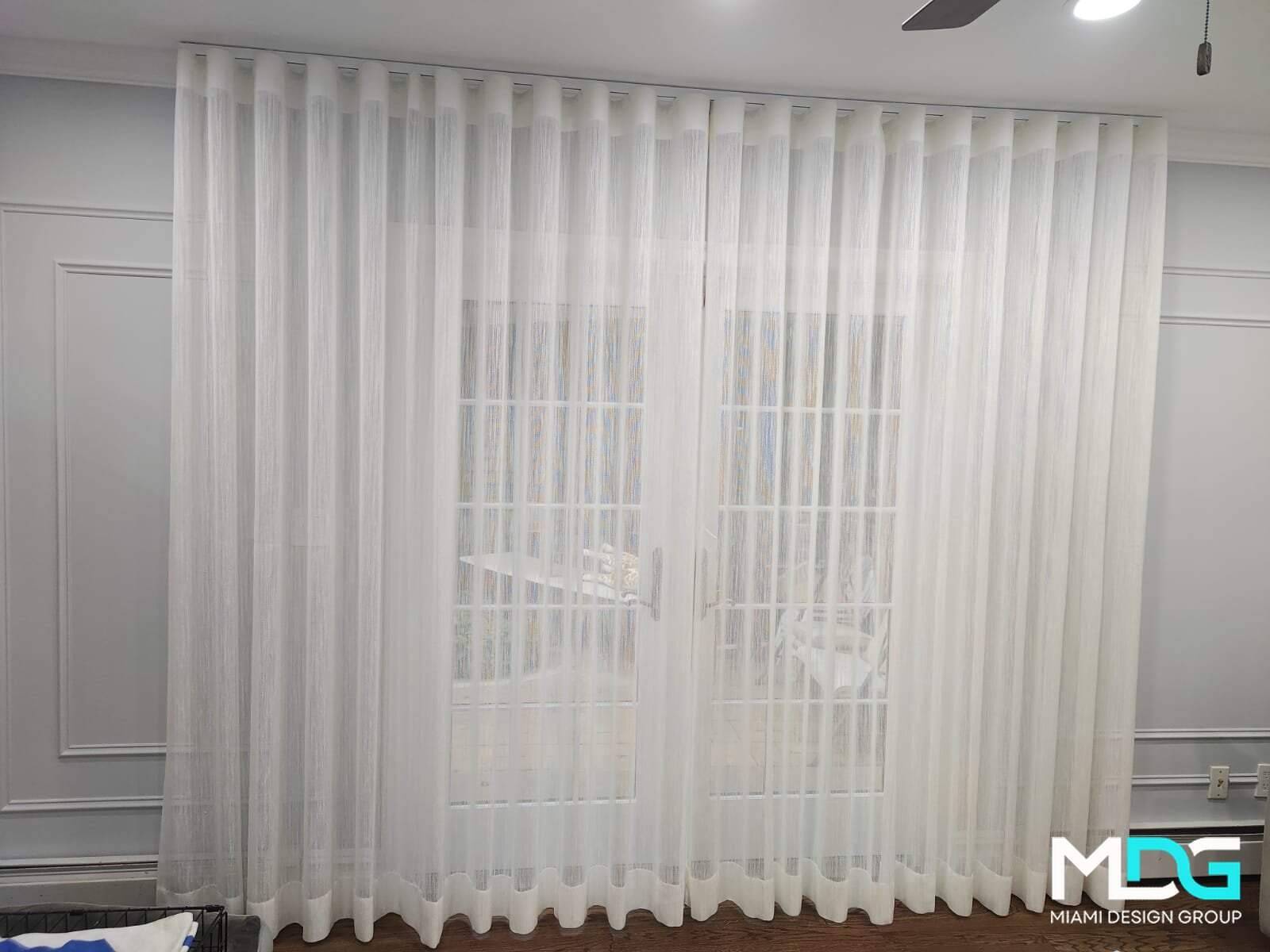
Those dramatic floor-to-ceiling windows that sold you on your condo create unique challenges. Standard horizontal blinds become impractical above 8 feet—they’re heavy, hard to operate, and the cords create safety hazards. Trying to manually adjust treatments on 12-foot windows means climbing ladders or stretching dangerously, which gets old fast when you’re doing it multiple times a day.
This is where motorized blinds for condos become practical rather than just luxurious. Battery-powered or hardwired motorized shades operate with a remote, smartphone app, or voice command through Alexa or Google Home. You can program them to close automatically during peak sun hours, protecting your furniture from UV damage while reducing the load on your AC.
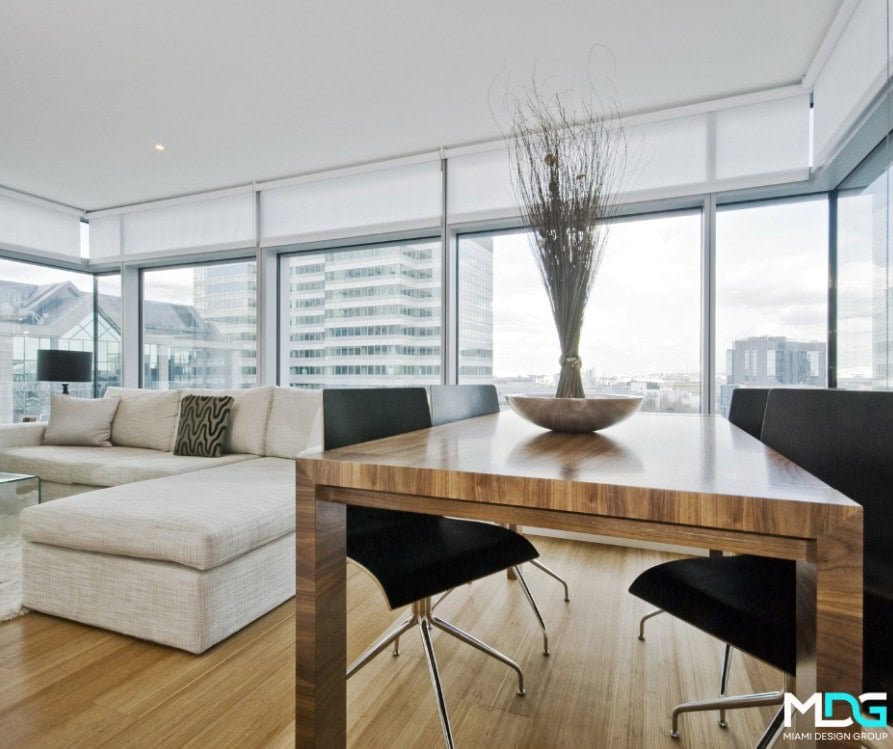
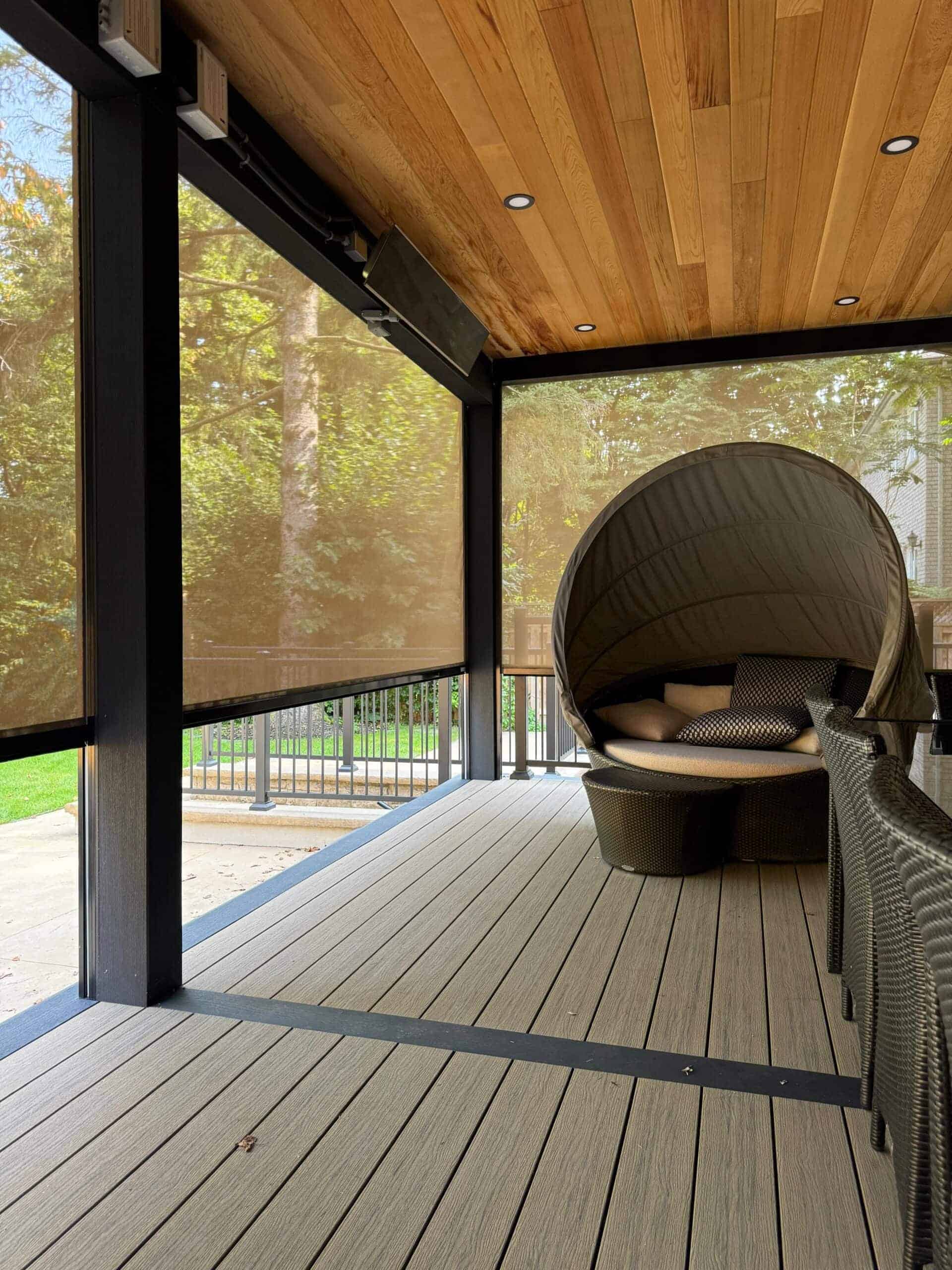
Roller shades work particularly well for expansive glass because they’re purpose-made for large-scale applications. They roll up tightly into slim cassettes when open, maintaining your view without bulky stacks of fabric. When closed, they provide consistent coverage across the entire window without gaps or uneven sections.
The right motorized system also solves the coordination problem. If your living room has a wall of windows, you can control all of them simultaneously rather than adjusting each one individually. Set scenes for different times of day—”morning” that lets in natural light, “afternoon” that blocks western sun, “evening” that provides privacy once the city lights come on.
Materials matter more with floor-to-ceiling installations in Miami. The fabric needs enough weight to hang straight without rippling, but not so much that it strains the motor. Solar screen fabrics work well because they reduce glare and heat while maintaining your view during the day. For bedrooms, blackout materials provide complete light control, essential when sunrise hits your windows at 6 AM year-round.
Your condo board cares what your windows look like from the outside. Even interior treatments are visible from the street or neighboring buildings, which is why most associations in Brickell, Aventura, and Miami Beach have specific requirements about exterior appearance. Ignoring these rules means redoing everything at your expense once the board sends that letter.
Most HOAs require neutral-colored backing visible from outside—white, off-white, or beige. Your gorgeous patterned drapes might look perfect from inside, but if the backing facing out is bright blue, you’ll likely need approval or face rejection. Some buildings go further, specifying exact colors or even requiring all units use identical exterior-facing treatments to maintain visual uniformity.
The approval process typically requires submitting detailed specifications, photos or samples of your proposed treatments, and sometimes proof that your installer is licensed and insured. This isn’t optional bureaucracy—your building’s declaration probably gives the HOA authority to require removal of non-compliant installations, and you’re responsible for the cost.
Working with companies experienced in condo window treatments makes this process smoother. We provide the documentation your board needs, suggest HOA-approved options that meet community standards, and handle the back-and-forth if questions arise. This saves you weeks of frustration and prevents expensive mistakes.
Some associations maintain lists of pre-approved contractors or products. Using someone from that list often streamlines approval because the board already trusts them to follow the rules and deliver quality work. We have experience with buildings throughout Miami—we know the window types, wall construction, and installation requirements that make the job go smoothly.
Timing matters too. Some HOAs restrict construction work to specific hours or days to minimize disruption to other residents. Your installer needs to work within those windows, which affects scheduling. We build these constraints into our project planning rather than discovering them on installation day.
Not all window treatment companies understand condo-specific challenges. You need someone who’s worked with HOA approvals, knows how to handle floor-to-ceiling installations, and uses materials engineered for Miami’s climate. The cheapest quote often comes from companies that don’t account for these factors, leading to problems later.
Look for companies that offer in-home consultations where they assess your actual space, light patterns, and privacy needs in your Brickell or Aventura condo. Photos and measurements you provide yourself rarely tell the complete story. Professional assessment catches issues before they become expensive problems—like windows that aren’t perfectly square, or wall types that require specific mounting hardware.
Ask about their experience with motorization and smart home integration. If you want your shades to work with your existing Crestron or Control4 system, they need technical expertise beyond just installing fabric. Battery-powered versus hardwired, single-motor versus dual-motor for wide spans, programming scenes and schedules—these decisions affect how well the system works for your actual lifestyle.
Motorization costs more upfront—typically $300-800 per window depending on size and features. That seems expensive until you calculate what you’re actually getting. In Miami’s climate, automated shades programmed to close during peak sun hours can reduce cooling costs by 10-25%. For a larger condo, that’s $100-200 in annual energy savings, meaning the system pays for itself within 2-3 years while the convenience lasts decades.
The safety factor matters if you have children or pets. Cordless motorized treatments eliminate the strangulation hazard that comes with traditional cord systems. No dangling chains, no loops that curious kids can get tangled in. Operation is simple enough that elderly family members or guests can use them without confusion or physical strain.
Convenience goes beyond just pushing a button. You can program schedules that automatically adjust your treatments throughout the day without any input from you. Close the bedroom shades at 10 PM, open the living room shades at sunrise, lower the western-facing treatments at 2 PM when the afternoon sun hits hardest. Set it once and your condo manages itself, even when you’re traveling or at work.
Smart home integration adds another layer of functionality. Connect your motorized shades to temperature sensors and they’ll automatically close when indoor temps rise above your threshold. Link them to your security system and they’ll simulate occupancy when you’re away, opening and closing on varied schedules to deter break-ins. Voice control through Alexa or Google Home means adjusting treatments without getting off the couch or putting down what you’re carrying.
The resale value boost is real in Miami’s competitive condo market. Modern buyers expect smart home features in luxury condos. Motorized window treatments signal that your unit has been upgraded thoughtfully, not just decorated. When comparable units in your Brickell or Miami Beach building are listed at similar prices, the one with motorized shades and smart home integration often sells faster and for more money.
Choosing custom window treatments for your Miami condo isn’t just about picking colors and fabrics. You need solutions that handle South Florida’s climate, work with your building’s HOA regulations, and actually solve the glare, heat, and privacy problems that come with modern high-rise living.
Look for companies with experience in condo-specific challenges—HOA approvals, floor-to-ceiling installations, motorization, and smart home integration. Ask about their timeline, what materials they recommend for coastal conditions, and whether they’ve worked with buildings in Brickell, Aventura, or your specific neighborhood.
The right window treatments transform how you live in your space. No more adjusting blinds five times a day. No more squinting at screens because of glare. No more furniture fading or AC running constantly. Just a comfortable, private, well-designed home that works the way you need it to.
We specialize in custom window treatments designed specifically for condo and apartment living in South Florida. With comprehensive design services, home automation expertise, and experience navigating HOA requirements throughout Miami-Dade and Broward County, we handle the complexity so you get solutions that actually work for your space.