Miami kitchen remodelers reveal 10 game-changing secrets for creating chef-grade kitchens in 2026, from induction cooking to multi-functional islands that transform how you live.
Share:
Summary:
Walk into any newly remodeled kitchen in Miami-Dade or Broward County and you’ll notice something different. The cooktops look sleek, almost invisible. The air feels cooler. And when someone boils water, it happens in half the time you’d expect.
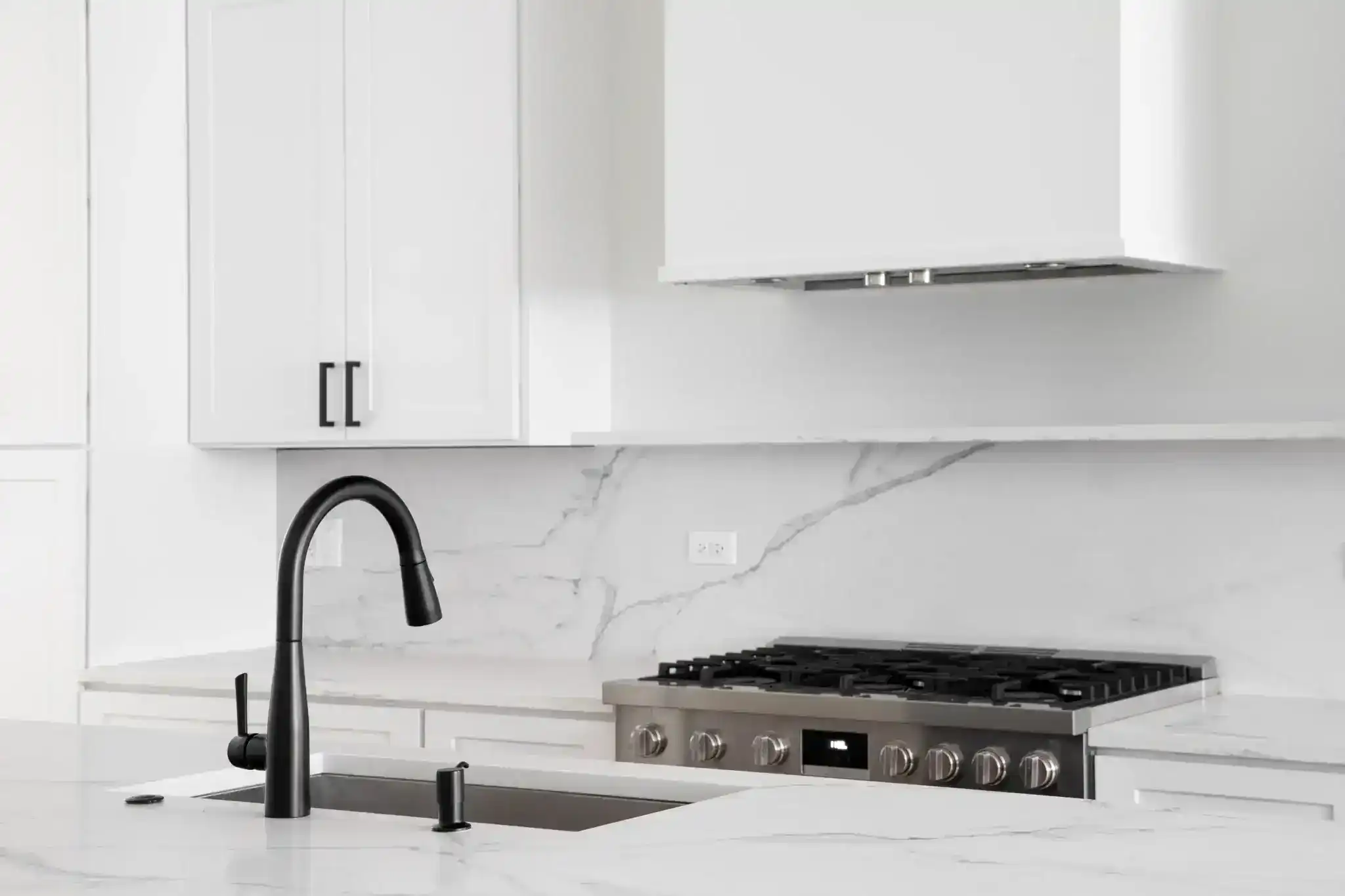
That’s induction cooking, and it’s become the secret weapon of kitchen remodelers who understand performance. Unlike gas or traditional electric stoves, induction uses electromagnetic energy to heat your cookware directly. No flames. No hot coils. Just precise, instant heat that responds the second you adjust the temperature.
For Miami homeowners, this matters more than you’d think. Induction keeps your kitchen cooler in a climate where every degree counts. It uses up to 90% of its energy efficiently compared to 40% for gas, which means lower utility bills year-round. And because the surface around your pan stays relatively cool, you’re not dealing with baked-on messes or the safety concerns that come with open flames.
Here’s what happens when you place a pan on an induction cooktop: copper coils beneath the surface create a magnetic field. That field interacts with the ferromagnetic material in your cookware—cast iron or certain stainless steels—and generates heat directly in the pan itself. The cooktop surface never gets dangerously hot.
This isn’t just clever engineering. It’s a fundamental shift in how your kitchen operates. Water boils 20 to 40% faster than on gas. Temperature adjustments happen instantly, giving you the kind of control that professional chefs depend on. And if you accidentally turn on a burner without a pan, nothing happens. No wasted energy, no safety risk.
The technology has been around for years, but 2026 marks a turning point. Prices have dropped significantly—entry-level induction ranges now start around $1,000, and the energy savings offset that initial investment faster than most Miami homeowners expect. We’re seeing induction requests double compared to just two years ago across South Florida.
What makes this particularly relevant for Miami-Dade and Broward Counties is how it handles the heat. Gas stoves pump warmth into your kitchen, making your AC work overtime in Florida’s tropical climate. Induction does the opposite. Because it heats the pan and not the air around it, your kitchen stays comfortable even during long cooking sessions. In Miami’s climate, that’s not a luxury—it’s a practical necessity that affects your comfort and your electric bill.
The learning curve is minimal. You’ll need cookware with a magnetic base, but most quality pots and pans already qualify. A simple test: if a magnet sticks to the bottom, it’ll work with induction. And once you experience the speed and precision, going back to gas feels like driving with the parking brake on. We’ve found that clients rarely second-guess the decision once they’ve cooked their first meal.
Here’s what happens when you place a pan on an induction cooktop: copper coils beneath the surface create a magnetic field. That field interacts with the ferromagnetic material in your cookware—cast iron or certain stainless steels—and generates heat directly in the pan itself. The cooktop surface never gets dangerously hot.
This isn’t just clever engineering. It’s a fundamental shift in how your kitchen operates. Water boils 20 to 40% faster than on gas. Temperature adjustments happen instantly, giving you the kind of control that professional chefs depend on. And if you accidentally turn on a burner without a pan, nothing happens. No wasted energy, no safety risk.
The technology has been around for years, but 2026 marks a turning point. Prices have dropped significantly—entry-level induction ranges now start around $1,000, and the energy savings offset that initial investment faster than most Miami homeowners expect. We’re seeing induction requests double compared to just two years ago across South Florida.
What makes this particularly relevant for Miami-Dade and Broward Counties is how it handles the heat. Gas stoves pump warmth into your kitchen, making your AC work overtime in Florida’s tropical climate. Induction does the opposite. Because it heats the pan and not the air around it, your kitchen stays comfortable even during long cooking sessions. In Miami’s climate, that’s not a luxury—it’s a practical necessity that affects your comfort and your electric bill.
The learning curve is minimal. You’ll need cookware with a magnetic base, but most quality pots and pans already qualify. A simple test: if a magnet sticks to the bottom, it’ll work with induction. And once you experience the speed and precision, going back to gas feels like driving with the parking brake on. We’ve found that clients rarely second-guess the decision once they’ve cooked their first meal.
Want live answers?
Connect with a Miami Design Group expert for fast, friendly support.
The kitchen island used to be simple. Extra counter space. Maybe some storage underneath. If you were fancy, a couple of bar stools.
In 2026, that’s ancient history. Multi-functional islands have become the central hub of chef-grade kitchens—combining prep zones, dining areas, storage solutions, and even remote workstations into one carefully designed piece. We’re building islands that adapt to how homeowners actually live, not just how they cook.
Think about your daily routine. Morning coffee and quick breakfast. Afternoon homework session with the kids. Evening meal prep while talking to family. Late-night laptop work. Your island handles all of it, but only if it’s designed with that versatility in mind from the start. And in Miami’s open-concept homes where the kitchen flows into living spaces, your island often defines the entire room’s functionality.
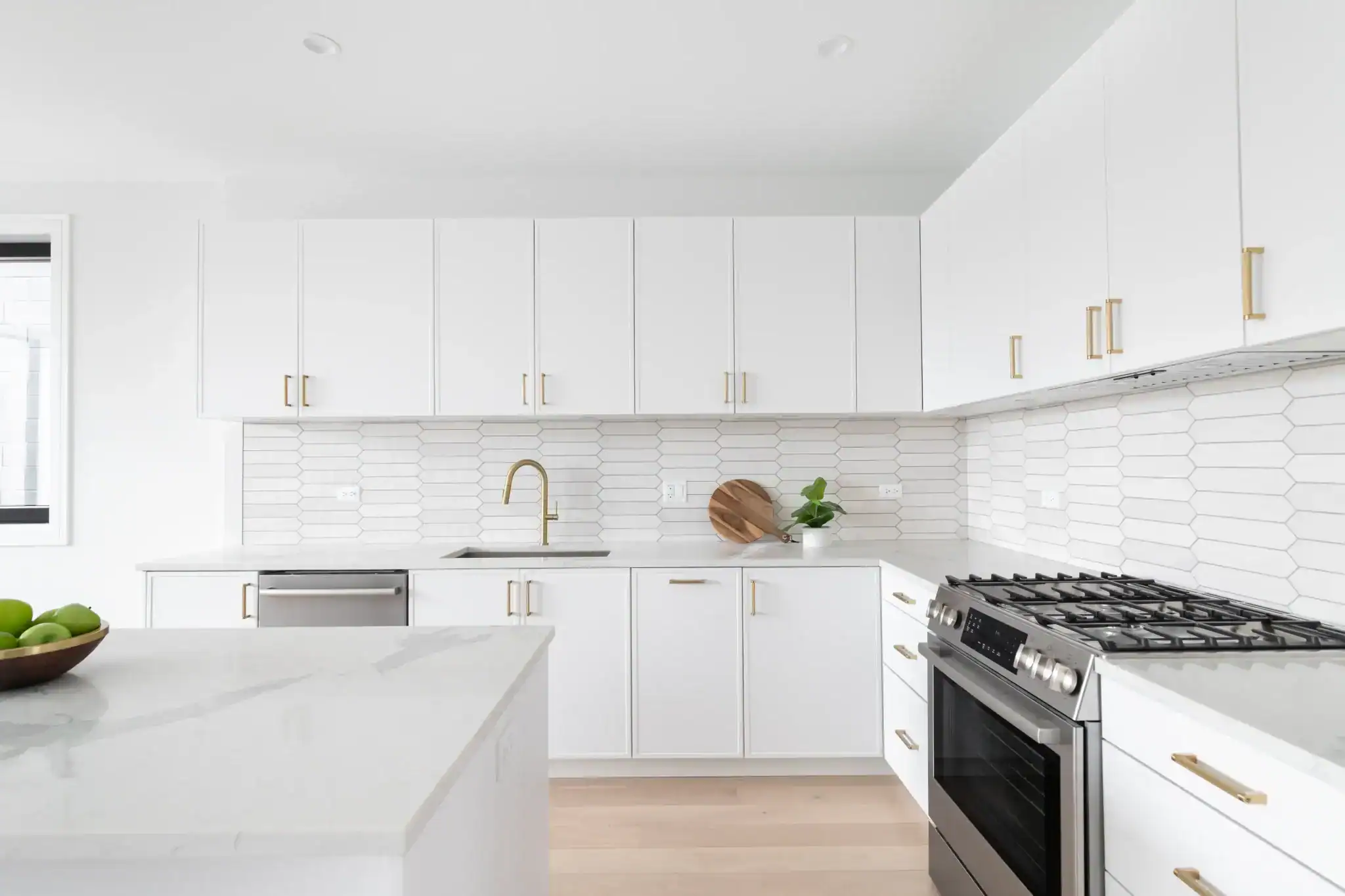
The best multi-functional islands start with understanding your space and your habits. In Miami kitchens, where open-concept layouts dominate, your island needs to define zones without blocking flow. That means maintaining at least four feet of clearance on all sides—enough room for appliances to open, for people to pass comfortably, and for multiple people to work simultaneously.
Size matters, but bigger isn’t always better. We typically recommend that islands occupy no more than 10% of your total kitchen space. Go larger and you create traffic jams. Go smaller and you miss the opportunity to add meaningful functionality. The sweet spot depends on your room dimensions, but a well-designed island should feel like a natural gathering point, not an obstacle course.
What goes into a multi-functional island? Start with storage. Deep drawers with pull-out organizers for pots and pans. Specialized compartments for utensils, spices, and small appliances. Wine racks if you entertain. A pullout trash and recycling system to keep bins hidden but accessible—64% of homeowners remodeling in 2026 are adding these hidden waste solutions. Every inch below that countertop should serve a purpose.
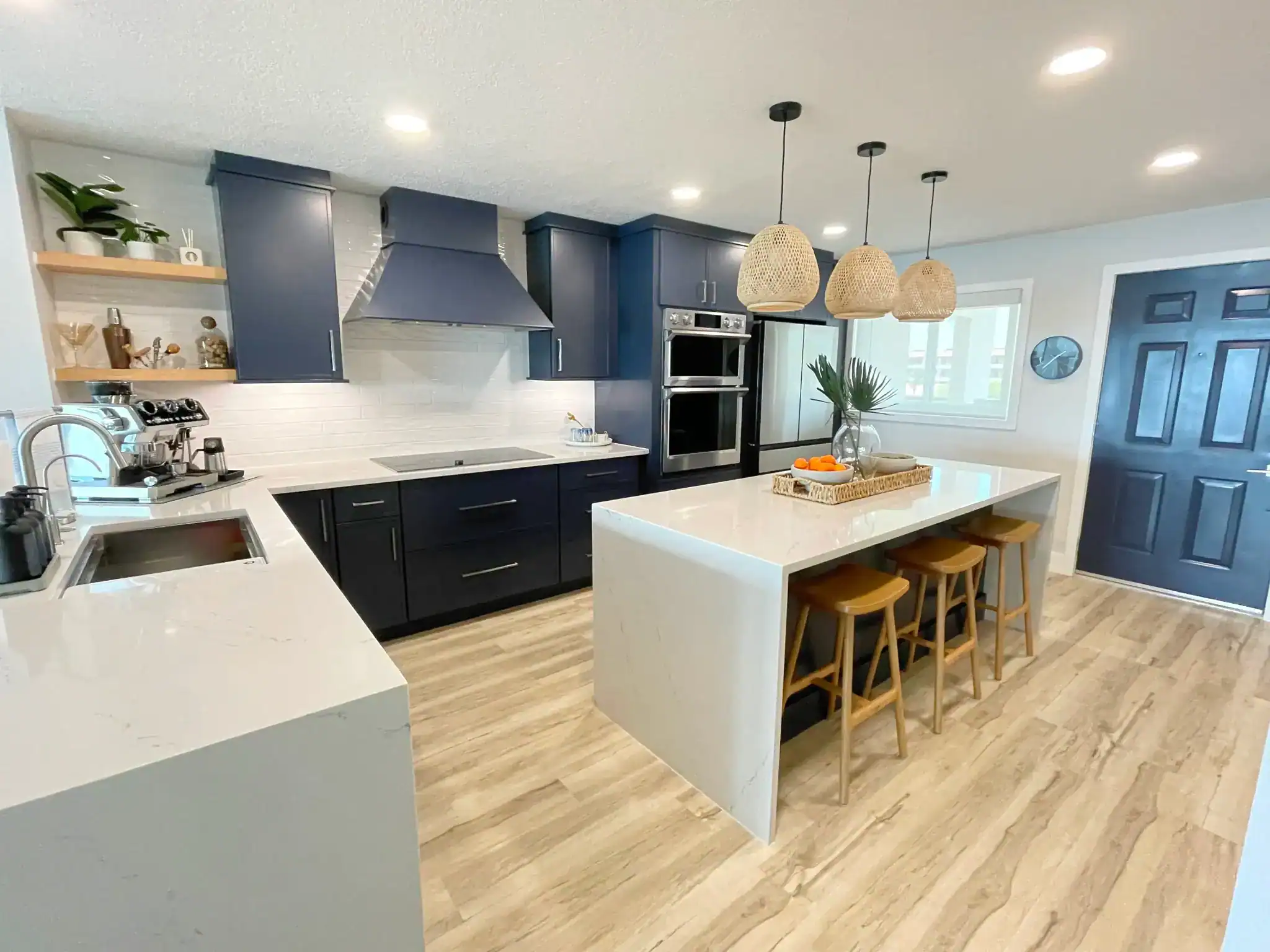
Then consider the surfaces. Multi-level islands are trending because they create distinct zones. A lower section for food prep with a durable surface like butcher block or quartz. A raised section for casual dining or laptop work that keeps the mess separate. Some Miami homeowners are even incorporating waterfall edges—where the countertop material extends down the sides—for a sculptural, high-end look that also protects the island’s base from humidity damage.
Seating is where many designs fall short. You need at least 24 inches of width per person, with 15 inches of knee clearance underneath if you’re adding stools. The overhang should be 12 to 15 inches for comfortable seating. And think about who’s sitting there—kids doing homework need different considerations than guests having cocktails during your next Miami Beach gathering.
Appliances can be integrated directly into islands, but this requires planning. A prep sink with a small dishwasher drawer keeps cleanup contained. An induction cooktop transforms your island into a cooking station, though you’ll need to address ventilation—either with a downdraft system or a statement hood above. Some homeowners add wine coolers, beverage refrigerators, or warming drawers, turning the island into a complete entertaining hub.
The mistake most people make is treating the island as an afterthought. It should be one of the first decisions in your kitchen remodel, not the last. Because once you understand how your island will function, everything else—your layout, your traffic patterns, your storage strategy—falls into place around it. When we get this right, we create islands that don’t just look impressive. They fundamentally change how you use your kitchen every single day.
Sustainability used to mean compromise. Eco-friendly materials looked eco-friendly—which is to say, they looked like you’d sacrificed style for principle. Not anymore.
In 2026, the sustainable materials we work with rival anything on the luxury market. Recycled quartz that mimics marble with dramatic veining. FSC-certified wood cabinets in rich, warm tones. Bamboo surfaces that are harder than oak and grow back in a fraction of the time. Low-VOC paints and finishes that protect your indoor air quality without limiting your color choices.
For Miami homeowners, this matters on multiple levels. The environmental impact is real—kitchen remodels generate significant waste, and choosing sustainable materials reduces that footprint. But there’s also a practical angle. Sustainable materials are often more durable and better suited to Miami’s humid climate than their conventional alternatives.
Take engineered quartz made with recycled content. It offers the same stain resistance, scratch resistance, and low maintenance as standard quartz, but with a lighter carbon footprint. The newest versions feature realistic veining and color variations that were impossible to achieve even a few years ago. You get the look of natural stone without the environmental cost of quarrying and transporting massive slabs across the country to South Florida.
Cabinets made from FSC-certified wood come from responsibly managed forests where trees are replanted and ecosystems are protected. The quality is identical to non-certified wood—often better, since FSC certification requires higher standards—but you’re not contributing to deforestation. For Miami kitchens dealing with year-round humidity, moisture-resistant plywood with low-VOC finishes provides both durability and healthier indoor air. This matters when you’re in an enclosed space for hours every day.
Bamboo deserves special mention. It’s technically a grass, not a wood, which means it regenerates incredibly fast. Bamboo flooring and countertops are harder and more moisture-resistant than many traditional hardwoods, making them ideal for South Florida’s climate. The aesthetic has evolved too—modern bamboo products come in a range of colors and finishes that work with contemporary, transitional, or even traditional kitchen designs.
Sustainable doesn’t mean expensive, either. Many eco-friendly materials cost the same or less than conventional options, especially when you factor in longevity. A bamboo floor might have a similar upfront cost to hardwood, but it’ll outlast it in a humid climate. Recycled glass countertops can be more affordable than natural stone while offering unique, artistic patterns you can’t get anywhere else.
The real shift is in perception. Sustainable materials are no longer the alternative choice—they’re often the better choice, period. When we stay current with material innovations, we can offer clients options that check every box: beautiful, durable, climate-appropriate for Miami-Dade and Broward Counties, and environmentally responsible. You don’t have to choose between a chef-grade kitchen and a sustainable one. In 2026, they’re the same thing.
Here’s what separates a good kitchen from a great one: intention. Every choice—from the cooktop you select to the way your island functions to the materials that can handle Miami’s humidity—should support how you actually live.
The 10 secrets we use aren’t really secrets at all. They’re principles. Prioritize performance over appearance. Choose technology that solves real problems. Design for flexibility because how you use your kitchen will evolve. Invest in quality where it matters and save where it doesn’t. And always, always consider Miami’s unique climate demands.
Your kitchen can deliver chef-grade functionality without requiring a chef-grade budget. It just requires working with professionals who understand the difference between trends and transformations. At Miami Design Group, we bring 15 years of experience creating spaces that work as beautifully as they look—from window treatments to complete kitchen remodels, with the local South Florida expertise that makes all the difference in Miami-Dade and Broward Counties.
Article details:
Share:
Continue learning: