
Hear from Our Customers
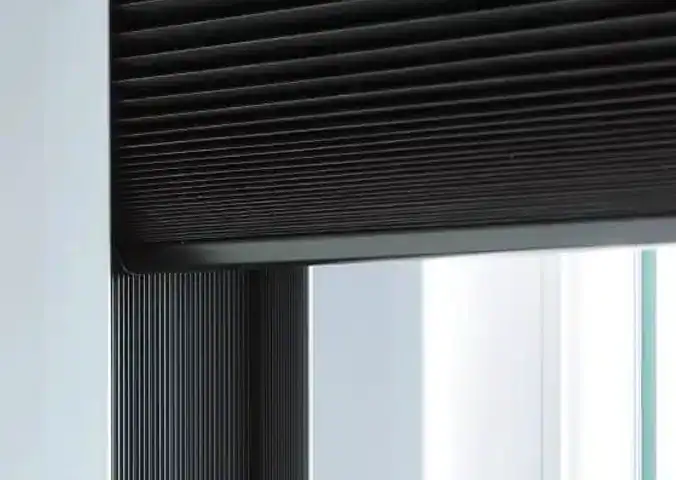
You’re probably adjusting your blinds three, four, maybe five times a day. Morning sun in the bedroom. Afternoon glare in the living room. That brutal west-facing heat that turns your kitchen into a sauna by 3 PM.
Hunter Douglas shades handle all of that automatically. They close before the afternoon sun turns your AC into a losing battle. They open just enough to let light in without the heat. They adjust throughout the day so you’re not constantly getting up to deal with them.
Most homes in Middle River Vista were built between the 1940s and 1960s. Beautiful homes, but they weren’t designed for Florida’s current energy costs or the way we live now. Properly programmed motorized shades can cut your cooling costs by 15-25% during the hot months. That’s not a sales pitch—that’s what happens when you block solar heat during peak sun hours while still controlling natural light the rest of the day.
Your furniture stops fading. Your floors stop getting damaged. Your energy bill drops. And you stop thinking about your windows because they’re finally doing what they should.
We’re an authorized Hunter Douglas dealer serving Middle River Vista and the surrounding Fort Lauderdale area. That means you get access to the actual PowerView automation system, professional-grade motors built for coastal humidity, and comprehensive warranty coverage that matters when something goes wrong.
We’re not new to this. Our team has over 20 years of experience with established businesses in NYC and Toronto before expanding to South Florida. We understand how your home’s orientation affects sun exposure throughout the day. We know how Middle River Vista’s mature trees create shifting light patterns. And we know exactly how to program your shades so they work with your home’s specific conditions.
Licensed and insured technicians handle the mounting, wiring, and programming. You’re not dealing with a subcontractor who showed up in a van. You’re working with people who do this full-time and have done it thousands of times before.
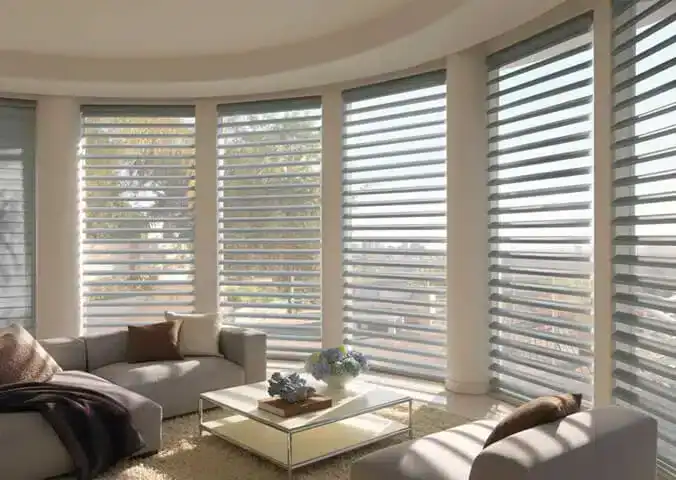
You schedule a consultation and someone comes to your home in Middle River Vista. Not to sell you—to measure, assess your windows, and understand how you actually use each room. We look at sun exposure, existing smart home systems, and what you’re trying to solve.
You get fabric samples and see exactly what you’re choosing. We walk through motorization options, control methods, and programming schedules that make sense for your routine. If you want your bedroom shades to open gradually at sunrise instead of an alarm, we set that up. If you want kitchen shades to adjust automatically while you’re making breakfast, that happens too.
Once you approve everything, we order your custom Hunter Douglas shades. When they arrive, our technicians install and program them. They sync with your existing smart home system if you have one—Alexa, Google Assistant, your security panel, whatever you’re already using.
Before we leave, you know exactly how to control everything. App, voice commands, remote, or automated schedules. We don’t hand you a manual and disappear. You walk through it with us until it makes sense.
If something needs adjusting after you’ve lived with them for a week, we come back. That’s part of the process.
Ready to get started?
Hunter Douglas PowerView automation is the system that actually works reliably. It uses Bluetooth Low Energy technology for real-time, two-way communication. That means when you tell a shade to close to 40%, it confirms it’s at 40%—not somewhere close. Cheaper systems guess. This one doesn’t.
You get professional-grade motors specifically designed for Florida’s coastal climate. High humidity doesn’t kill them. They’re built to last 10-15 years with proper maintenance, and they’re covered under comprehensive warranty.
In Middle River Vista, where most homes have that classic post-war layout with big windows facing east or west, solar shades are usually the right call. They block UV rays and heat while maintaining your view. You’re not sitting in a cave, but you’re also not squinting through glare or watching your furniture fade.
For bedrooms, blackout options with motorization mean you control exactly how much light comes in and when. For living areas near the water or facing the street, you get privacy on demand without sacrificing natural light during the day.
Everything integrates with your security system if you want it to. Arm your alarm to “Away” and your shades lower automatically. Exterior cameras detect motion at night and your shades close immediately. You’re not walking room to room every evening doing a window check.
It depends entirely on how many windows you’re covering, which fabric you choose, and whether you’re adding full automation or just motorization. A single motorized shade for a standard window typically starts around $600-800 installed. Full-room automation with scheduling and smart home integration runs higher.
Here’s what affects the price: larger windows cost more because there’s more fabric and a stronger motor. Blackout fabrics cost more than solar shades. Adding PowerView automation for scheduling and app control adds to each shade. If you’re doing a whole house, the per-window cost usually drops because we’re already there doing the work.
Most Middle River Vista homeowners see a noticeable drop in their energy bills within the first month, especially if you’re covering west-facing windows that get afternoon sun. That 15-25% reduction in cooling costs isn’t theoretical—it’s what happens when you’re blocking heat before it gets inside instead of trying to cool it down after. The shades typically pay for themselves over time, but the real value is not thinking about your windows anymore.
Yes, if you’re using Alexa, Google Assistant, or most major home automation platforms. Hunter Douglas PowerView integrates directly with those systems, so you can control your shades with voice commands or through your existing app. If you have a security system, we can usually tie the shades into that too—so they automatically lower when you arm the alarm or respond to motion detection.
The integration process happens during installation. We connect the PowerView hub to your home network, sync it with your smart home system, and test everything before we leave. You’re not figuring this out on your own with a setup guide.
If you don’t have a smart home system yet, that’s fine. You’ll still have app control, remote control, and the ability to set automated schedules. You can add voice control later if you want it. The system is designed to work independently or as part of a larger setup—it doesn’t require you to have everything else in place first.
For most Middle River Vista homes, installation takes one day if you’re doing a full house, or a few hours if it’s just a few rooms. The timeline depends on how many windows you’re covering and whether we’re installing motorization or full automation with programming.
Here’s the typical process: we measure and consult first, which takes about an hour. Then your custom shades are manufactured, which usually takes 2-3 weeks. Once they arrive, we schedule installation. Our technicians mount the shades, handle any wiring for motorized systems, and program everything if you’re adding automation.
The actual installation is straightforward. We’re not tearing into walls or rewiring your house. Most motorized Hunter Douglas shades use rechargeable battery packs or plug into existing outlets. If you want hardwired power, that takes a bit longer, but it’s still same-day work for most homes.
After installation, we walk you through how everything works. You’re not reading a manual later trying to figure out the app. We make sure you’re comfortable controlling the shades before we leave, and if you need adjustments after living with them for a few days, we come back.
Motorized means the shades go up and down with a remote or app instead of you pulling a cord. Automated means they do it on their own based on schedules, sensors, or triggers you set up. Both use motors, but automation adds the intelligence layer.
With basic motorization, you press a button and the shade moves. That’s it. You still have to remember to close them when the sun hits or open them in the morning. It’s convenient, but you’re still making the decision every time.
With PowerView automation, you set it once and forget it. Your bedroom shades open gradually at 7 AM. Your living room shades close at 2 PM when the sun starts heating up that side of the house. Your kitchen shades adjust throughout the day to keep light in without glare. You can override everything manually whenever you want, but the system handles the daily routine automatically.
Most Middle River Vista homeowners go with full automation because the whole point is not thinking about it anymore. If you’re already getting motorized shades, the cost to add scheduling and smart home integration isn’t dramatically higher, and it’s the difference between a convenience feature and something that actually changes how your home feels.
Yes, but only if they’re programmed correctly for your home’s sun exposure. Just having motorized shades doesn’t do anything—you have to actually use them to block heat during peak sun hours. That’s where automation makes the difference.
Florida homeowners use about 30% more electricity than the national average, mostly because of AC costs. When your windows are letting in direct sunlight during the afternoon, your AC is fighting a losing battle. Hunter Douglas solar shades block that heat before it gets inside while still letting light through. Blackout shades block everything. Either way, you’re reducing the load on your cooling system.
The Department of Energy says automated shading can cut heating and cooling energy use by up to 30% through optimized daylight control. In Middle River Vista, where most homes were built in the 1940s-1960s without modern energy efficiency in mind, that difference shows up fast. You’re not just saving a few dollars—most homeowners see $200-400 less per year in cooling costs, sometimes more if you’re covering a lot of west-facing windows.
The shades don’t replace good insulation or an efficient AC system, but they’re one of the few upgrades that pays for itself over time while actually making your home more comfortable. You’re not just spending less—you’re also not dealing with hot spots, glare, or furniture damage from UV exposure.
Yes. Motorized Hunter Douglas shades eliminate the lift cords that pose strangulation risks with traditional blinds. There are no dangling cords, no loops, no pull chains. The shades move with a motor, so there’s nothing for kids to get tangled in.
That’s actually one of the main reasons parents choose motorization beyond the convenience factor. Traditional corded blinds are a known safety hazard—motorized systems remove that risk entirely. Even if you’re not worried about daily use, the peace of mind matters when you have toddlers or young children in the house.
The controls are also designed to be child-safe. Remotes can be mounted out of reach. App controls require a phone or tablet. If you’re using voice commands, kids can’t accidentally trigger the shades without saying the exact command. And if a shade encounters resistance while moving—say a toy or hand is in the way—it stops automatically.
If safety is your primary concern, motorized Hunter Douglas shades are one of the best options available. You’re getting the functionality you want without the risks that come with traditional corded window treatments. It’s not just about convenience—it’s about removing a hazard that shouldn’t exist in your home.