
Hear from Our Customers
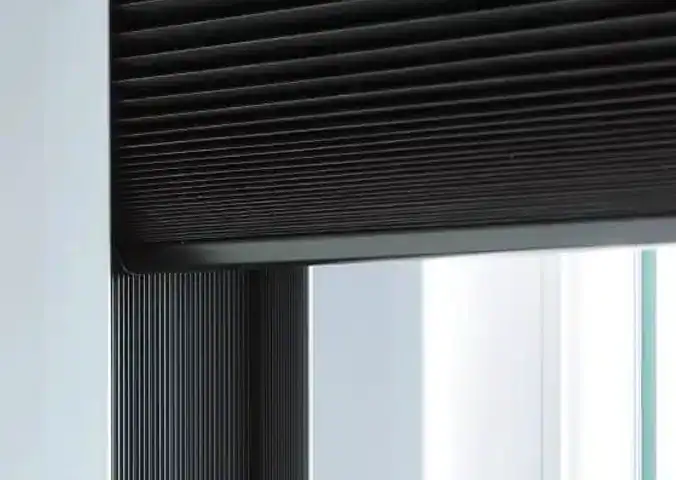
Your windows are responsible for up to 30% of your cooling costs. That’s not a small number when you’re running AC from April through October in South Florida.
Hunter Douglas shades cut that heat gain by up to 60% when installed correctly. You’re looking at $200 to $400 in annual savings, sometimes more depending on your home’s size and sun exposure. That’s real money back in your pocket every year.
But it’s not just about the bills. UV rays fade your furniture, bleach your paint, and damage wood floors over time. Quality window treatments block those rays before they do the damage. You keep your interiors looking newer, longer, without constantly replacing rugs or reupholstering chairs.
And if you’ve dealt with Florida humidity warping cheap blinds or causing fabric shades to develop mildew, you know how frustrating it is to replace window treatments every few years. Hunter Douglas builds their products to handle moisture, heat, and salt air—especially important here in Santa Barbara Shores where you’re close to the Intracoastal Waterway.
We work exclusively with top-tier brands, and Hunter Douglas is at the top of that list. We’re based in Hallandale Beach and serve homeowners throughout Santa Barbara Shores and the surrounding Pompano Beach area.
What sets us apart is simple: we’re not just a window treatment company. We handle home automation, interior design, and full remodeling projects. That means when you’re upgrading your shades, we can integrate them with your smart home system, coordinate them with your overall design, or help you plan a larger renovation if that’s where you’re headed.
You’re not getting a salesperson who’s trying to upsell you on features you don’t need. You’re getting a design consultation with someone who understands how window treatments fit into the bigger picture of your home—especially in a high-end waterfront neighborhood like Santa Barbara Shores where details matter.
First, we schedule a free in-home consultation. You show us your space, we talk about what’s not working with your current setup, and we measure your windows. This isn’t a high-pressure sales call—it’s a conversation about what you actually need.
From there, we walk you through your options. Different rooms have different requirements. Your bedroom needs blackout capabilities for sleep. Your living room needs glare control without losing natural light. Your waterfront-facing windows need serious UV protection. We match the right Hunter Douglas product to each space.
Once you’ve made your selections, we place the order and schedule installation. Our team shows up on time, installs everything precisely, and tests all the functionality before we leave. If you’re adding motorization or PowerView automation, we make sure it’s programmed correctly and show you how to use it.
The whole process typically takes two to three weeks from consultation to installation, depending on the product and customization level. You’re never left guessing where things stand—we keep you updated throughout.
Ready to get started?
You get a full design consultation where we assess your home’s specific needs. In Santa Barbara Shores, that usually means addressing intense sun exposure, humidity concerns, and often integrating with existing smart home systems. We’re looking at your home’s orientation, your furniture placement, and how you actually use each room.
We provide accurate measurements and handle all the ordering directly with Hunter Douglas. You’re getting factory-direct products with full manufacturer warranties, not knockoffs or “similar” alternatives. Every shade, blind, or drapery is custom-made for your exact window dimensions.
Installation is handled by our own team—not subcontractors. They’re experienced with Hunter Douglas products specifically, which matters when you’re dealing with motorized systems or complex mounting situations. Many homes in Santa Barbara Shores have unique architectural features or older construction that requires extra attention during installation.
If you’re adding PowerView automation, we integrate it with your existing smart home setup. That includes programming schedules, connecting to Alexa or Google Assistant, and making sure everything responds correctly. You’re not left with a complicated system you don’t know how to use—we walk you through every feature before we leave.
It depends entirely on what you’re covering and which products you choose. A single standard window with a basic cellular shade might run $300 to $500 installed. A large sliding glass door with a motorized solar shade could be $1,500 to $2,500.
For a typical 2,000-square-foot home in Santa Barbara Shores with 15 to 20 windows, you’re usually looking at $8,000 to $15,000 for quality Hunter Douglas shades throughout. That includes consultation, custom manufacturing, and professional installation.
If you’re adding motorization or PowerView automation to multiple windows, expect to add 30% to 50% to those baseline costs. The upside is that automated shades improve your energy efficiency even more because they can adjust throughout the day based on sun position—something you’d never do manually.
Most homeowners see this as a long-term investment. You’re recovering costs through energy savings within five to seven years, and quality Hunter Douglas products typically last 15 to 20 years or more with minimal maintenance.
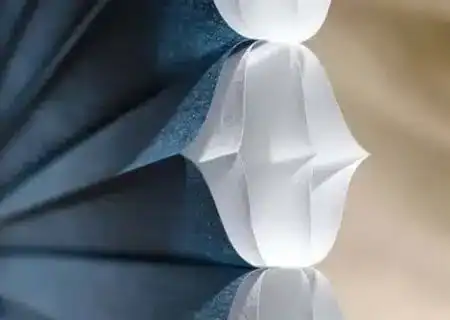
Cellular shades are designed primarily for insulation. They have a honeycomb structure that traps air, creating a barrier between your window and your room. That makes them excellent for reducing heat transfer and lowering energy bills. They come in different opacities, from sheer to blackout.
Solar shades are designed to block UV rays and reduce glare while maintaining your view. They’re made from a screen-like material that filters sunlight but doesn’t provide much insulation. You can see through them during the day, which is why they’re popular for rooms with water or landscape views.
In Santa Barbara Shores, many homeowners use both. Solar shades go on windows facing the Intracoastal Waterway or any view you want to preserve. Cellular shades go on bedrooms where you need darkness for sleeping, or on windows where insulation matters more than the view.
You can also layer them. A solar shade for daytime use with a cellular shade behind it for nighttime privacy and insulation gives you maximum flexibility. It costs more upfront, but it’s the most functional solution for Florida’s climate combined with waterfront living.
Most motorized Hunter Douglas shades run on individual battery packs, not your home’s electrical system. That means they’ll keep working during a power outage as long as the batteries are charged.
The batteries typically last six months to a year depending on how often you use the shades. When they run low, you get a notification through the PowerView app, and you just swap in fresh ones. It takes about two minutes per shade.
If you want true backup power, you can integrate your shades with a home battery system or generator. That’s overkill for most people, but it’s an option if you’re already running critical systems on backup power.
The bigger concern during a storm isn’t power—it’s whether you’ve closed your shades before the weather hits. That’s where automation really helps. You can program your shades to close automatically when a weather alert is issued, or close them remotely from your phone if you’re away from home.
Start with your priorities for each room. If you need complete darkness for sleeping, you’re looking at blackout cellular shades or honeycomb shades in a room-darkening fabric. If you want to reduce glare on your TV without losing natural light, solar shades make more sense.
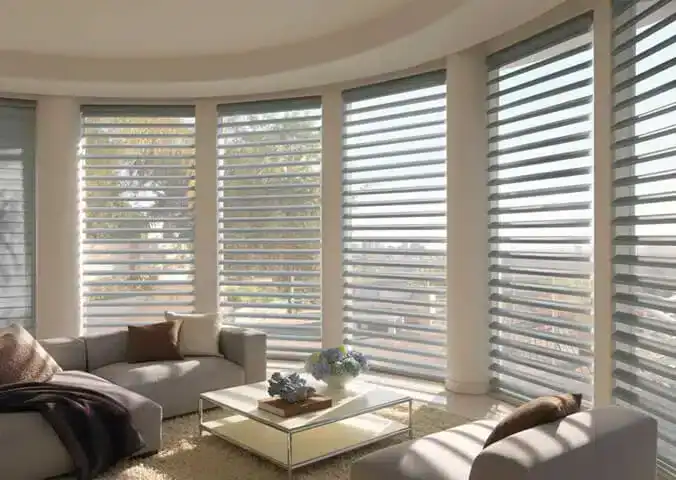
For rooms facing south or west in Santa Barbara Shores, UV protection should be your top priority. Those windows take the most intense sun exposure, and that’s where you’ll see the most furniture fading and heat gain. Hunter Douglas Silhouette or Pirouette shades work well here—they diffuse light beautifully while blocking UV rays.
If you have high humidity in bathrooms or near the waterfront, avoid real wood blinds. They’ll warp over time. Hunter Douglas makes faux wood options that look identical but handle moisture much better.
During our consultation, we assess each window individually. We’re looking at sun exposure, room function, your aesthetic preferences, and your budget. Then we recommend specific products for specific windows. You’re not buying the same shade for every window in your house—that rarely makes sense.
Yes, if you’re using PowerView automation. Hunter Douglas PowerView Gen 3 supports Matter, which is the new universal standard for smart home devices. That means it works with Apple HomeKit, Google Home, Amazon Alexa, and most other major platforms.
You can control your shades with voice commands, set schedules based on time of day or sunrise/sunset, and create scenes that adjust multiple shades at once. For example, “movie mode” could close your living room shades and dim your lights simultaneously.
PowerView also integrates with some security systems. Your shades can automatically adjust when you arm or disarm your alarm, or open and close on a schedule when you’re traveling to make your home look occupied.
The setup process is straightforward if you’re already comfortable with smart home tech. If you’re not, we handle the integration during installation. We connect everything to your network, program your initial scenes and schedules, and show you how to make adjustments later.
From consultation to installation, plan on two to three weeks for most projects. The consultation and measuring takes about an hour. Then we place your order with Hunter Douglas, and manufacturing typically takes 10 to 14 business days depending on the product and current demand.
Once your shades arrive, we schedule installation. For a whole-house project, installation usually takes one full day, sometimes two if you’re doing a large home with motorization on many windows. For a single room or a few windows, we’re often done in two to three hours.
If you’re in a rush, let us know during the consultation. Some Hunter Douglas products have faster turnaround times, and we can prioritize your project if timing is critical. But rushing usually means fewer customization options, so there’s a tradeoff.
The timeline can extend if you’re doing a larger renovation project and window treatments are just one piece. In those cases, we coordinate with your other contractors to make sure installation happens at the right point in the project—usually after painting is done but before final furniture placement.