Your smart devices don't need to live in separate apps. Learn how integrated home automation connects shades, lights, and security into one system that actually works.
Share:
Summary:
Integrated home automation means your smart devices communicate through a central system instead of operating independently. Your motorized shades, lighting controls, security cameras, and climate systems share information and respond to unified commands.
Think of it like this: instead of telling each device what to do separately, you set a scene. “Good morning” raises your shades, adjusts your lights to daylight temperature, and disarms your entry sensors. One command. Multiple systems responding together.
The difference between having smart devices and having an integrated system comes down to if your technology works for you or you work for it. Most homeowners start with individual devices—a smart thermostat here, automated blinds there—and end up juggling five apps to control their home. Integration eliminates that fragmentation.

Motorized window treatments form the foundation of integrated living because they affect everything else in your home. Light control impacts your heating and cooling efficiency. Privacy connects to your security system. Even your entertainment setup depends on managing natural light and glare.
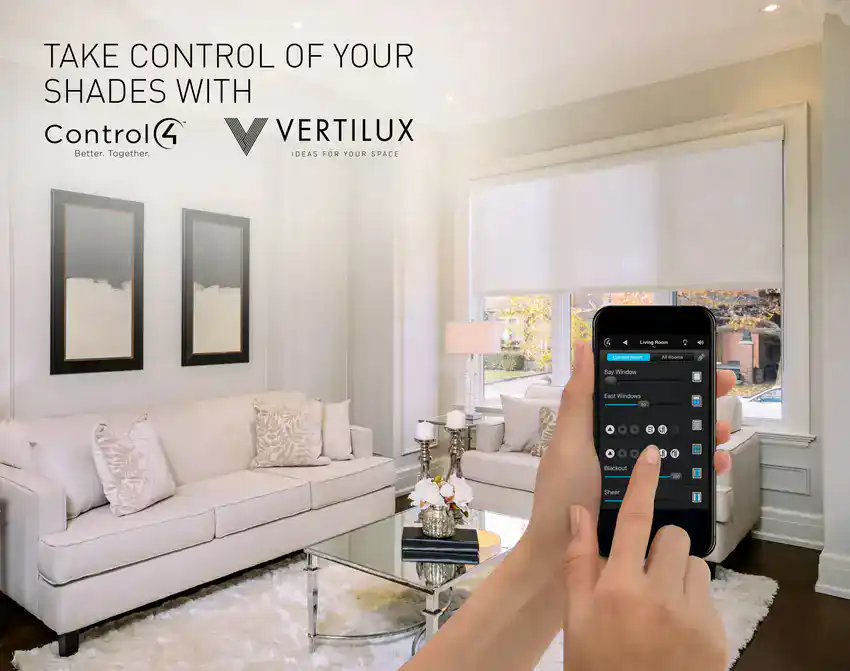
Modern smart shades use wireless protocols—typically Z-Wave, Zigbee, or Wi-Fi—to communicate with your central hub. Battery-powered motors have evolved significantly. Rechargeable lithium-ion batteries now last months between charges, and some systems include solar panels that keep them running indefinitely without hardwiring.
Installation matters more than most people realize. Your shades need stable connectivity to respond reliably. Walls, distance from your hub, and interference from other devices all affect performance. Professional installation guarantees your motors are positioned correctly, programmed properly, and integrated flawlessly with your other systems.
The real power shows up in automation. Your shades can respond to time of day, temperature sensors, or security system status. When your home reaches a certain temperature, shades automatically close on sun-facing windows. When you arm your security system at night, every shade in your home lowers. When you wake up, they gradually open to simulate natural sunrise.
This isn’t about adding features you’ll never use. It’s about removing decisions from your daily routine. Your home handles light management, temperature optimization, and privacy control based on patterns you set once and forget about. That’s the difference between smart devices and integrated automation.
The compatibility question comes up constantly. Not all motorized shades work with all automation platforms. Some manufacturers lock you into their ecosystem. Others use open protocols that integrate with multiple systems. Before you invest in window treatments, verify they’ll communicate with your planned automation setup. Retrofitting incompatible devices later costs significantly more than choosing the right system upfront.
Motorized window treatments form the foundation of integrated living because they affect everything else in your home. Light control impacts your heating and cooling efficiency. Privacy connects to your security system. Even your entertainment setup depends on managing natural light and glare.
Modern smart shades use wireless protocols—typically Z-Wave, Zigbee, or Wi-Fi—to communicate with your central hub. Battery-powered motors have evolved significantly. Rechargeable lithium-ion batteries now last months between charges, and some systems include solar panels that keep them running indefinitely without hardwiring.
Installation matters more than most people realize. Your shades need stable connectivity to respond reliably. Walls, distance from your hub, and interference from other devices all affect performance. Professional installation guarantees your motors are positioned correctly, programmed properly, and integrated flawlessly with your other systems.
The real power shows up in automation. Your shades can respond to time of day, temperature sensors, or security system status. When your home reaches a certain temperature, shades automatically close on sun-facing windows. When you arm your security system at night, every shade in your home lowers. When you wake up, they gradually open to simulate natural sunrise.
This isn’t about adding features you’ll never use. It’s about removing decisions from your daily routine. Your home handles light management, temperature optimization, and privacy control based on patterns you set once and forget about. That’s the difference between smart devices and integrated automation.
The compatibility question comes up constantly. Not all motorized shades work with all automation platforms. Some manufacturers lock you into their ecosystem. Others use open protocols that integrate with multiple systems. Before you invest in window treatments, verify they’ll communicate with your planned automation setup. Retrofitting incompatible devices later costs significantly more than choosing the right system upfront.
Want live answers?
Connect with a Miami Design Group expert for fast, friendly support.
Security integration transforms your smart home from convenient to genuinely protective. When your security system communicates with your shades and lighting, your home can simulate occupancy, respond to threats, and provide visual deterrence automatically.
The most practical application is presence simulation. When you arm your system in “away” mode, your shades and lights follow programmed patterns that make your home appear occupied. Shades open and close at realistic times. Lights turn on in different rooms throughout the evening. Potential intruders can’t identify vacant homes by watching for patterns.
Motion detection creates another integration point. When your security cameras or sensors detect movement in unexpected areas, your system can trigger responses. Exterior lights flood the area. Interior shades close for privacy. Your security footage captures everything while your home actively responds to the threat.

Security sensors do more than sound alarms—when integrated properly, they orchestrate your entire home’s response to potential threats. Door and window sensors, motion detectors, and cameras become triggers for coordinated actions across your shades, lighting, and other systems.
Entry point monitoring provides the first layer. When someone opens a door or window while your system is armed, your home can respond immediately. Lights throughout your home turn on to full brightness. Shades in relevant rooms can be lowered to prevent visual access. These responses happen in seconds, before you even receive the alert on your phone.
The psychology of security matters as much as the technology. Intruders expect dark, unresponsive homes. When every light activates and shades adjust the moment they trigger a sensor, most will abandon the attempt. Your home demonstrates it’s monitored and responsive, even if you’re hundreds of miles away.
Glass break sensors add another dimension. When these sensors detect the specific frequency of breaking glass, your system knows exactly which window was compromised. That location data allows targeted responses—closing shades in that room, activating nearby cameras, and turning on exterior lights around that specific area. This precision response provides better security footage and more effective deterrence than generic whole-home alerts.
Motion patterns teach your system normal behavior. In Boca Raton homes, you might have regular landscaping service, pool maintenance, or other scheduled visitors. Your security integration can distinguish between expected movement in certain areas at certain times versus unexpected activity. This reduces false alarms while maintaining protection when it matters.
The integration extends to your daily routines too. When you disarm your system in the morning, your shades can open automatically. When you arm it at night, every shade closes and specific lights turn on for evening security. These automated responses remove decision fatigue from your routine while ensuring consistent security practices.
Professional monitoring services can access your integrated system data when an alarm triggers. They see not just that a sensor activated, but also that your shades closed and lights activated—confirming the system responded correctly. This additional context helps them assess the situation more accurately and respond appropriately.
Security scenes combine multiple systems into coordinated responses for specific situations. These aren’t just about arming and disarming—they’re about creating layers of protection that adapt to different scenarios throughout your day.
Your “leaving home” scene does more than lock doors. It closes all shades to prevent visual access to your interior. It sets specific lights on randomized timers to simulate occupancy. It arms your security system and activates cameras. One button press as you walk out the door handles everything, ensuring you never forget a step in your security routine.
Vacation mode takes this further. Your shades open and close on varied schedules that mimic your actual patterns. Lights turn on in different rooms at realistic times—kitchen lights in the morning, living room in the evening, and bedroom lights later at night. The randomization prevents the obvious patterns that signal an empty home.
“Arriving home” scenes prioritize convenience without compromising security. As you pull into your driveway, your system recognizes your phone’s presence. Exterior lights turn on. Your entry door unlocks. Interior shades open to welcome natural light. Your security system disarms. By the time you reach your door, your home is ready for you.
Night mode balances security with comfort. Perimeter lights stay on or activate with motion. All shades close for privacy. Interior lights dim to preset levels for nighttime movement. Your security system arms in “stay” mode, protecting entry points while allowing interior movement. If a sensor triggers, your system knows to alert you differently than during away mode.
Panic scenes provide emergency responses. A specific button or voice command can activate all exterior lights, close all shades, lock all doors, and immediately alert your monitoring service. These scenes are rarely needed, but having them programmed provides assurance and eliminates decision-making during high-stress situations.
The key to effective security scenes is testing and refinement. Your initial setup might have shades that close too slowly or lights that don’t provide adequate coverage. Professional integration includes this testing phase, ensuring every scene performs reliably when you need it. Your security shouldn’t depend on hoping your automation works—it should be verified and dependable.
Integration with professional monitoring adds another layer. When specific scenes activate, your monitoring service can receive context about what triggered the response. They know whether you manually activated a panic scene or if your system responded to a sensor. This information helps them assess the situation and respond appropriately.
Integrated living isn’t about owning the most devices—it’s about making the devices you have work together seamlessly. Your smart shades, lighting, and security systems should communicate, coordinate, and respond to your routine without constant input.
The difference between frustration and functionality comes down to proper integration. Devices that share a common platform, communicate reliably, and respond to unified commands transform your daily experience. You stop managing technology and start enjoying the benefits it provides.
Professional integration matters. The compatibility challenges, programming requirements, and testing needed to create reliable automation aren’t simple weekend projects. We bring 15 years of experience connecting smart home systems that work together, serving homeowners throughout Boca Raton and South Florida. Our comprehensive approach handles everything from product selection through installation and ongoing support, guaranteeing your integrated home performs reliably from day one.
Article details:
Share:
Continue learning: