
Hear from Our Customers
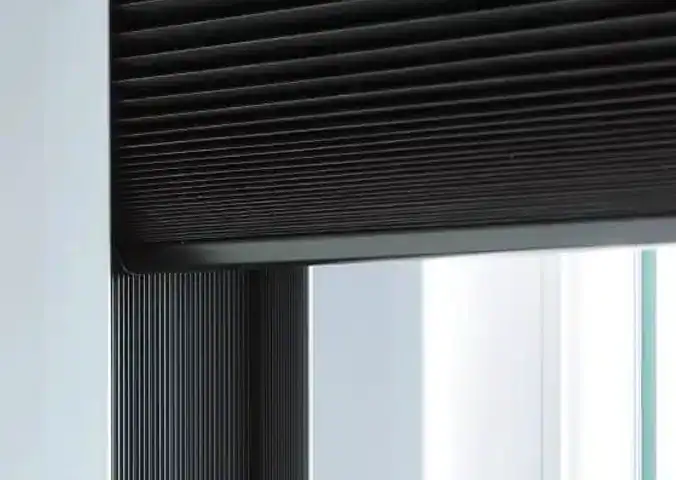
Your AC isn’t fighting a losing battle anymore. Hunter Douglas shades in Greenacres, FL are built with cellular insulation that blocks heat before it gets inside. That means your system runs less, your rooms stay cooler, and your monthly bill drops.
You’re not adjusting blinds by hand throughout the day. Motorized shades respond to the sun automatically, closing when heat peaks and opening when you want natural light. You set it once through your phone or voice control, and it handles the rest.
Your furniture isn’t fading. UV-blocking fabrics filter out the harsh rays that damage hardwood, upholstery, and artwork. You keep the light without the consequences. And when hurricane season hits, you’ve got window treatments designed to hold up under pressure—literally. These aren’t decorative. They’re functional, durable, and built for South Florida.
We handle the full process—consultation, custom measuring, installation, and smart home integration. We work with homeowners in Greenacres who want Hunter Douglas quality without the runaround.
Greenacres sits just far enough inland to avoid beachfront pricing, but close enough to deal with salt air, humidity, and hurricane prep. We factor that in. Every shade is custom-made for your windows, your home’s orientation, and how you actually use your space.
We’re not a franchise. We’re a local operation serving South Florida, and we show up when we say we will. You’ll work with people who know the difference between a cellular shade and a roller shade—and why that matters for your specific setup.
We start with a free in-home consultation. You show us the windows, we talk through what’s not working—glare, heat, privacy, outdated look—and we walk through options that fit your budget and goals. No pressure. Just information.
Next, we measure every window. Hunter Douglas shades are custom-made, so precision matters. We account for mounting depth, window type, and whether you want inside or outside mount. If you’re adding motorization, we plan the power source and integration during this step.
Once your shades are fabricated, we schedule installation. Our team mounts everything, tests the operation (manual or motorized), and makes sure it’s dialed in. If you’re connecting to Alexa, Google, or a home automation system, we handle that setup too.
After install, you’ve got warranty coverage and support. Hunter Douglas backs their products, and we back our work. If something needs adjustment or you want to add more shades later, we’re a phone call away.
Ready to get started?
You’re getting custom-fabricated window treatments built to your exact measurements. Every shade is made in the U.S. with Hunter Douglas materials—no shortcuts, no generic knockoffs. Fabrics are chosen based on your needs: light filtering, blackout, solar protection, or privacy.
Motorization is available on most styles through Hunter Douglas PowerView. That means app control, voice control, and scheduling. You can set your shades to close during peak heat hours or open at sunrise. It integrates with Alexa, Google Assistant, and most smart home platforms.
In Greenacres, FL, where summer heat is relentless and hurricane prep is part of the routine, durability matters. Hunter Douglas blinds and shades are engineered for high-humidity climates. The mechanisms don’t corrode. The fabrics resist mold and fading. And if you qualify, some energy-efficient styles come with a federal tax credit—up to $600 per year through 2032.
Installation is part of the package. We’re not dropping off a box and wishing you luck. Our team mounts, levels, and tests every shade. If there’s an issue with fit or function, we handle it before we leave.

Cost depends on the style, size, and features you choose. A standard roller shade for a single window might start around a few hundred dollars. Cellular shades with motorization and smart home integration will run higher—often $800 to $1,500 per window depending on size and fabric.
Hunter Douglas isn’t the budget option, and that’s intentional. You’re paying for U.S. manufacturing, lifetime warranty coverage, and materials that hold up in Florida’s climate. Cheaper alternatives fade, warp, or need replacement within a few years. These don’t.
We give you a flat quote after measuring your windows and understanding what you need. No surprise fees. And if you’re doing multiple windows, we can work with your budget to prioritize the rooms that matter most—usually the ones with the most sun exposure or the highest cooling costs.
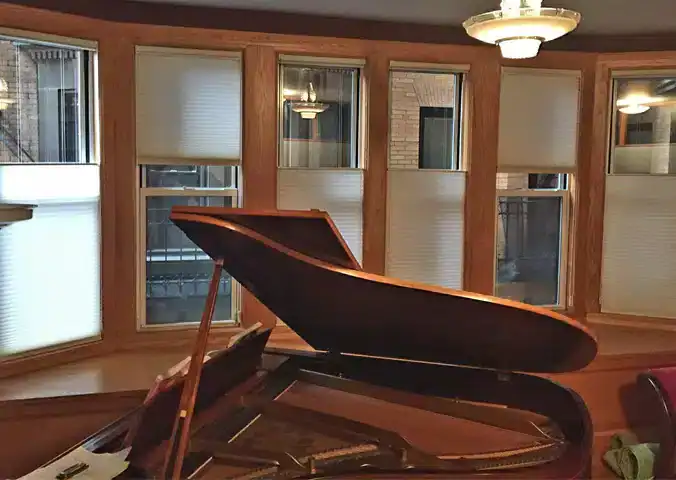
Cellular shades have a honeycomb structure that traps air, creating insulation. They’re the best option if you’re trying to reduce heat gain or loss. In Greenacres, where your AC runs most of the year, cellular shades can cut cooling costs by blocking heat before it enters the room.
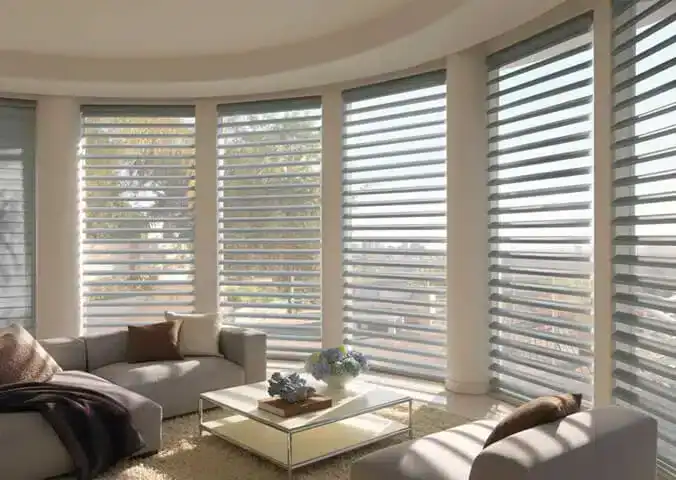
Roller shades are a single layer of fabric that rolls up and down. They’re sleek, simple, and work well for light control and privacy. They don’t insulate like cellular shades, but they’re often more affordable and easier to motorize.
If energy efficiency is your priority, go cellular. If you want a clean look with smart home control and you’re less concerned about insulation, roller shades work. We’ll show you samples of both during the consultation so you can see the difference in person. Most people end up mixing styles depending on the room.
Yes. Hunter Douglas PowerView motorization connects to your phone through an app. You can open or close individual shades, group them by room, or set schedules. Want your bedroom shades to close at sunset and open at 7 a.m.? You program it once and forget it.
Voice control works with Alexa and Google Assistant. You can say “close the living room shades” and it happens. If you’ve already got a smart home system—Crestron, Control4, Savant—PowerView integrates with those too.
The system runs on rechargeable batteries or hardwired power, depending on your setup. Battery life is solid—usually 6 to 12 months depending on how often the shades move. We handle the programming and connection during installation, so it’s ready to use the day we finish.
Hunter Douglas shades aren’t a replacement for impact windows or storm shutters, but they add a layer of protection. Certain styles—like the Duette cellular shades—are built with durable fabrics and reinforced mounting systems that hold up better than standard blinds when pressure changes or debris hits.
They won’t stop a direct impact, but they reduce the risk of glass scattering if a window does break. And because they’re motorized, you can close them all from your phone before a storm hits—no climbing ladders or scrambling room to room.
In Greenacres, where hurricanes are a regular concern, most homeowners pair Hunter Douglas shades with other storm prep measures. The shades handle day-to-day climate control and add a secondary layer of defense when weather gets serious. It’s not overkill. It’s practical.
After we measure your windows, fabrication typically takes three to five weeks. Hunter Douglas custom-makes every shade, so there’s no rushing it. Once they arrive, installation usually takes a few hours to a full day depending on how many windows you’re covering.
If you’re adding motorization or smart home integration, we build in extra time to program everything and make sure it’s connected properly. You’re not waiting weeks after install to use your shades—they’re functional the day we finish.
We’ll give you a timeline during the consultation. If you’re on a deadline—moving in, hosting an event, or just tired of dealing with broken blinds—we’ll let you know what’s realistic. Most Greenacres projects from consultation to final install take about four to six weeks total.
Yes. Certain Hunter Douglas cellular shades qualify for the federal Energy Efficient Home Improvement Credit. You can claim 30% of the cost, up to $600 per year, for shades installed between 2023 and 2032. The shades need to meet specific insulation standards, and we’ll tell you which styles qualify.
Florida doesn’t offer a state-level rebate for window treatments, but some utility companies run energy efficiency programs that might cover part of the cost. It’s worth checking with your provider—especially if you’re in an older home with high cooling bills.
We don’t handle the tax paperwork, but we’ll give you documentation showing the product specs and install date. Your accountant or tax software will need that when you file. It’s not a huge rebate, but if you’re doing multiple windows, it adds up.