body { overflow-x: clip !important; }
Shades Built for Florida Homes! Grand Opening of Our New Showroom — Now Serving Miami-Dade & Broward County! 📍 Visit Us in Hallandale Beach, FL 📍 Now Open in Sunny Isles Beach, FL Shades Built for Florida Homes! Grand Opening of Our New Showroom — Now Serving Miami-Dade & Broward County! 📍 Visit Us in Hallandale Beach, FL 📍 Now Open in Sunny Isles Beach, FL
Guides

Choosing the Right Window Treatments for South Florida Living

Choosing the Right Window Treatments for South Florida Living

What's in this guide

  1. Why South Florida Breaks the Normal Rules
  2. Matching the Treatment to the Room
  3. Light Control, Privacy, and the View — Pick Two, or Layer
  4. What Condo and HOA Rules Might Decide For You
  5. Is Motorization Worth It?
  6. How to Start

Buying window treatments in South Florida is not the same exercise it is in Denver or Chicago. The sun sits higher, stays longer, and hits harder. The air carries salt and moisture that quietly destroys materials that would last decades inland. And half the housing stock comes with an HOA or condo board that has opinions about what your windows look like from the street.

None of that means your options are limited. It means the wrong choice fails faster here, and the right choice does more work. This guide walks through how to think about it room by room.

Why South Florida Breaks the Normal Rules

Most window treatment advice online is written for a climate that gets four seasons and moderate sun. Ours is a different problem entirely.

Sun That Doesn’t Quit

Our UV load is high year-round, not seasonal. That means two things: heat gain through glass is a constant drag on your AC, and everything the sun touches indoors is slowly fading. Hardwood floors, rugs, artwork, leather, and upholstery all pay the price on south- and west-facing exposures. A treatment that only addresses privacy leaves that damage unchecked.

Humidity, Salt Air, and What They Do to Materials

Real hardwood is beautiful, and in a humid bathroom or a beachfront condo it will warp, swell, and eventually stop operating smoothly. Near the water, salt air is corrosive to unprotected metal hardware and mechanisms. This is why material selection matters more here than aesthetics alone — faux wood, composite, vinyl, and marine-grade or coated hardware exist specifically because natural materials struggle in these conditions.

Custom shades in a bright South Florida living room

Matching the Treatment to the Room

The most common mistake we see is picking one product and using it everywhere. Rooms do different jobs, and so should their window treatments.

Living Rooms and Great Rooms

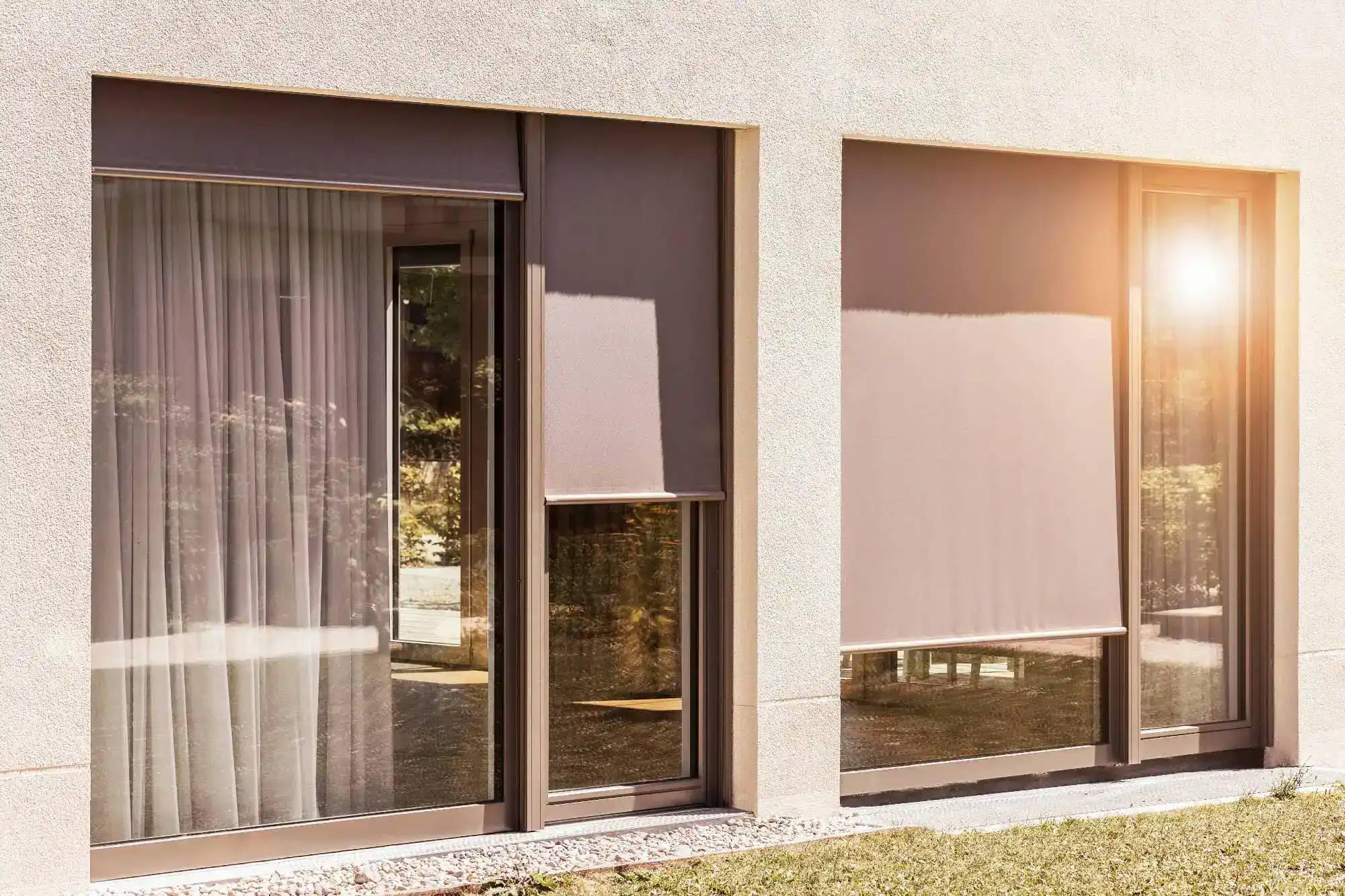
These are usually the rooms with the best view and the worst heat gain — often floor-to-ceiling glass facing water or a pool deck. The goal here is cutting glare and heat without giving up the view you paid for. Solar shades are the workhorse: they filter the harsh part of daylight while keeping the outside visible. Layering drapery over them adds softness, improves acoustics in rooms with hard surfaces, and gives you a full-privacy option after dark.

Bedrooms

Bedrooms are where blackout earns its keep. Between early sunrises and streetlights, light control is the difference between sleeping through the night and waking at 6:30 whether you like it or not. Look for side channels or a well-designed valance if you want true darkness — the fabric is only half the equation, and light leaking around the edges undoes most of the benefit.

Kitchens and Bathrooms

Moisture and grease are the enemies here. Real wood blinds are a poor choice in both rooms. Faux wood, vinyl shutters, aluminum, and moisture-resistant composites hold up far better and clean easily. In bathrooms, top-down/bottom-up configurations are worth considering: they let light in from above while keeping the lower half of the window private.

Home Offices

If you spend your day on video calls, glare control is the whole game. A solar shade with a lower openness factor cuts screen glare without making the room feel like a cave. Positioning matters too — the window behind your desk is usually the one causing the problem.

Light Control, Privacy, and the View — Pick Two, or Layer

Here is the tradeoff nobody explains up front: a single shade cannot maximize all three at once. A fabric open enough to preserve your view is, by definition, open enough for people to see in at night when your lights are on. A fabric that guarantees privacy blocks the view.

That is why layering is so common in well-designed South Florida homes. A solar shade handles daytime heat, glare, and view retention. A drapery panel or a second blackout shade handles nighttime privacy and darkness. You operate whichever one the moment calls for, instead of compromising on a single product that does everything adequately and nothing well.

What Condo and HOA Rules Might Decide For You

If you live in a condo or a managed community, check the rules before you fall in love with a fabric. Many buildings require that anything visible from the exterior present a uniform color — typically white or off-white — so the facade reads consistently from the street or the water.

This is not a dealbreaker. Most quality shade lines offer a white or neutral backing paired with whatever color you want facing into the room. But finding out after installation is an expensive way to learn the rule, and it is one of the first things we check on a condo project.

Layered drapery and shades in a modern Miami interior

Is Motorization Worth It?

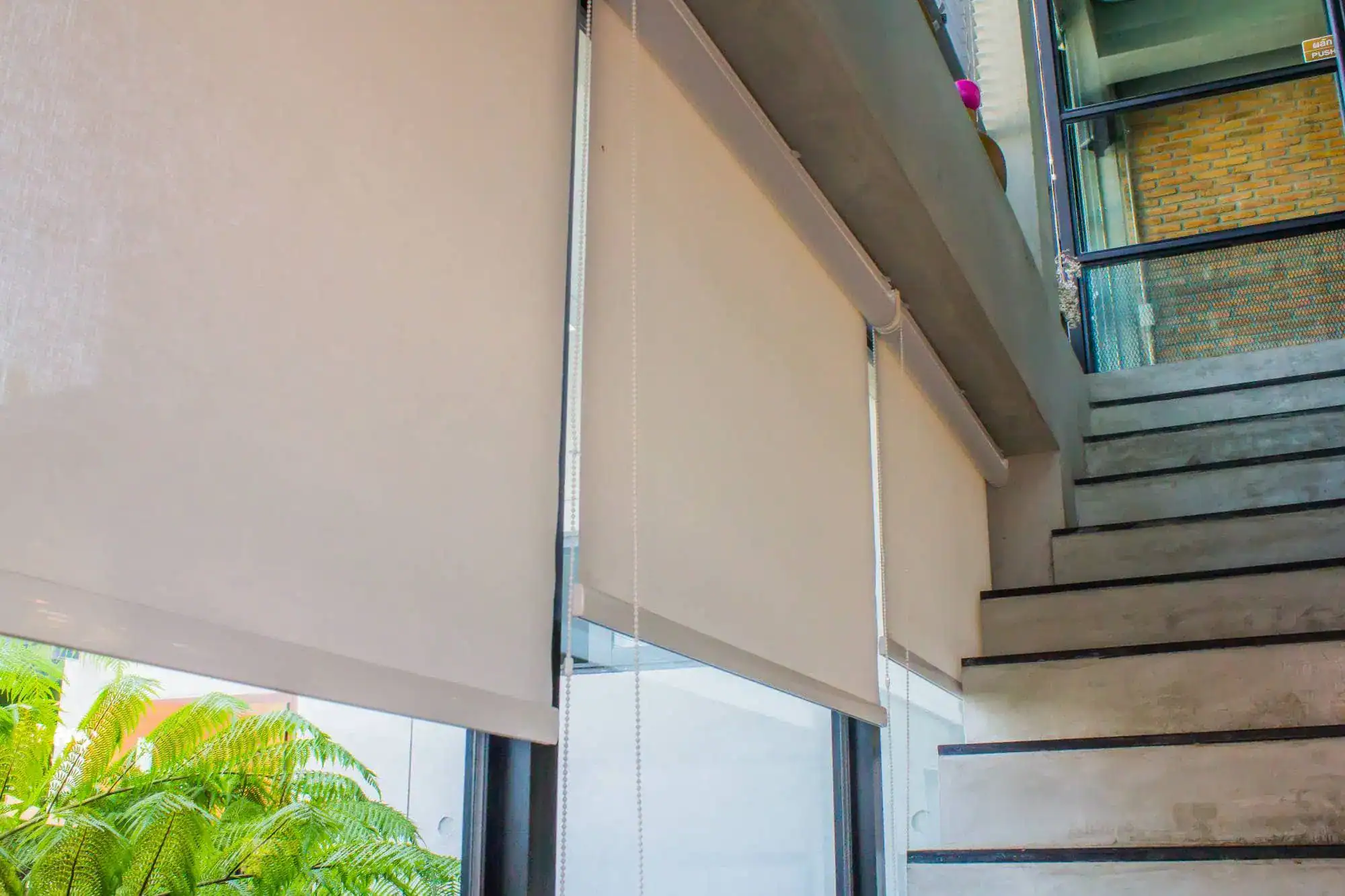
For most homes, motorization is a convenience upgrade. In a few situations it is closer to a necessity: windows above a stairwell or a two-story great room, wide spans of glass where a manual chain becomes a workout, and any home where you want shades to respond to the sun automatically rather than remembering to adjust them.

It is also the safest option for homes with young children, since it eliminates cords entirely. If you are on the fence, a practical approach is motorizing the windows that are genuinely hard to reach and keeping manual controls elsewhere.

How to Start

The short version: identify your worst exposure first. There is almost always one wall of glass doing the most damage to your comfort and your energy bill, and solving that one usually changes how the whole home feels. From there, work room by room based on what each space actually needs rather than what looks best in a catalog.

Every window is a different size, exposure, and problem — which is why we measure and design each one rather than selling a package. Book a free in-home consultation and we will walk your space, look at your exposures, and bring samples you can see in your own light.

Let's Talk

Have a project in mind?

Book a complimentary in-home consultation and our team will help bring your vision to life.

Two South Florida Locations

Visit Our Showrooms

See our shades, blinds, drapery, and custom closets in person. Stop by whichever showroom is closer to you.

Sunny Isles Beach Showroom

18190 Collins Ave
Sunny Isles Beach, FL 33160

305-614-2624

Mon–Thu: 9AM–6PM
Fri: 9AM–5PM · Sat: Closed · Sun: 11AM–4PM

Get Directions

Hallandale Beach Showroom

2520 SW 30th Ave
Hallandale Beach, FL 33009

305-614-2624

Mon–Thu: 9AM–6PM
Fri: 9AM–5PM · Sat: Closed · Sun: 11AM–4PM

Get Directions
Call Showrooms Get A Quote