You’re not shopping for curtains. You’re managing a project with deadlines, budgets, brand standards, and a property full of guests who’ll notice if the blackout shades don’t actually black out. Finding a window treatment supplier who understands that difference saves you time, money, and the headache of dealing with callbacks six months after installation.
Miami’s hotel market is growing fast. With nearly 2,000 new hotel rooms opening in Miami-Dade County in 2026 alone, and 28 million visitors generating $22 billion in annual spending, competition for quality commercial suppliers is real. You need someone who can handle bulk orders, meet fire safety codes, deliver on time, and install systems that last through years of guest use. That’s where Miami Design Group comes in.
Fire safety isn’t optional in hospitality. Every piece of fabric in a guest room needs to meet strict fire-retardant standards, and inspectors will check. If your window treatments don’t pass NFPA-701-2004 or California Title 19 certification requirements, you’re facing delays, replacements, and potential liability issues that derail your timeline.
Most hotel operators don’t have time to verify every fabric specification or chase down certification documentation. That’s why working with a commercial supplier who knows these requirements matters. We source fabrics and materials that meet fire safety regulations for hotels, so you’re not scrambling to replace non-compliant treatments after installation. We provide the documentation you need for inspections upfront.
Beyond fire ratings, you’re also dealing with Miami-specific considerations that affect longevity and performance. Hurricane-prone regions need treatments that can withstand high winds and humidity without warping, deteriorating, or developing mold. South Florida’s intense UV exposure fades fabrics faster than in other climates, which is why commercial-grade materials engineered for sun resistance matter here.
The reality is that cutting corners on compliance creates bigger problems later. You might save money upfront with a residential supplier offering “good enough” solutions, but when you’re facing a failed inspection or replacing faded curtains after one season, those savings disappear. Commercial-grade treatments cost more initially because they’re engineered for durability, safety, and long-term performance in high-traffic hospitality environments.
Think about what happens when you install non-compliant materials. Best case, you catch it before the inspector does and eat the replacement cost. Worst case, you’re dealing with occupancy delays, lost revenue, and the reputation hit of opening late. Working with a hospitality window covering dealer who handles compliance correctly the first time eliminates that risk entirely.
Order window treatments for one room and quality control is straightforward. Order for 150 rooms and consistency becomes your biggest challenge. Color variations between batches, slight measurement discrepancies, or hardware that doesn’t match across floors creates a patchwork look that guests notice immediately. Brand standards exist for a reason, and inconsistent window treatments undermine them.
Commercial buyers need suppliers with the capacity to handle large-scale bulk window treatment orders without quality drops. That means reliable sourcing, standardized fabrication processes, and the ability to maintain color and material consistency across multiple production runs. If you’re renovating in phases, you also need confidence that ordering treatments for the second phase six months later will match the first phase exactly. Nothing looks worse than Floor 3 having slightly different shade colors than Floor 2.
We handle bulk shade orders with systems designed for consistency. Our experience with commercial projects means we understand the importance of maintaining standards across large quantities. We’re not a residential shop trying to scale up for one big project and learning on your dime.
The installation timeline matters too. Hotels can’t shut down entire floors for weeks while window treatments get installed room by room. You need a supplier with enough installation crews to move quickly and efficiently, working around occupied rooms when necessary. Delays cost you revenue, and missed deadlines during renovations create cascading problems with other contractors waiting to start their work.
Property managers and hotel operators also appreciate suppliers who can provide replacement parts and service down the line. When one motorized shade breaks in Room 412, you don’t want to discover that the supplier no longer carries that hardware or that the fabric has been discontinued. Working with an established commercial supplier reduces those risks and makes ongoing maintenance simpler.
For properties like the new hotels opening in Brickell, Miami Beach, or Downtown Miami, having a local supplier who can respond quickly to service needs matters. When you’re dealing with a property management window supplier based in South Florida, you’re not waiting days for someone to fly in from out of state to fix a problem.
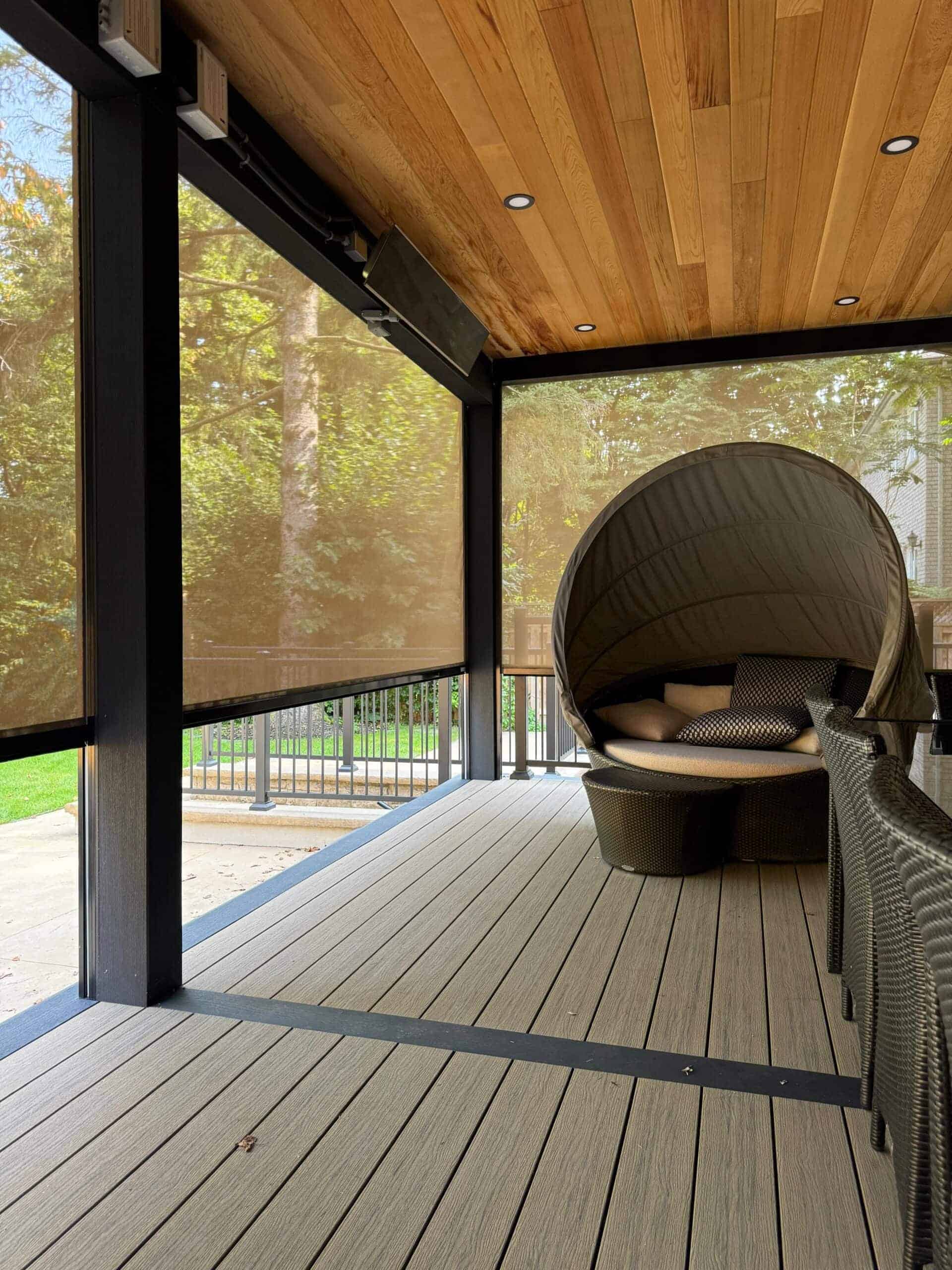
Motorized window treatments aren’t just a luxury feature anymore. They’re becoming standard in hotels because they solve real operational problems. Housekeeping staff can adjust all the shades in a suite with one button instead of walking to each window. Guests appreciate the convenience and modern feel. And motorized systems reduce wear and tear from manual operation, which means fewer repairs and longer-lasting treatments.
The commercial automation market is growing fast, with the global blinds and shades sector expected to reach $30.8 billion by 2033, largely driven by motorized and automated solutions. Hotels are investing in this technology because it improves both guest experience and operational efficiency in measurable ways.
We integrate commercial motorized blinds from leading manufacturers like Somfy and Lutron. These aren’t cheap retrofitted motors added to standard blinds. They’re commercial-grade systems designed for daily use in hospitality environments, with quiet operation and reliable performance.
Here’s the math hotel operators care about: automated shades can save housekeeping staff significant time during room turnover. Instead of manually raising and lowering treatments at every window, staff can control all shades in a room simultaneously with a wall switch or remote. In corner suites with 10+ windows overlooking Biscayne Bay or South Beach, that time savings adds up fast across every turnover.
Multiply that efficiency across hundreds of rooms and thousands of turnovers per year, and the labor savings can offset the initial cost of motorized systems within a relatively short period. Some hotels report that housekeeping efficiency gains alone justify the investment in automation, especially given Miami’s tight labor market and rising wage costs.
Beyond labor savings, motorized systems reduce the most common source of window treatment damage in hotels: guest misuse. When guests don’t have to pull cords or manually operate blinds, there’s less opportunity for broken mechanisms, torn fabrics, or tangled cords. The treatments simply last longer, which reduces your replacement and repair costs over time.
Automated shades also integrate with room management systems. You can program them to open at checkout time, close during peak sun hours for energy savings, or adjust automatically based on room occupancy. This level of control helps with both energy efficiency and maintaining consistent room presentation. When rooms sit empty between guests, you can keep shades closed to reduce cooling costs without relying on housekeeping to remember.
For hotels focused on sustainability, motorized shades contribute to LEED certification goals by improving energy performance. They help regulate room temperature by blocking Miami’s intense heat during the hottest parts of the day and allowing natural light during cooler hours, reducing HVAC demand. In a market where energy costs are significant, that efficiency matters to your bottom line.
The guest experience factor shouldn’t be overlooked either. Modern travelers expect smart technology in upscale hotels. Motorized shades signal that your property is current and invested in guest comfort. It’s a small detail that contributes to positive reviews and repeat bookings.
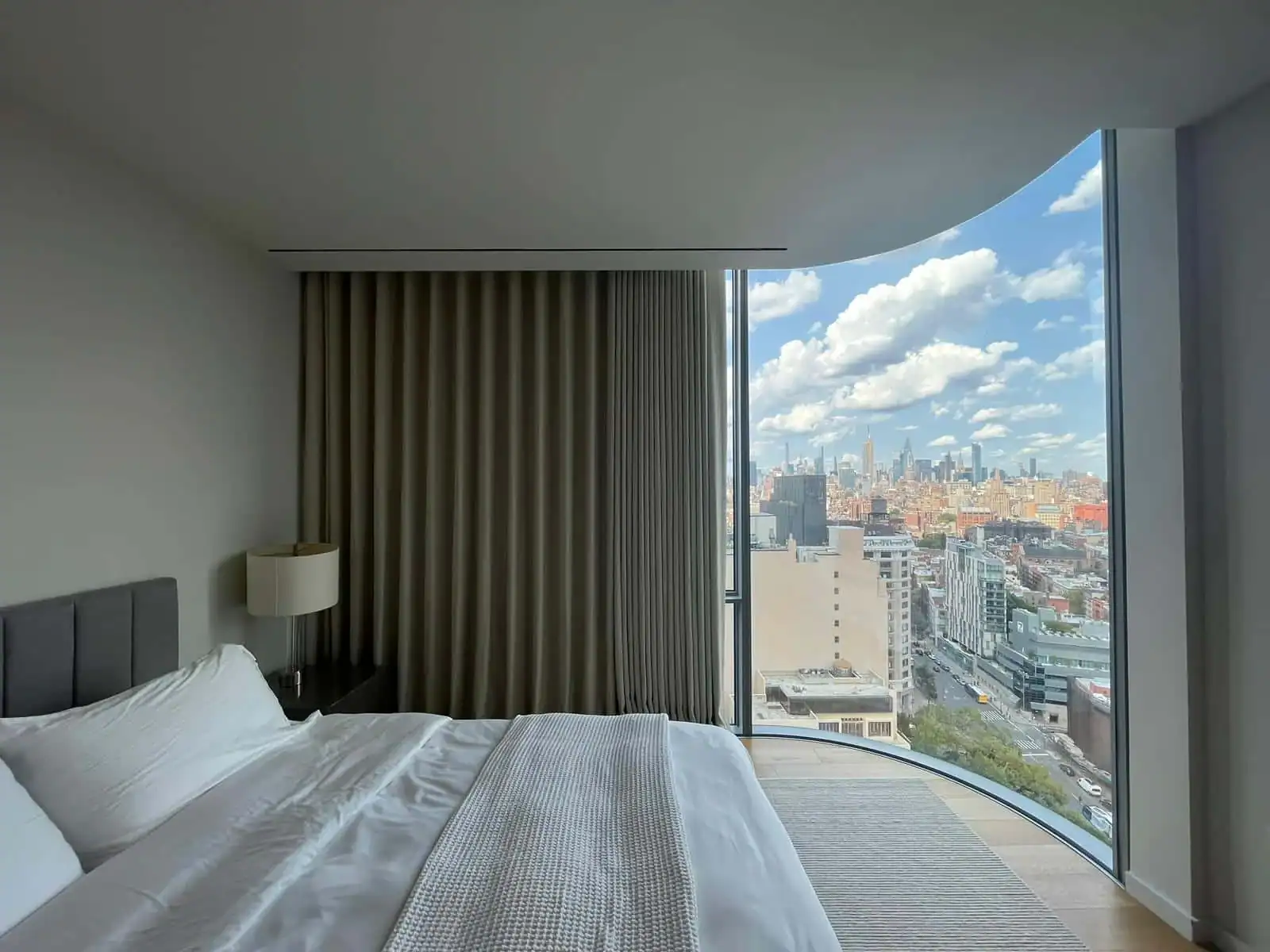
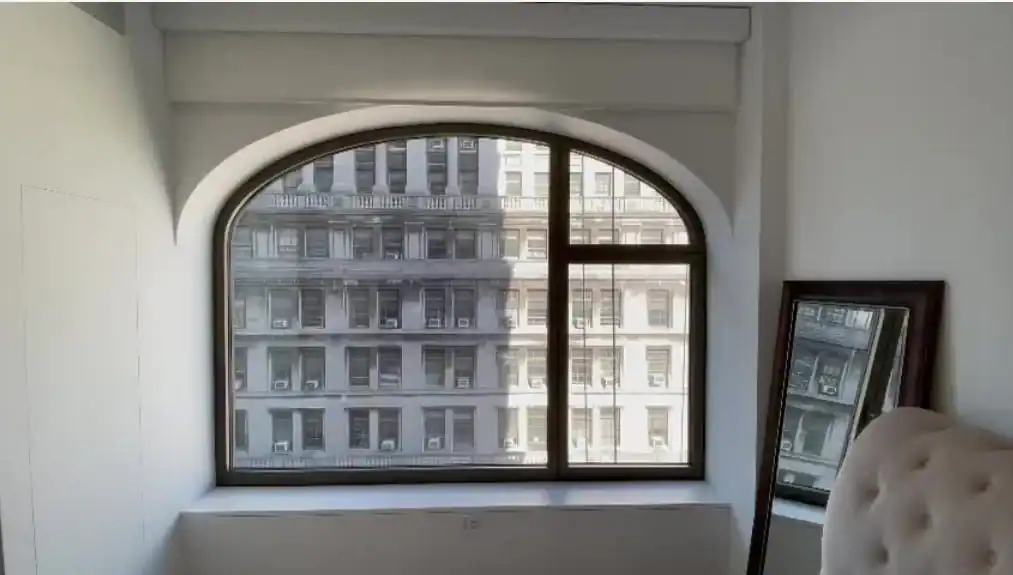
Every hotel claims to offer blackout curtains. Few actually deliver complete darkness. The problem isn’t usually the fabric—it’s the installation. Light spills in around the sides, through gaps at the top, or where panels don’t overlap properly. Guests notice immediately, and it affects their sleep quality and your reviews. In a market like Miami where TripAdvisor ratings directly impact bookings, that matters.
True blackout requires more than just blackout fabric. It requires proper measurement, side channels or overlapping panels that eliminate gaps, and attention to how the treatment mounts relative to the window frame. Commercial suppliers who specialize in hospitality understand these details. Residential suppliers often don’t, and you end up with complaints about light leaking in at 6 AM when the sun rises.
Our approach to hotel blackout shades addresses the light spill problem systematically. We measure for complete coverage, recommend appropriate mounting solutions, and use commercial-grade blackout materials designed for hospitality applications. The result is rooms where guests can actually sleep in darkness, regardless of whether it’s 6 AM or noon outside. That’s especially important for business travelers recovering from jet lag or families with young children.
Blackout solutions matter especially in Miami, where bright sunlight and early sunrises are year-round factors. Unlike northern cities where blackout needs are seasonal, South Florida properties deal with intense morning sun every single day. Your custom shades for hotel rooms need to perform consistently in that environment.
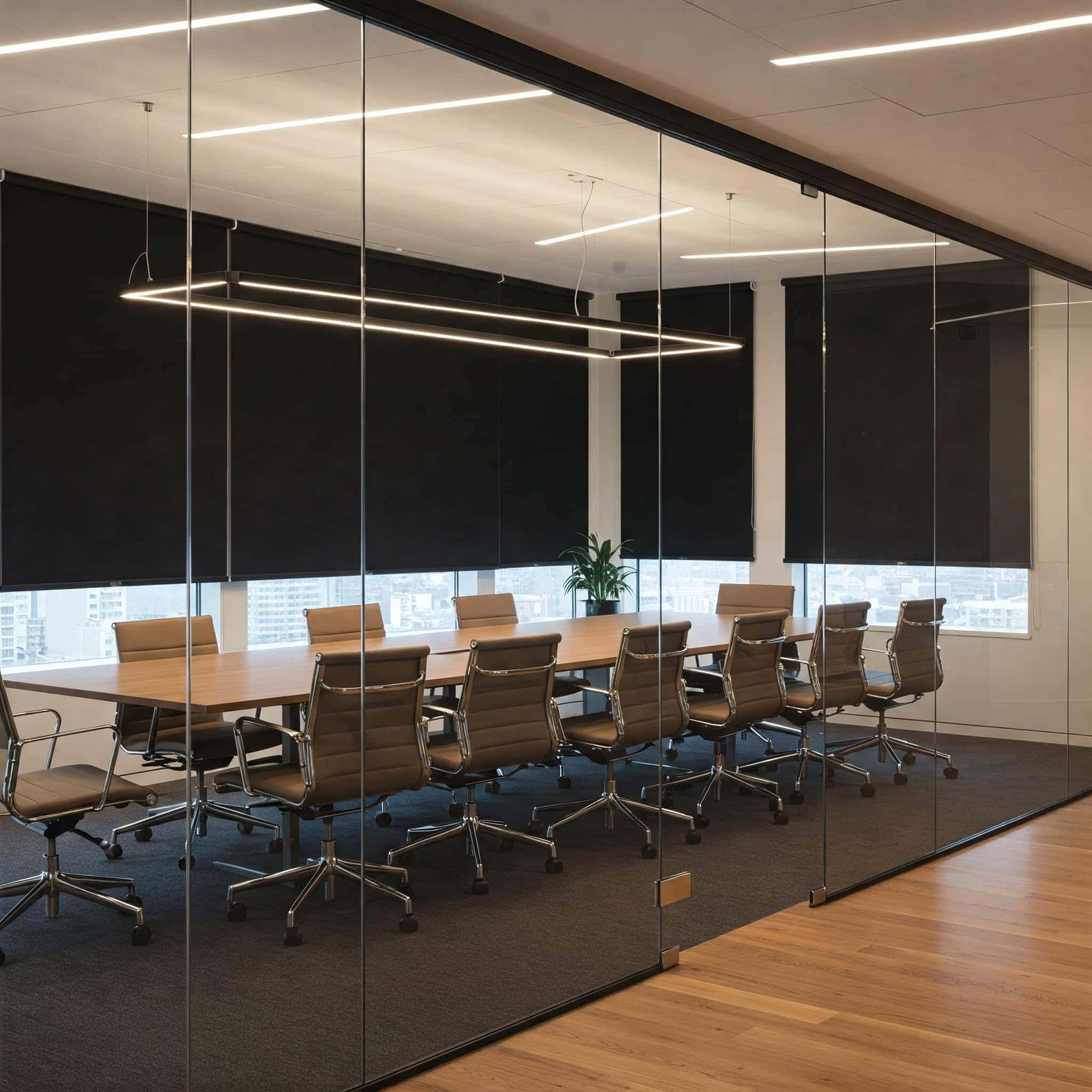
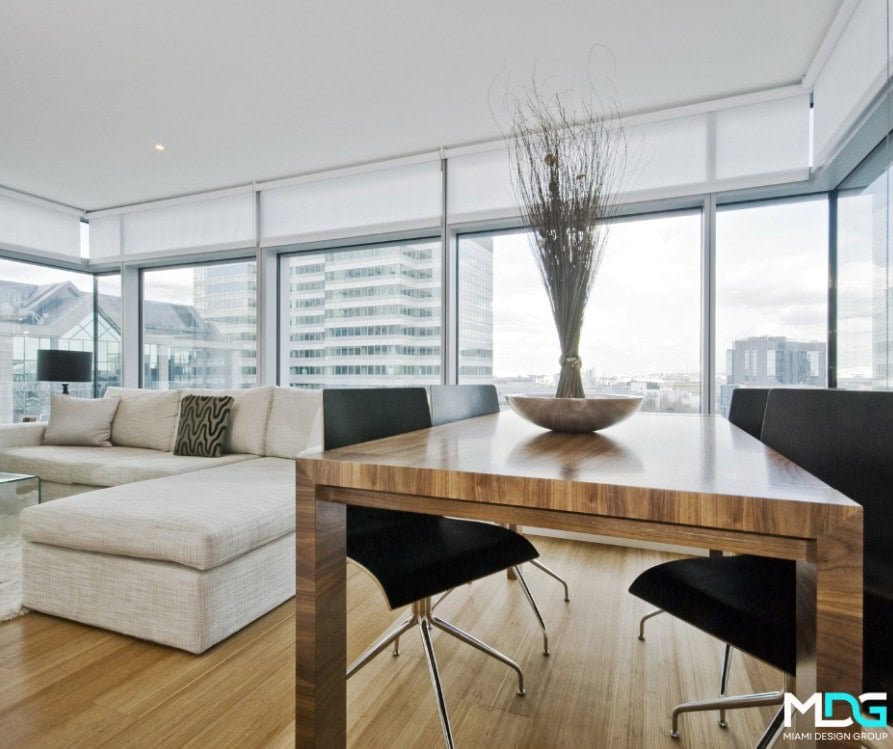
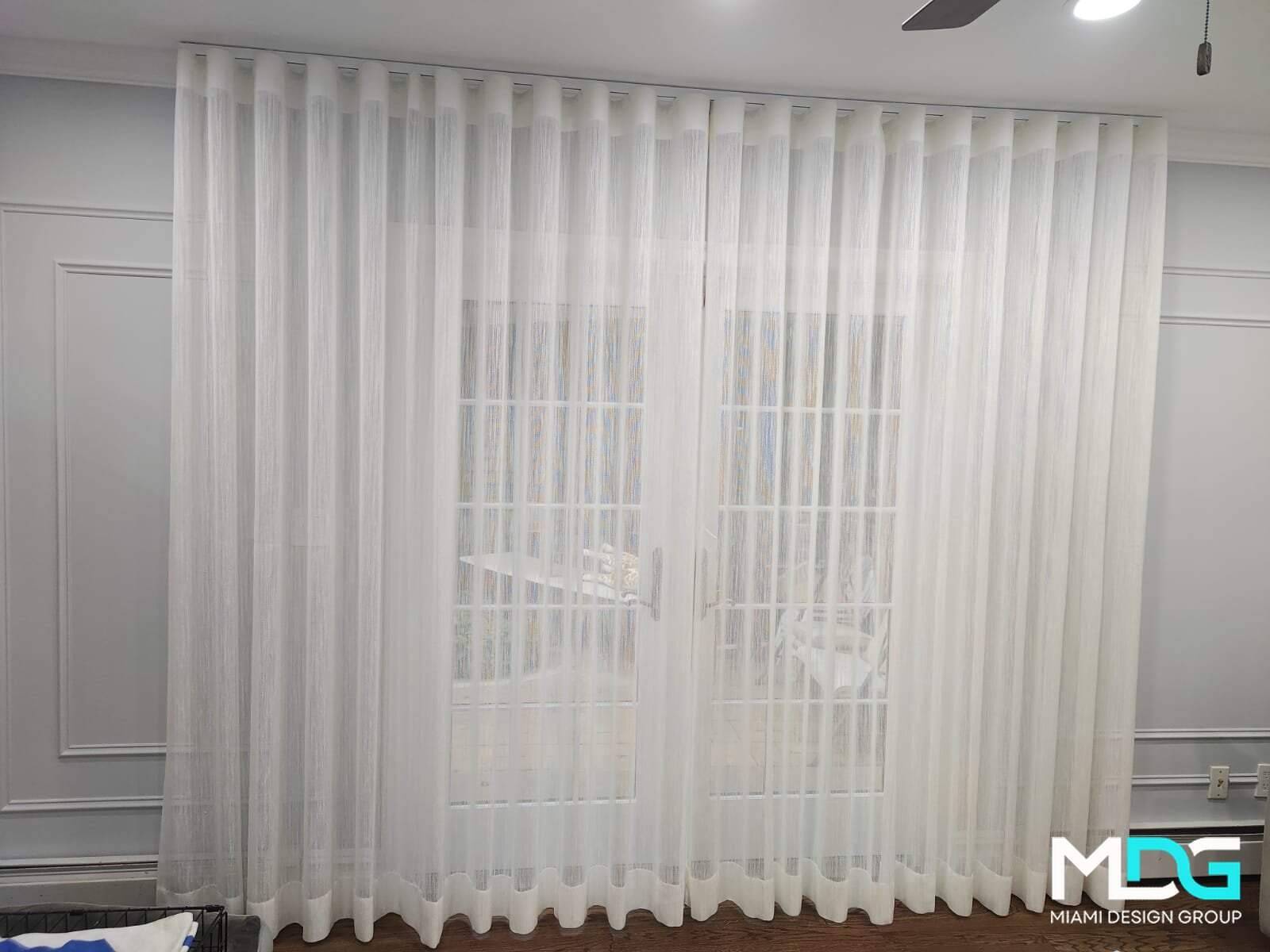
Layering also plays a role in effective light control. Many hotels combine blackout roller shades with sheer curtains or solar screens, giving guests flexibility to control light throughout the day while maintaining privacy. During daytime, the sheer layer filters harsh Miami sunlight without creating a cave-like atmosphere. At night, the blackout layer provides complete darkness. This dual-shade approach has become increasingly popular in upscale hotels because it offers versatility.
The durability of blackout materials matters too. Cheaper blackout fabrics can crack, peel, or lose their light-blocking properties after repeated exposure to Miami’s intense UV rays and humidity. Commercial-grade blackout materials are engineered to maintain their performance and appearance over years of use, which means you’re not replacing them after one season.
Where to buy hotel curtains in Miami matters because local suppliers understand these climate-specific challenges. A supplier based in a northern state might not realize how quickly inferior materials deteriorate in South Florida’s environment.
Hotel window treatment projects come with specific requirements that residential suppliers can’t meet. You need fire-rated materials, bulk order capacity, commercial-grade durability, and suppliers who understand hospitality timelines and operational needs. Cutting corners with residential-grade products or inexperienced suppliers creates problems that cost more to fix than doing it right the first time.
Miami Design Group brings 15 years of commercial experience to South Florida’s hospitality market. We handle everything from initial consultation and measurement through fabrication and installation, with expertise in motorized systems, blackout solutions, and bulk orders for hotel properties. Our understanding of Miami’s climate, local building codes, and hospitality industry standards makes us a reliable partner for hotel window treatment installation projects.
If you’re planning a hotel renovation or new build in Miami, working with a commercial supplier who specializes in hospitality solutions saves time, reduces risk, and delivers results that last. Reach out to us to discuss your project requirements and get a consultation on what your property actually needs.