Motorized skylights solve Florida's biggest skylight problems: brutal heat gain, hard-to-reach windows, and skyrocketing AC bills—all controlled from your phone.
Share:
Summary:
Your skylight looked amazing in the glossy real estate brochure. Natural light, a view of the puffy Florida clouds, a real “connected to nature” vibe. Then you actually moved in, and the reality of a 95-degree July afternoon in Miami hit your living room like a physical weight. Suddenly, that “beautiful feature” is a giant heat-funnel turning your home into a terrarium. Your navy blue sofa is fading to a sad denim, and your AC is working harder than a tourist trying to find parking in South Beach. To make matters worse, that skylight is twelve feet up, meaning you’d need the agility of a Cirque du Soleil performer just to adjust a manual shade. Motorized skylights solve this exact “ladder-and-sweat” dilemma. They give you total control over light, heat, and privacy via your smartphone or a simple voice command—no climbing required. Let’s break down why this might be the smartest “pinch-proof” upgrade you can give your home.
A motorized skylight is essentially a window in your ceiling that has traded its manual crank for a brain. It can either be a fully automated window that opens to let out rising heat or, more commonly in Florida, a high-performance shade fitted with a motor. Given our state’s habit of raining every afternoon at 3:00 PM, most homeowners prefer the motorized shade option to keep the water out while blocking the sun. The system is powered by a quiet electric motor that can be hardwired into your home’s electrical system, run on rechargeable batteries, or even powered by its own dedicated solar panel. You control the action through a remote, a wall switch, or an app on your phone. It’s like having a personal butler whose only job is to make sure you don’t get a sunburn while watching TV in your own living room. Beyond just “open” and “closed,” advanced systems can be integrated with sensors. These sensors can detect when the Florida sun is at its most aggressive and automatically deploy the shades to protect your flooring. It’s a set-it-and-forget-it solution for one of the most difficult-to-manage parts of your home’s architecture.

A motorized skylight window actually moves the glass to let in the breeze, which sounds romantic until you remember that Florida breezes are basically warm, humid soup. A motorized skylight shade, on the other hand, sits inside the frame and acts as a heat shield. In Miami-Dade and Broward, the “Shade” is usually the MVP because it targets our biggest enemy: solar heat gain. You’ve got options when it comes to the fabric, too. Cellular or “honeycomb” shades are the energy-efficiency kings in South Florida; they trap a layer of air to keep the heat out and the AC-cooled air in. If you’re a light sleeper with a skylight in the bedroom, blackout shades are a non-negotiable unless you want the 6:00 AM sun to be your unwanted alarm clock. The real “pro move” here is automation. You can program your shades to close during the peak “sweat hours”—usually noon to 4:00 PM—which takes the load off your AC unit without you having to lift a finger. In a state where the sun is trying to cook your carpet 365 days a year, this kind of tech is less of a luxury and more of a survival tactic.
If you’ve already got a house full of smart gadgets, your skylights should really be part of the conversation. These motorized systems play nice with Amazon Alexa, Google Home, and Apple HomeKit, turning your ceiling into another voice-activated servant. You can build “scenes” so that when you say, “Alexa, it’s movie time,” the lights dim and the skylight shades slide shut simultaneously. The remote access is a total lifesaver for the “I forgot” moments. We’ve all been at work when a classic Florida heatwave hits, worrying that the living room is currently reaching triple digits. With a smartphone app, you can close those shades from your office in Brickell or while you’re grabbing a cubano in Little Havana. Security and efficiency go hand-in-hand with these smart routines. By scheduling your shades to move while you’re on vacation, you give the impression that the house is occupied. More importantly, by letting the sensors close the shades when the temperature spikes, you’re managing your energy consumption like a high-tech facility manager, which is a very satisfying feeling when the FPL bill arrives.
Want live answers?
Connect with a Miami Design Group expert for fast, friendly support.
Let’s be honest: no one needs an automated ceiling window the way we need oxygen or croquetas, but your home’s efficiency definitely does. In the 305, an uncovered skylight is basically a hole in your insulation that lets the “Fire Ball in the Sky” have its way with your interior. Florida’s climate is uniquely punishing; the combination of high UV and relentless humidity can turn a standard skylight into a liability. Motorized shades give you the defensive measures needed to stop your home from becoming an accidental greenhouse. No matter if you “need” one usually depends on how much you enjoy climbing ladders in the humidity (we’re guessing not much). If you have high-end furniture or expensive artwork, the “need” becomes even more urgent. South Florida’s UV rays are essentially a slow-motion bleach for your belongings. A motorized shade acts as SPF 50 for your decor, ensuring your favorite rug doesn’t end up looking like a faded relic within two years.
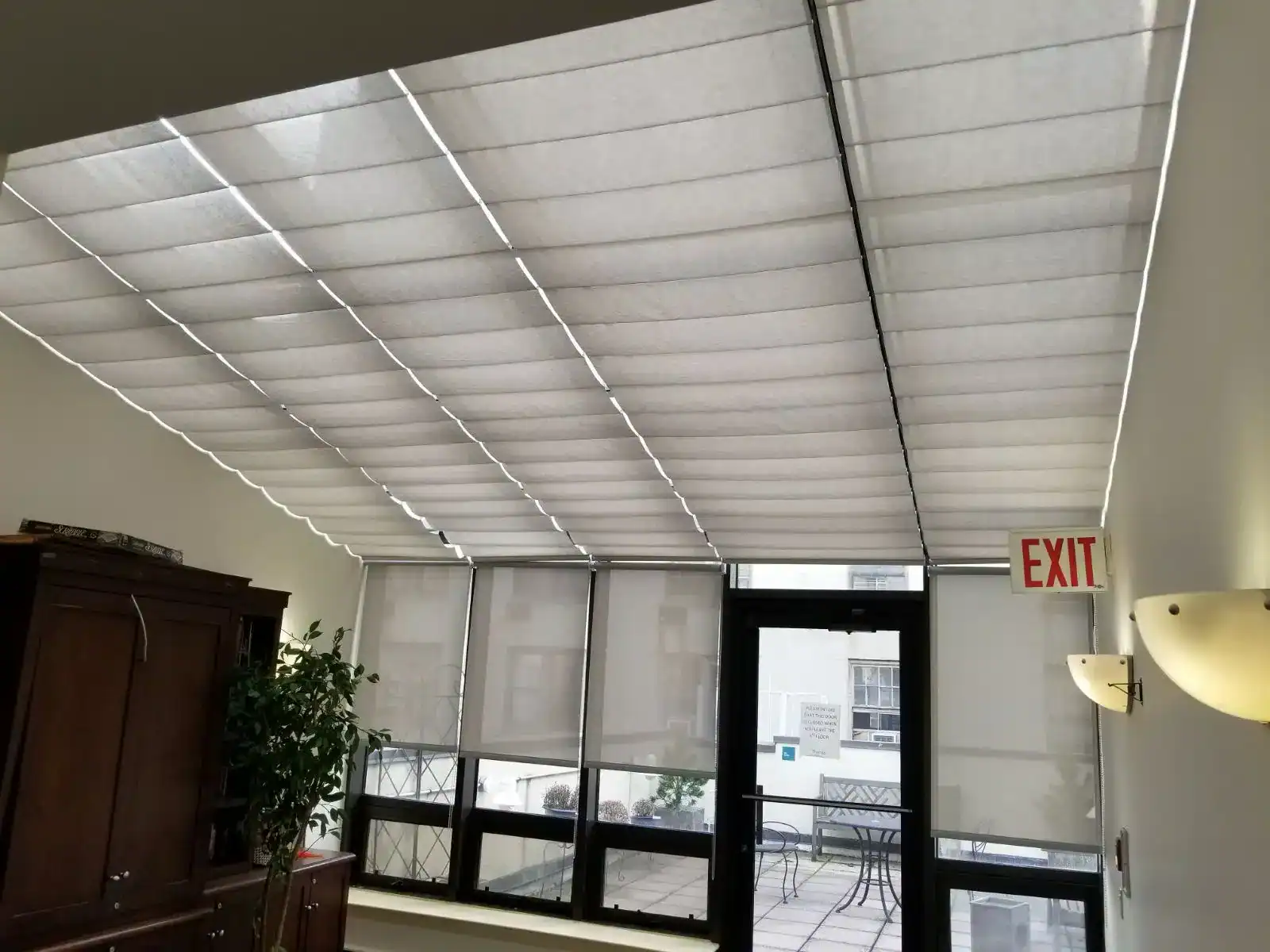
The most obvious reason to go motorized is “The Great Height Factor.” If your skylights are in a vaulted ceiling, you probably haven’t touched them since the day you moved in. Unless you have a ten-foot pole or a death wish involving a ladder, those shades are staying exactly where they are. Motorization turns a “dangerous chore” into a “one-tap miracle.” They are also a financial “no-brainer” if your AC unit is currently struggling to keep up. Skylights on south-facing roofs in Broward County can absorb an incredible amount of heat. By automating a cellular shade to close during the hottest part of the day, you’re essentially giving your AC a lunch break. Many homeowners find that the reduction in their monthly power bill helps the system pay for itself faster than they expected. Finally, consider the “Resale Flex.” When it’s time to put your house on the market, showing potential buyers a voice-controlled skylight is a major “wow” moment. It signals that the home is modern, well-maintained, and eco-friendly. In a competitive market like Miami-Dade, these are the kinds of high-tech details that make your property stand out from the “basic” competition.
We won’t sugarcoat it: motorized shades cost more than the ones you have to pull with a string. You’re paying for the motor, the tech, and the peace of mind. However, when you calculate the cost of replacing a sun-faded $4,000 sofa or the cumulative cost of an overworked AC unit, the “expensive” tag starts to look a lot more like a “smart investment” tag. There’s also a “secret” discount: the Federal Tax Credit. If you choose solar-powered motorized shades, you might be eligible for a 30% federal tax credit on both the product and the installation. This is a massive “pot of gold” that makes the jump from manual to motorized a lot easier on your wallet. Plus, solar models don’t require an electrician, which keeps the installation process from turning into a major renovation. Professional installation is the key to making sure your investment doesn’t end up leaking during a tropical depression. South Florida’s building codes are strict for a reason—the wind and rain here don’t play around. A pro will make sure the flashing is tight and the motor is calibrated perfectly, so you aren’t calling for repairs after the first heavy downpour. It’s worth the extra couple of bucks to know your roof is still, well, a roof.
In the end, motorized skylights have graduated from “fancy toy” to “essential equipment” for the modern Florida home. They solve the biggest local problems—inaccessible windows, brutal UV damage, and cooling costs that make you want to cry. They turn a static feature into a dynamic part of your home’s energy-management system. If you’re tired of playing a game of “beat the heat” every afternoon, or if you’ve forgotten what color your carpet used to be before the sun bleached it, it’s time to go motorized. You get to keep the natural light you love while losing the “unwanted sauna” experience. It’s a win for your comfort, your wallet, and your sanity. At Gemini Home Designs, we know the unique quirks of Miami-Dade and Broward architecture. We specialize in making your home smarter and cooler without the “corporate” runaround.
Article details:
Share:
Continue learning: