Hear from Our Customers
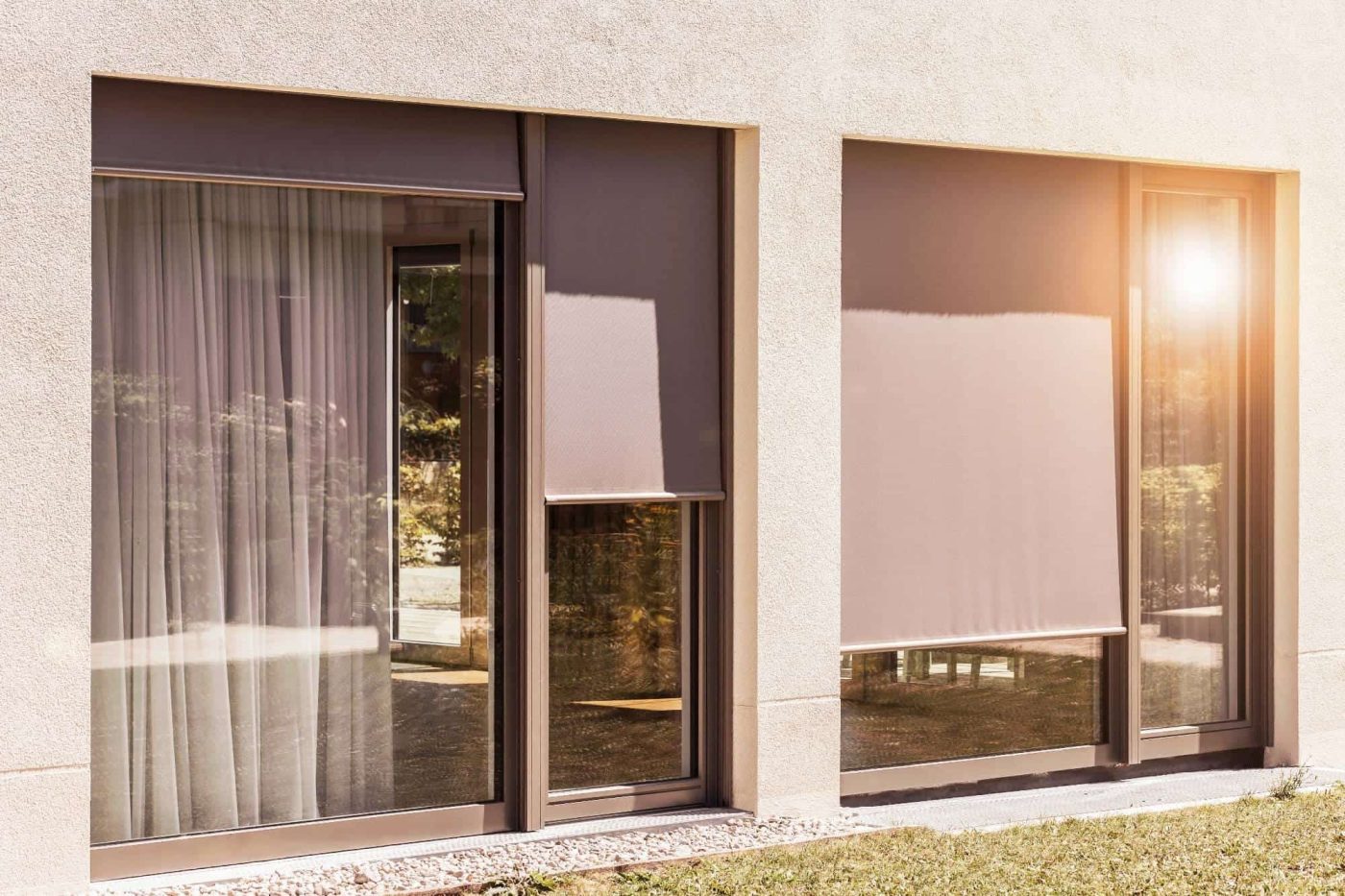
Your AC runs constantly from May through October. That’s just life in Fountainebleau. But when your window treatments can’t block the solar heat pouring through south-facing windows, you’re paying to cool air that’s being heated in real-time.
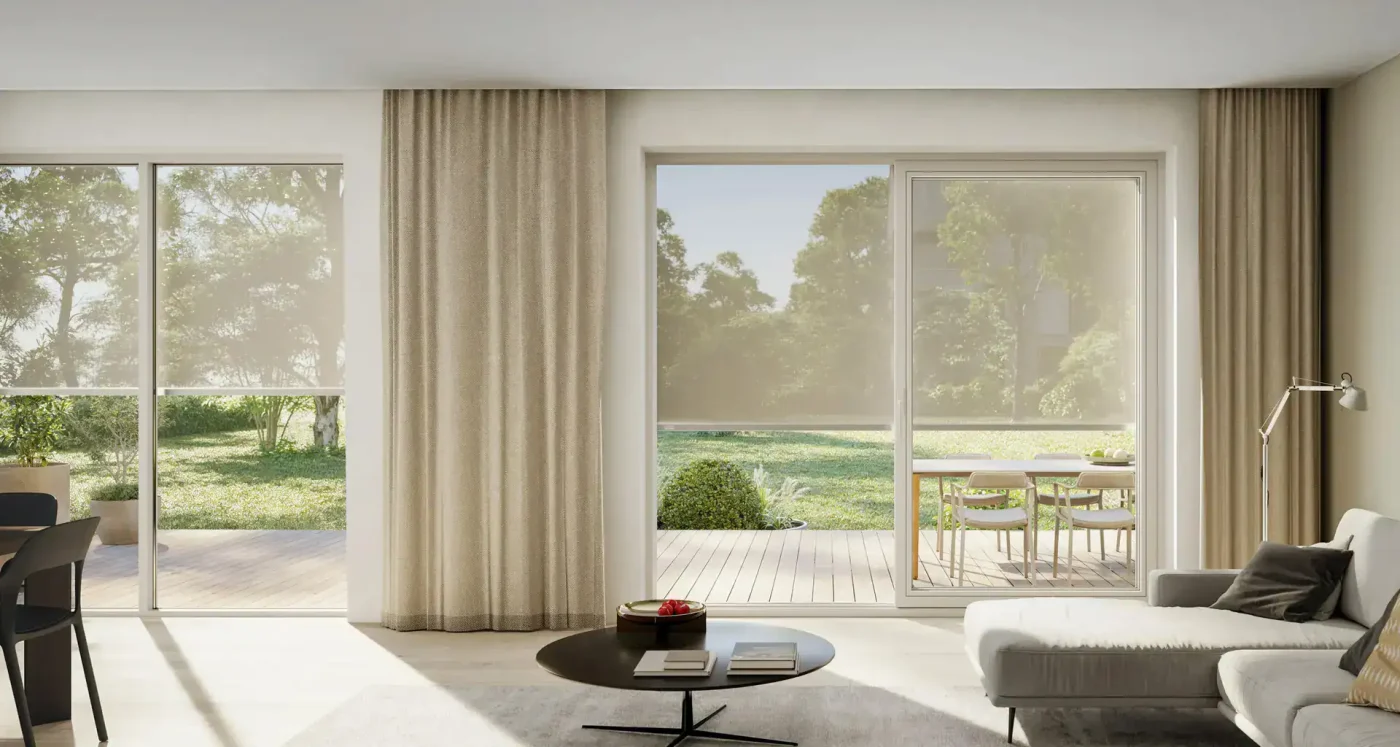
Lutron window shades handle this differently. They’re designed to reduce heat gain before it becomes a cooling problem. The cellular and roller shade options create an insulating barrier that keeps hot air from radiating into your rooms. You set schedules that automatically lower shades during peak sun hours, and your HVAC system doesn’t have to work as hard.
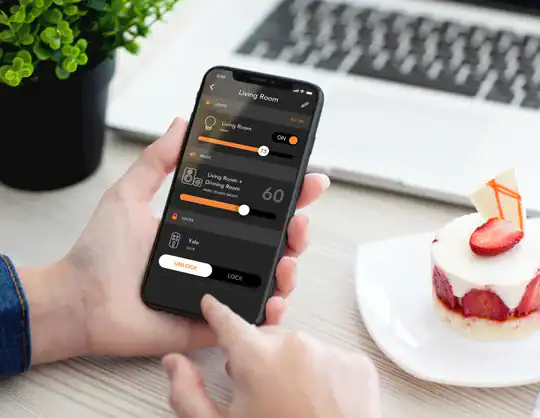
The motorized operation means you’ll actually use them. No cords to pull. No uneven alignment. Just consistent light control that adjusts throughout the day based on how you live. And when you integrate them with your existing smart home setup—whether that’s Control4, Lutron’s own system, or just your phone—you can manage every shade in your home from wherever you are.
This isn’t about convenience for convenience’s sake. It’s about making your Fountainebleau home more comfortable while your energy bills stay reasonable.
We operate as an authorized Lutron dealer serving Fountainebleau and the surrounding Miami-Dade area. We’re not new to window treatments—our team brings experience from markets in NYC and Toronto, and we’ve been helping Florida homeowners solve the specific challenges that come with this climate.
Fountainebleau sits about 15 miles west of downtown Miami, close to FIU’s south campus, with a mix of condos, townhomes, and single-family properties. The homes here deal with intense UV exposure, humidity that affects traditional window coverings, and the need for both privacy and natural light. We design Lutron smart shades systems that address all three without requiring you to compromise.
You’re not getting a one-size-fits-all quote. We measure your windows, assess your sun exposure, talk through how you use each room, and recommend fabrics and automation levels that make sense for your specific setup and budget.
We start with an in-home consultation where we measure your windows and talk through what’s not working with your current setup. Are certain rooms unbearably hot in the afternoon? Is glare making your TV unwatchable? Do you want blackout capability in bedrooms but filtered light in living areas? We need to know this before recommending specific Lutron shade styles and fabrics.
Once you approve the design and quote, we order your custom shades. These aren’t off-the-shelf products—each shade is built to your exact window dimensions with the fabric, opacity level, and motor type you selected. Lead times vary, but we keep you updated throughout production.
Installation happens in your home. Our team mounts the shades, installs the motors (hardwired or battery-powered depending on your setup), and programs everything to work with your preferred control method. That might be wall-mounted keypads, handheld remotes, or integration with your existing smart home system.
Before we leave, we walk you through operation. You’ll know how to create scenes like “Morning Open” or “Storm Close,” adjust individual shades, and troubleshoot basic issues. And if something needs adjustment after we’re gone, you call us directly.
Ready to get started?
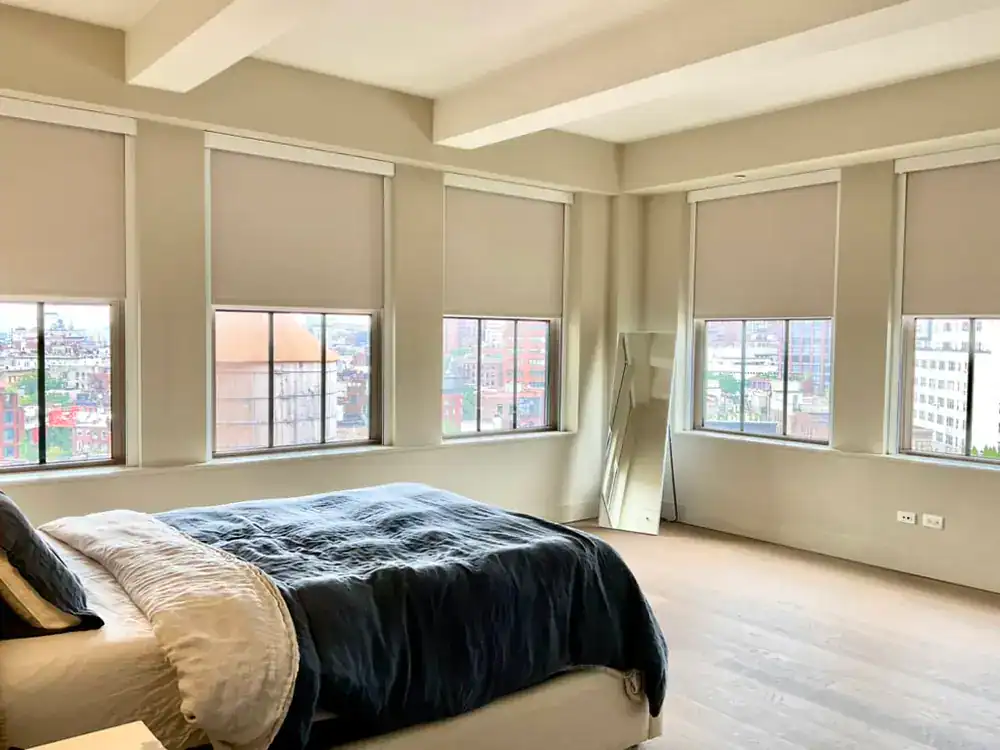
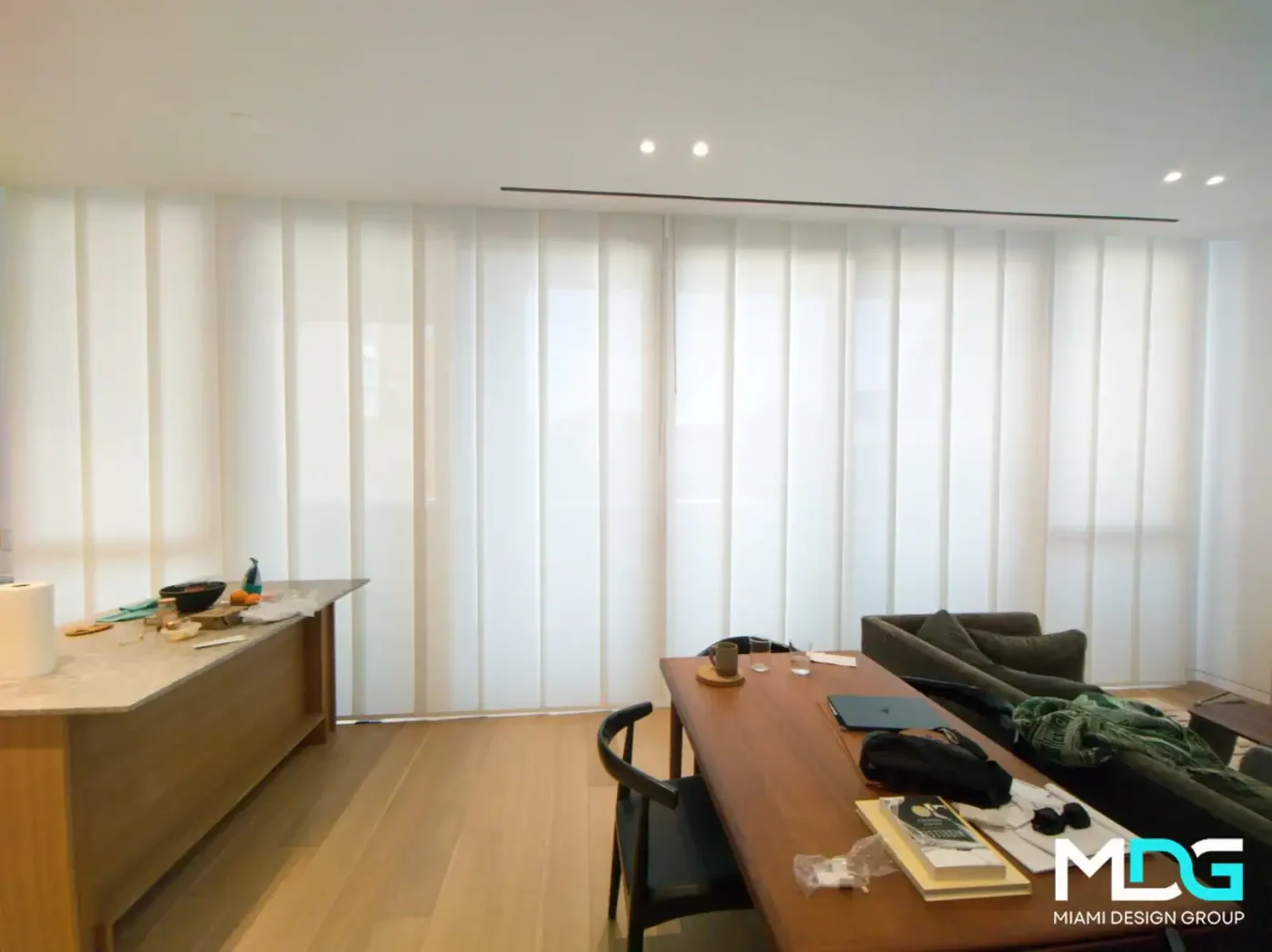
Lutron offers several shade styles, and the right one depends on your windows and priorities. Roller shades are the most popular—they’re clean-lined, available in hundreds of fabrics, and work in almost any room. Cellular shades provide better insulation, which matters when you’re trying to keep Miami heat out. For larger windows or sliding doors, Palladiom shades handle wide spans without sagging.
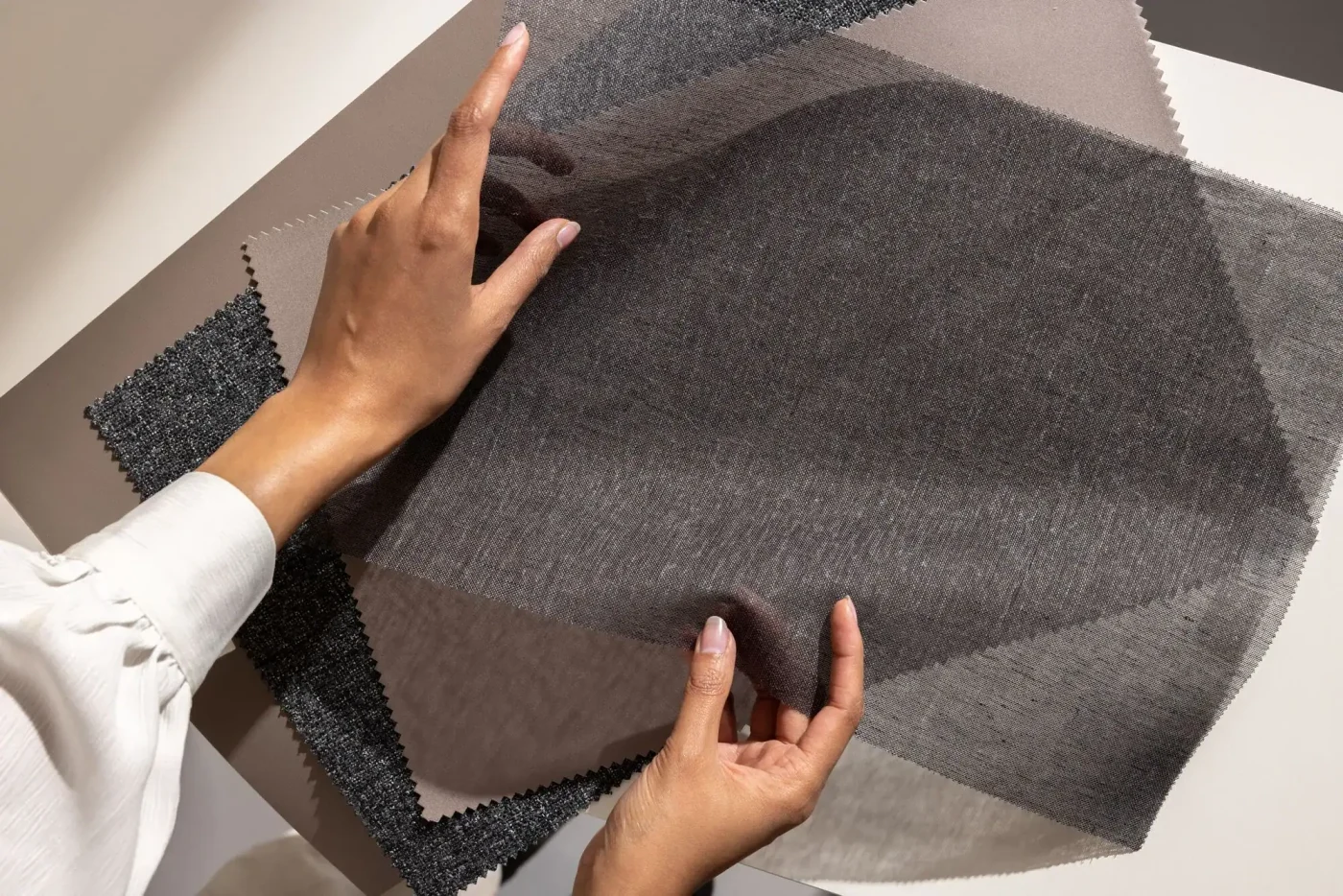
Fabric selection determines how much light and heat you block. Sheer fabrics filter UV while maintaining your view. Room-darkening fabrics block most light but allow some glow around edges. Blackout fabrics eliminate light entirely, which is what you want in bedrooms or media rooms.
The motors are whisper-quiet and designed for Florida’s humidity. You won’t hear them cycling, and they include soft-start and soft-stop functions that prevent jerky movement. Battery-powered motors work well for retrofits where running new wiring isn’t practical. Hardwired motors make sense in new construction or major renovations.
Control options range from simple (wireless remotes) to sophisticated (full integration with Lutron’s HomeWorks or RadioRA 3 systems). Most Fountainebleau homeowners land somewhere in the middle—they want app control and voice commands through Alexa or Google, but they don’t need enterprise-level automation. We match the control system to how you’ll actually use it.
Yes, but the savings depend on your window exposure and shade fabric. South and west-facing windows generate the most solar heat gain in Fountainebleau homes. When you install Lutron window shades with solar-blocking fabrics on these windows, you’re preventing heat from entering before your AC has to remove it.
Cellular shades create the best insulation because of their honeycomb structure—they trap air and create a thermal barrier. Roller shades with solar screen fabrics block UV and heat while maintaining outward visibility. Most homeowners see the biggest impact when they automate shades to close during peak sun hours (roughly 11 AM to 4 PM in summer).
The energy savings won’t cover your entire investment in year one, but over time the reduced HVAC load adds up. More importantly, your rooms stay more comfortable. You’re not dealing with hot spots near windows or glare that makes spaces unusable during the day.
Motorized shades eliminate the cord hazards that make traditional blinds dangerous. There are no pull cords, no looped chains, and no dangling strings that pose strangulation risks. The shades operate via motors controlled by wall switches, remotes, or apps—everything stays out of reach.
Lutron motors also include obstacle detection. If a shade encounters resistance while lowering (like a child’s hand or a pet), it automatically stops and reverses slightly. The soft-start and soft-stop functions prevent the sudden movements that could startle pets or cause injury.
For families with toddlers, you can mount the wireless Pico controls high on walls where small hands can’t reach them, while still controlling shades via your phone when needed. Battery-powered motor options mean no exposed wiring, and the bottom rails are weighted but not heavy enough to cause injury if a child pulls on them. This is a significant safety upgrade over corded window treatments.
Lutron designs their motors and components for climate extremes, including the humidity levels common in South Florida. The motors are sealed units that don’t allow moisture penetration, and the internal components are rated for continuous operation in high-heat environments.
The fabrics matter more than the motors when it comes to humidity resistance. We typically recommend synthetic materials over natural fibers for Fountainebleau installations. Polyester and PVC-based fabrics resist moisture, won’t develop mildew, and maintain their shape in humid conditions. Natural materials like linen or cotton can absorb moisture and may require more maintenance.
For homes near the coast or in particularly humid microclimates, we sometimes suggest adding a dehumidifier to the room or ensuring your HVAC system maintains reasonable indoor humidity levels (ideally 40-50%). But the shades themselves are built to handle what Miami throws at them. We’ve installed hundreds of systems in this area, and motor failure due to humidity is rare when the system is properly specified and installed.
Most likely, yes. Lutron shades integrate with the major smart home platforms—Control4, Crestron, Savant, and others. If you’re using a simpler setup with Amazon Alexa, Google Assistant, or Apple HomeKit, Lutron’s systems connect to those as well.
The integration level depends on which Lutron system you choose. RadioRA 3 is their mid-range platform that handles whole-home shade control and works with voice assistants and the Lutron app. HomeWorks is their high-end system for larger homes or more complex automation needs. Serena shades are their entry-level option that connects directly to smart home hubs without requiring a separate Lutron processor.
During your consultation, we’ll ask what you’re currently using for home automation. If you already have a Control4 system, we’ll design the Lutron integration to work within that ecosystem. If you’re just getting started with smart home tech, we’ll recommend the simplest path that gives you the control you want without unnecessary complexity. The goal is making your shades work with your life, not forcing you to learn a new system.
The motors, the alignment system, and the long-term reliability. Cheaper motorized shades use louder motors that wear out faster, especially in Florida’s climate. You’ll hear them operating from other rooms, and they often fail within a few years. Lutron motors are engineered for quiet operation and longevity—they’re designed to cycle thousands of times without degradation.
Lutron’s alignment technology keeps multiple shades moving in perfect sync. When you have several shades on the same wall, they start, move, and stop together with minimal light gaps. Budget systems don’t maintain this precision—you’ll see uneven alignment and wider gaps that let light and heat through.
The control systems are also more sophisticated. Lutron’s wireless technology is reliable and doesn’t require line-of-sight like some IR-based systems. The programming options let you create complex scenes and schedules that actually work consistently. And when something does need service, you’re working with an authorized dealer who can get parts and support directly from Lutron.
You’re paying more upfront, but you’re getting a system that works correctly for 10-15 years instead of replacing failed motors every few years. For most Fountainebleau homeowners, that math makes sense.
Installation timing depends on how many windows you’re covering and whether we’re hardwiring motors or using battery-powered units. For a typical Fountainebleau home with 8-12 windows, expect installation to take one full day, sometimes stretching into a second day if we’re integrating with an existing automation system.
The actual mounting and motor installation moves quickly—we’re usually spending more time on programming and setup than physical installation. Each shade needs to be calibrated so it knows its upper and lower limits. If you’re setting up scenes or schedules, that requires additional programming time. And if we’re integrating with Control4, Lutron HomeWorks, or another system, we need to ensure all the devices communicate correctly.
We schedule installations after your custom shades arrive from Lutron, which typically takes 3-4 weeks from order placement. We’ll confirm the installation date about a week in advance and give you an arrival window. Most installations happen without requiring you to take a full day off work, but someone does need to be home to let us in and available for the walkthrough at the end.