Modern pergolas are revolutionizing outdoor living in Boca Raton. Learn how louvered roofs, exterior shades, and smart home integration create year-round comfort despite South Florida's challenging climate.
Share:
Summary:
Traditional pergolas provide partial shade through fixed slats or open beams. They look nice but don’t actually solve South Florida’s outdoor living problems. You’re still dealing with intense sun, sudden rain, and limited usability.
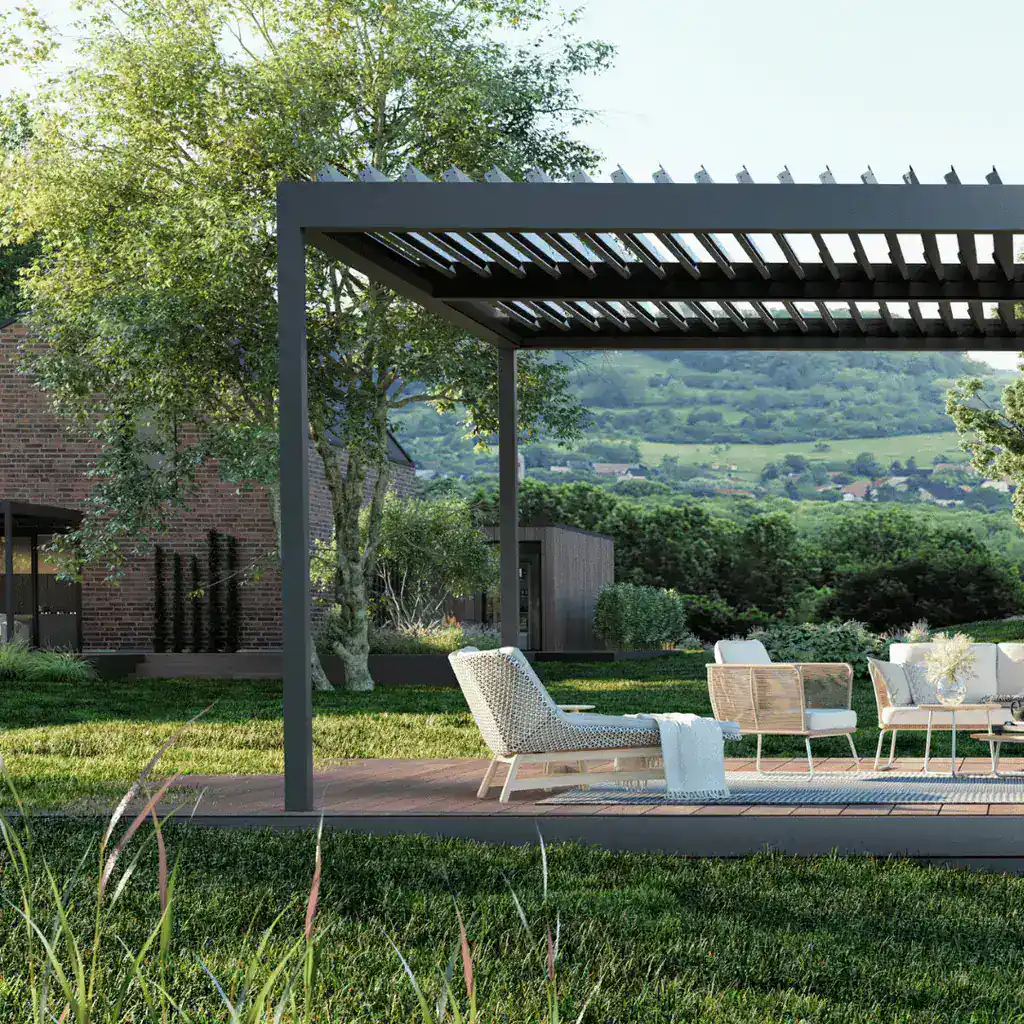
Modern louvered pergolas flip that equation. Motorized aluminum louvers rotate from fully open to completely closed, giving you precise control over sunlight, airflow, and weather protection. Press a button and the roof adjusts. Rain starts falling during dinner? The system closes automatically. Want morning sun but afternoon shade? The louvers tilt to exactly where you need them.
The difference shows up in daily use. You’re not guessing whether to set up outside or wondering if the weather will cooperate. The space adapts to conditions instead of forcing you to adapt to the space. That’s the shift from decorative structure to functional outdoor room.

Boca Raton’s weather patterns create specific challenges. Intense morning sun. Even more intense afternoon sun. Humidity that makes everything feel ten degrees hotter. Thunderstorms that roll in without warning. And the ever-present concern about hurricane season.
Motorized louvered pergolas address each of these. The aluminum louvers rotate to block direct sunlight while maintaining airflow underneath—crucial for managing humidity. When positioned correctly, they create a microclimate that’s noticeably cooler than the surrounding area without feeling closed in. You get shade without sacrificing the open-air feeling that makes outdoor living appealing in the first place.
Rain protection works differently than you might expect. When the louvers close completely, they create an interlocking seal that channels water into integrated gutters. The system isn’t just water-resistant—it’s designed to handle South Florida’s heavy downpours. Many homeowners report eating dinner outside while rain pours around them, protected by a roof that was open and sunny thirty minutes earlier.
The automation piece matters more than it sounds. Rain sensors detect moisture and close the louvers before you even know it’s starting. Wind sensors monitor conditions and adjust positioning to prevent damage. Sun sensors can program the system to follow optimal shade angles throughout the day. You can override everything manually, but most people find the automated responses handle 90% of situations without any input.
Hurricane preparation requires a different approach. These systems are engineered to withstand significant wind loads—many are rated for 130+ mph winds with louvers open, even higher when closed. During hurricane warnings, you open the louvers to allow wind to pass through rather than creating resistance. The structure is anchored deep with engineered footings sized for your specific soil conditions and local wind load requirements. It’s not hurricane-proof—nothing is—but it’s engineered specifically for South Florida’s storm reality rather than hoping decorative structures somehow survive.
Boca Raton’s weather patterns create specific challenges. Intense morning sun. Even more intense afternoon sun. Humidity that makes everything feel ten degrees hotter. Thunderstorms that roll in without warning. And the ever-present concern about hurricane season.
Motorized louvered pergolas address each of these. The aluminum louvers rotate to block direct sunlight while maintaining airflow underneath—crucial for managing humidity. When positioned correctly, they create a microclimate that’s noticeably cooler than the surrounding area without feeling closed in. You get shade without sacrificing the open-air feeling that makes outdoor living appealing in the first place.
Rain protection works differently than you might expect. When the louvers close completely, they create an interlocking seal that channels water into integrated gutters. The system isn’t just water-resistant—it’s designed to handle South Florida’s heavy downpours. Many homeowners report eating dinner outside while rain pours around them, protected by a roof that was open and sunny thirty minutes earlier.
The automation piece matters more than it sounds. Rain sensors detect moisture and close the louvers before you even know it’s starting. Wind sensors monitor conditions and adjust positioning to prevent damage. Sun sensors can program the system to follow optimal shade angles throughout the day. You can override everything manually, but most people find the automated responses handle 90% of situations without any input.
Hurricane preparation requires a different approach. These systems are engineered to withstand significant wind loads—many are rated for 130+ mph winds with louvers open, even higher when closed. During hurricane warnings, you open the louvers to allow wind to pass through rather than creating resistance. The structure is anchored deep with engineered footings sized for your specific soil conditions and local wind load requirements. It’s not hurricane-proof—nothing is—but it’s engineered specifically for South Florida’s storm reality rather than hoping decorative structures somehow survive.
Want live answers?
Connect with a Miami Design Group expert for fast, friendly support.
A pergola handles overhead coverage, but South Florida’s low-angle sun creates different challenges. Morning and late afternoon sun streams horizontally under any roof structure. Western exposure bakes through windows and glass doors. That’s where exterior shades and retractable awnings complete the climate control equation.
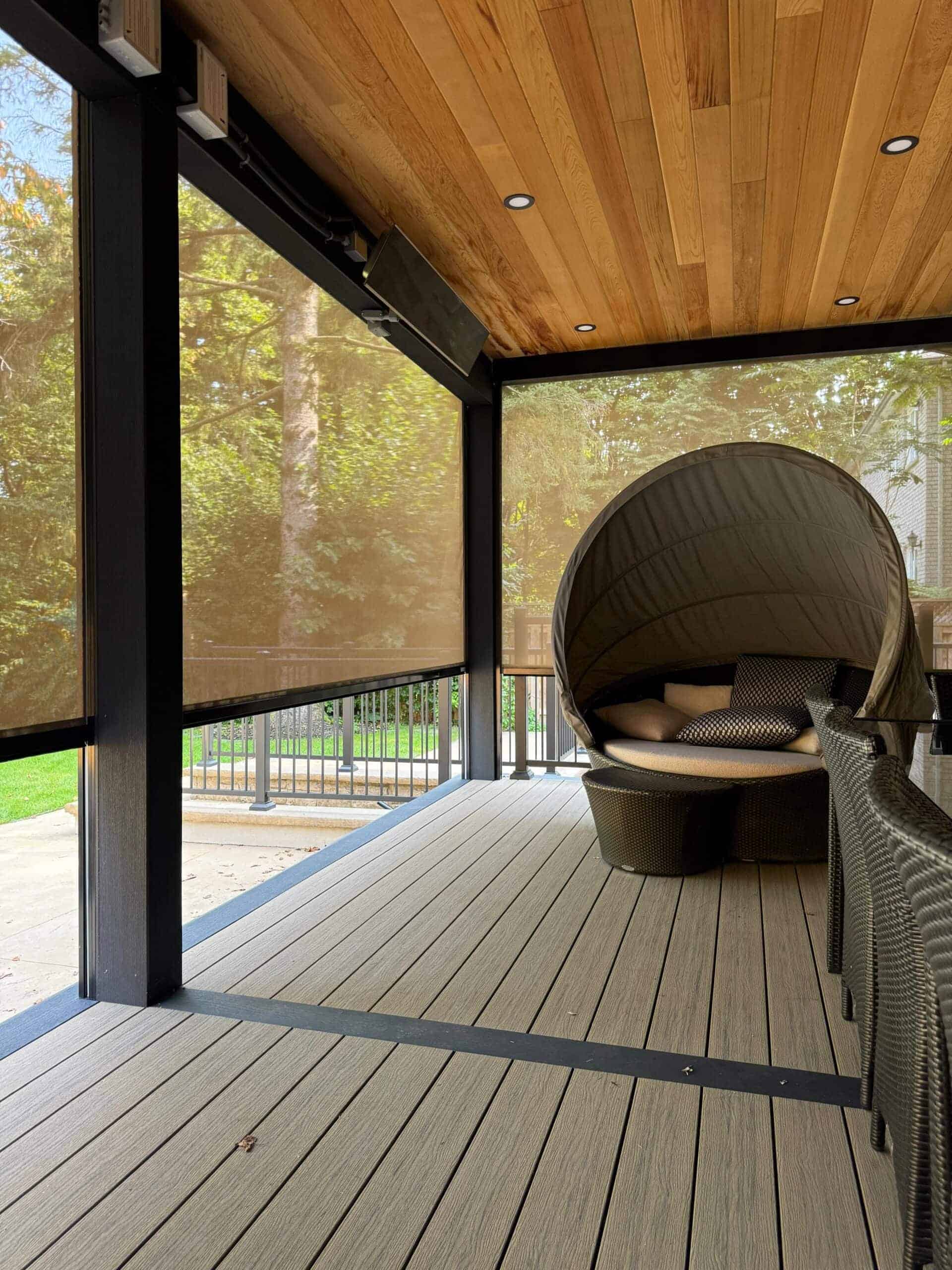
Exterior shades mount on the outside of windows, blocking heat before it enters your home. The difference between exterior and interior window treatments is significant—exterior shades stop solar energy at the glass, preventing heat buildup inside. Interior blinds only manage heat that’s already in your room. For south and west-facing windows in Boca Raton, exterior shading can reduce cooling costs by 20-30%, translating to substantial savings when summer electric bills regularly hit $300-400 monthly.
The fabric technology matters. Solar screen fabrics come in various “openness factors”—the percentage of open space in the weave. A 5% openness fabric blocks 95% of UV rays while maintaining some outward visibility. A 10% openness allows more light and better views but less heat blocking. The right choice depends on your specific orientation, view priorities, and heat gain issues. Most Boca Raton homes benefit from tighter weaves on western exposures and more open fabrics on northern or eastern windows.

Manual exterior shades work fine for occasional use, but motorization changes the usage pattern entirely. When shades require walking outside and hand-cranking, most homeowners only adjust them seasonally or during extreme conditions. Motorized shades get used daily because adjustment takes seconds from inside your home.
The practical difference shows up in energy efficiency. With motorized shades, you lower them during peak sun hours and raise them when the sun moves. That daily adjustment maximizes cooling savings and protects furniture from UV damage. Manual shades typically stay in one position because the effort of constant adjustment outweighs the benefit. You’re paying for the shades either way—motorization makes sure you use them the best way you can.
Integration with your pergola system creates coordinated climate control. When your pergola closes for rain, exterior shades can automatically retract to prevent wind damage. When afternoon sun hits, both systems adjust simultaneously. Some advanced setups use sun sensors to track solar position throughout the day, adjusting shades and pergola louvers to maintain consistent comfort without any manual input.
Wind sensors add important protection. South Florida’s sudden storms can damage extended shades. Automated wind sensors retract shades when gusts exceed safe limits—typically around 20-30 mph depending on the system. This automatic protection prevents damage that would require expensive repairs or replacement.
The investment difference between manual and motorized is significant but not prohibitive. Motorization typically adds 30-50% to shade costs. For most Boca Raton homeowners, the daily convenience and increased energy savings justify the upgrade. You’re more likely to use the shades properly, which means you actually get the benefits you paid for in the first place.
Retractable awnings fill a different role than pergolas. They extend from your home’s exterior wall, providing coverage for areas where a freestanding pergola doesn’t make sense—narrow patios, outdoor kitchens built against the house, or windows that need seasonal shade. The retractable feature means you can have coverage when needed and full sun exposure when desired.
Modern awnings bear little resemblance to the faded fabric structures you might remember. Current systems use solution-dyed acrylic fabrics that resist fading for 10+ years in Florida sun. The fabric is mildew resistant and handles humidity without deteriorating. Frame construction uses powder-coated aluminum that won’t rust in coastal conditions. Many systems include wind ratings up to 30 mph when extended, with automatic retraction for higher winds.
Motorization is nearly standard for quality awnings now. Manual crank operation works for small awnings, but anything over 12 feet wide becomes difficult to operate manually. Motorized systems extend and retract in under a minute, making them practical for daily use. Many homeowners extend awnings during morning coffee, retract for midday sun on cooler days, then extend again for afternoon and evening use.
The positioning flexibility matters for outdoor kitchens. You want coverage while cooking but might prefer open sky for evening entertaining. Retractable awnings provide that flexibility without permanent overhead structures that might interfere with sight lines or architectural features. They’re also easier to permit in some communities where freestanding pergolas face restrictions.
Fabric selection affects both aesthetics and function. Solid fabrics provide maximum UV blocking and rain protection. Striped patterns add visual interest and can complement your home’s color scheme. Translucent fabrics allow filtered light while still providing heat reduction. For Boca Raton’s intense sun, most homeowners choose solid or tightly woven fabrics for maximum heat blocking, saving lighter fabrics for areas with less direct exposure.
Integration with home automation works similarly to pergolas. Voice commands, scheduled operation, and sensor-based automation all apply. The main difference is wind sensitivity—awnings retract at lower wind speeds than louvered pergolas. This means your automation system might close awnings during storms while leaving pergola louvers partially open for airflow.
South Florida outdoor living shouldn’t require constant compromise. Modern pergolas with louvered roofs, exterior shades, and integrated awnings create spaces that work with the climate instead of fighting against it. You get weather-responsive protection, energy savings that offset installation costs, and smart home integration that makes everything effortless to control.
The systems aren’t cheap—quality installations represent significant investment. But they solve real problems that affect how you use your home every day. Reduced energy bills, protected outdoor furniture, and actually usable patio space during peak hours all contribute to the value equation. For Boca Raton homeowners who want outdoor spaces that function as well as they look, these integrated solutions deliver results that traditional structures simply can’t match.
We specialize in coordinating these elements—pergolas, exterior shades, awnings, and home automation—into cohesive outdoor living systems designed specifically for South Florida conditions. Our comprehensive approach guarantees everything works together rather than cobbling together separate solutions from multiple contractors.
Article details:
Share:
Continue learning: