Discover how custom pergolas and motorized screens transform Boca Raton outdoor spaces into year-round living areas with smart automation and hurricane protection.
Share:
Summary:
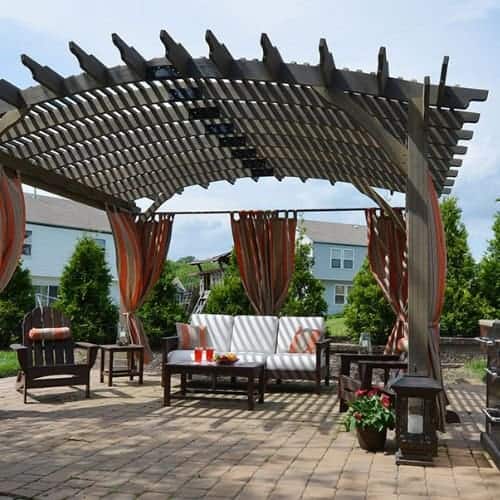
A pergola isn’t just decorative. When properly designed for South Florida conditions, it becomes the backbone of your outdoor living strategy—providing adjustable shade, rain protection, and the structural foundation for integrated screens and automation.
Modern louvered pergolas let you control exactly how much sun reaches your space. Open the louvers for morning coffee in dappled light. Close them completely when afternoon heat peaks or storms approach. The difference between a fixed structure and an adjustable system is the difference between occasionally using your patio and living there daily.
The real value shows up in engineering. Coastal Boca Raton properties face salt air corrosion, intense UV degradation, and hurricane threats that destroy poorly built structures. Aluminum construction resists rust indefinitely. Hurricane ratings matter—systems engineered to withstand 185 mph winds protect your investment and your home when storms hit.

Fixed pergolas look nice but can’t adapt. The shade pattern that works at 9 AM leaves you baking by noon. Rain means abandoning your outdoor furniture to the elements. You’re locked into whatever the builder decided when they installed it.
Motorized louvered roofs change that equation entirely. Adjust the angle with a remote, phone app, or voice command. Want full sun for your morning routine? Open the louvers. Need complete coverage during Florida’s notorious afternoon thunderstorms? Close them and stay dry. The louvers aren’t decorative—they’re functional climate control that responds to real-time conditions.
The engineering behind quality louvered systems matters more than most people realize. Cheap versions bind, leak, or fail when you need them most. Look for double-walled louver construction that channels water through integrated gutters and down the support posts. This keeps your space dry even during heavy rain, unlike basic slatted designs that drip everywhere.
Integration with home automation elevates convenience to another level. Connect your pergola to weather sensors and it closes automatically when rain starts. Link it to your smart home system and it coordinates with outdoor lighting, ceiling fans, and speakers for seamless entertaining. Schedule it to open at sunrise and close during peak heat hours without touching a button.
The cost difference between fixed and motorized pergolas is real but misleading. Yes, motorized systems cost more upfront. But you’re comparing a decorative structure you’ll use occasionally to a functional outdoor room you’ll use daily. Factor in the energy savings from blocking solar heat before it reaches your windows, plus the property value increase from truly usable outdoor square footage, and the math shifts considerably.
South Florida’s climate accelerates wear on any outdoor structure. Salt air corrodes metal. UV radiation breaks down protective coatings. Humidity promotes mold and mildew. Motorized systems built with marine-grade aluminum and powder-coated finishes handle these challenges without the constant repainting and repairs that wood or steel structures demand. You’re not just buying shade—you’re buying years of low-maintenance functionality.
Fixed pergolas look nice but can’t adapt. The shade pattern that works at 9 AM leaves you baking by noon. Rain means abandoning your outdoor furniture to the elements. You’re locked into whatever the builder decided when they installed it.
Motorized louvered roofs change that equation entirely. Adjust the angle with a remote, phone app, or voice command. Want full sun for your morning routine? Open the louvers. Need complete coverage during Florida’s notorious afternoon thunderstorms? Close them and stay dry. The louvers aren’t decorative—they’re functional climate control that responds to real-time conditions.
The engineering behind quality louvered systems matters more than most people realize. Cheap versions bind, leak, or fail when you need them most. Look for double-walled louver construction that channels water through integrated gutters and down the support posts. This keeps your space dry even during heavy rain, unlike basic slatted designs that drip everywhere.
Integration with home automation elevates convenience to another level. Connect your pergola to weather sensors and it closes automatically when rain starts. Link it to your smart home system and it coordinates with outdoor lighting, ceiling fans, and speakers for seamless entertaining. Schedule it to open at sunrise and close during peak heat hours without touching a button.
The cost difference between fixed and motorized pergolas is real but misleading. Yes, motorized systems cost more upfront. But you’re comparing a decorative structure you’ll use occasionally to a functional outdoor room you’ll use daily. Factor in the energy savings from blocking solar heat before it reaches your windows, plus the property value increase from truly usable outdoor square footage, and the math shifts considerably.
South Florida’s climate accelerates wear on any outdoor structure. Salt air corrodes metal. UV radiation breaks down protective coatings. Humidity promotes mold and mildew. Motorized systems built with marine-grade aluminum and powder-coated finishes handle these challenges without the constant repainting and repairs that wood or steel structures demand. You’re not just buying shade—you’re buying years of low-maintenance functionality.
Want live answers?
Connect with a Miami Design Group expert for fast, friendly support.
Pergolas provide overhead protection, but South Florida sun comes from all angles. Low-angle morning and evening sun streams under any roof. Wind-driven rain hits horizontally. Bugs don’t care about your beautiful louvers—they want in.
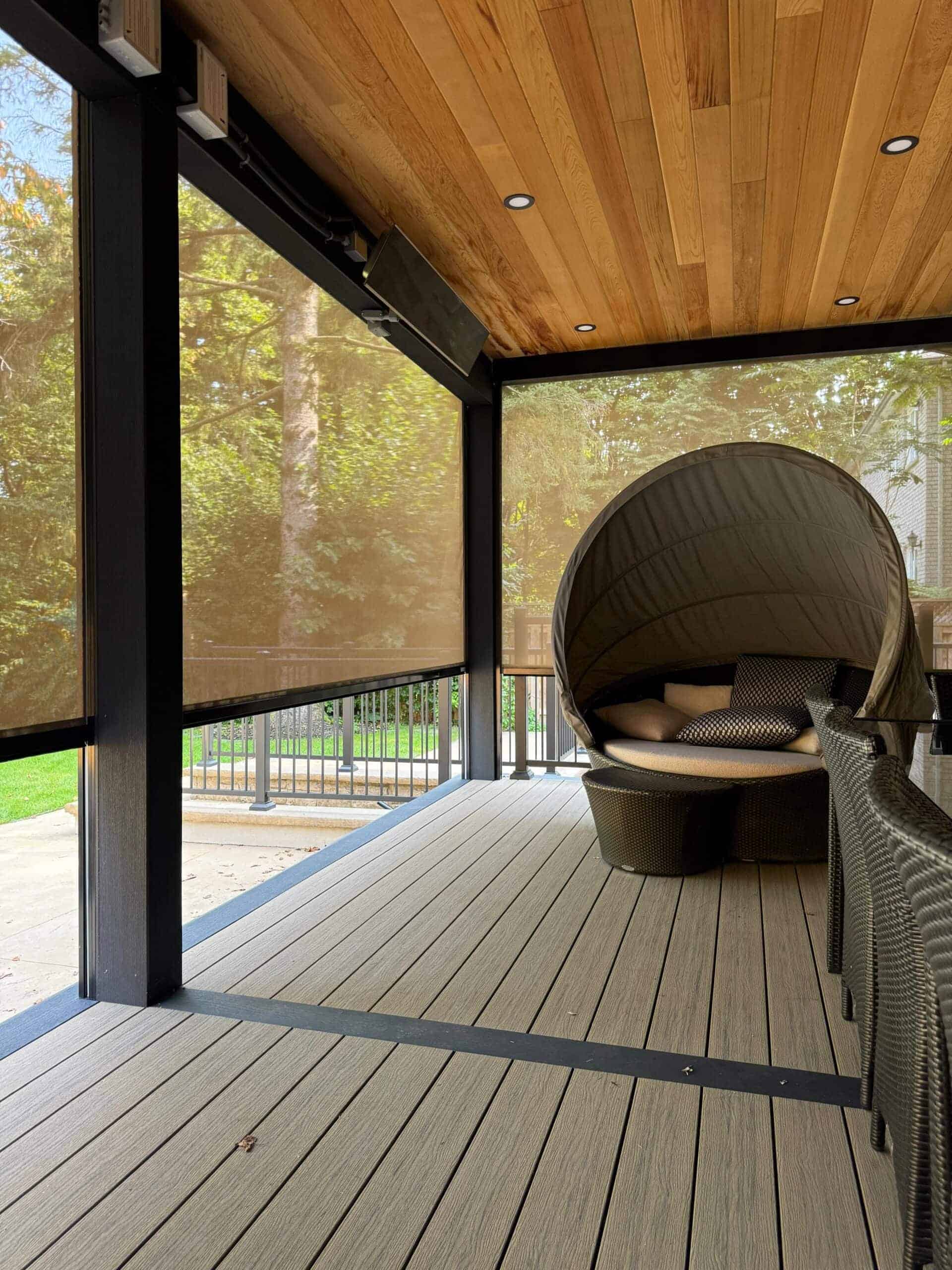
Motorized retractable screens complete the outdoor room concept. Install them on the open sides of your pergola and you’ve got adjustable walls that deploy when needed and disappear when you want open views. One button transforms your patio from breezy outdoor space to protected room.
The technology has evolved significantly beyond the old manual crank systems that jammed constantly. Modern motorized screens use track-guided systems that stay aligned even in wind. Magnetic tensioning keeps the fabric taut and self-correcting. Quality motors operate whisper-quiet and integrate with the same home automation controlling your pergola louvers and lighting.

Not all screen fabrics serve the same purpose. What you choose depends on whether you’re fighting sun, seeking privacy, or trying to keep bugs out. Most people need some combination, which is why understanding the options matters.
Solar screens focus on heat and UV reduction. The fabric is woven to block up to 95% of solar radiation while maintaining visibility. You can see through them to your yard or view, but the sun’s intensity gets dramatically reduced. This makes the biggest difference on west-facing patios that catch brutal afternoon sun. The temperature drop is immediately noticeable—your outdoor space becomes usable during hours it was previously unbearable.
The openness factor of solar screens requires understanding. A 5% openness fabric blocks more sun but reduces visibility. A 10% openness fabric maintains better views but allows more heat through. For most Boca Raton applications, 5% openness hits the sweet spot—enough visibility to enjoy your surroundings while blocking the heat that makes outdoor living miserable during summer months.
Privacy screens use tighter weaves or solid fabrics that block sight lines completely. They’re essential if your outdoor space faces neighbors, the street, or commercial properties. But they also block airflow more than solar screens, which can make your space feel stuffy in Florida’s humidity. The tradeoff is real—complete privacy comes at the cost of reduced ventilation.
Bug screens use the finest mesh to keep out even no-see-ums while maintaining maximum airflow. They’re nearly invisible when deployed and transform your pergola into a screened room without the permanent enclosure. For evening entertaining when mosquitoes emerge, bug screens make the difference between guests enjoying themselves and everyone retreating indoors.
The ideal solution for many Boca Raton properties combines multiple screen types on different sides of the pergola. Use solar screens on west and south exposures where sun is most intense. Install privacy screens facing neighboring properties. Add bug screens on sides where you want airflow but need insect protection. Modern motorized systems let you control each screen independently, deploying exactly what you need for current conditions.
Fabric durability in coastal environments separates quality screens from ones that fail within a year. Salt air and UV exposure destroy untreated fabrics quickly. Look for marine-grade materials specifically rated for outdoor coastal use. The fabric should resist fading, mildew, and degradation from constant sun exposure. Cheaper screens might cost less initially but require replacement so frequently that they’re more expensive long-term.
The 2026 smart home goes beyond controlling lights and thermostats. Outdoor shading automation is becoming standard in high-end Boca Raton properties because it delivers tangible comfort and energy savings without requiring constant manual adjustment.
Integration starts with choosing systems that speak the same language as your existing smart home platform. Whether you’re running Control4, Savant, or mainstream platforms like Google Home or Amazon Alexa, your pergola and screens should connect seamlessly. This isn’t about novelty—it’s about creating automated routines that actually improve daily living.
Weather-responsive automation makes the most practical difference. Connect your shading system to local weather data and it closes automatically when rain is detected. Link it to temperature sensors and it deploys solar screens when heat exceeds your threshold. Add wind sensors and it retracts screens before gusts damage them. These aren’t hypothetical features—they’re standard capabilities in quality automated systems that prevent damage and maintain comfort without you monitoring weather conditions constantly.
Scheduling transforms how you use outdoor spaces. Program your pergola louvers to open at sunrise, providing natural morning light. Schedule them to close during peak afternoon heat, blocking solar gain before it heats your home’s interior. Set screens to deploy at dusk when bugs emerge. Your outdoor space adapts to daily patterns automatically, making it usable throughout the day without manual intervention.
Voice control feels like luxury until you’re carrying food to your outdoor kitchen and need to adjust shade without putting anything down. “Close the patio screens” becomes as natural as turning on lights. The convenience factor is real, especially during entertaining when you’re managing multiple tasks simultaneously.
Scene programming lets you create preset configurations for different activities. “Movie night” closes louvers completely, deploys blackout screens, and dims outdoor lighting. “Morning coffee” opens louvers to 45 degrees and retracts screens for open views. “Entertaining” sets partial shade and deploys bug screens. One command configures your entire outdoor space for the current activity.
Energy management integration provides benefits most people don’t consider initially. When your shading system communicates with your thermostat, it can block solar heat before it reaches windows, reducing air conditioning load significantly. Studies show properly deployed exterior shading can cut cooling costs by 25-30% during summer months. That’s not marketing—it’s physics. Blocking heat outside is far more effective than trying to cool it once it’s penetrated your windows.
The smartphone control aspect matters more for monitoring than constant adjustment. Check whether your screens are deployed before a storm hits while you’re at work. Verify your pergola closed properly after you’ve left for vacation. Receive alerts if wind speeds exceed safe thresholds for deployed screens. This remote awareness prevents damage and gives peace of mind when you’re away from home.
South Florida’s climate shouldn’t force you indoors half the year. The outdoor square footage you’ve invested in can function as true living space with the right shading solutions—not decorative additions that look nice but don’t solve actual problems.
Custom pergolas with motorized screens address the specific challenges Boca Raton properties face. Intense sun, sudden storms, salt air corrosion, hurricane threats, and the desire for smart home integration all require engineered solutions rather than basic structures. The difference between a system that works and one that disappoints comes down to proper design, quality materials, and professional installation that accounts for coastal conditions.
Your outdoor space represents significant investment and potential enjoyment. Making it genuinely usable year-round requires expertise in both the products and the local environment. We bring comprehensive design capabilities, smart home integration knowledge, and understanding of South Florida’s unique demands to every project. If you’re ready to transform your outdoor areas into functional living spaces that perform as well as they look, reach out for a consultation that addresses your specific property and goals.
Article details:
Share:
Continue learning: