Bio-climatic pergolas are taking over Boca Raton's outdoor spaces. Find out why motorized louvered roofs outperform traditional pergolas in South Florida's demanding climate.
Share:
Summary:
The difference comes down to one word: adaptability. Traditional pergolas offer fixed shade through stationary beams or slats. They look nice. They define a space. But they can’t adjust when conditions change, which in South Florida happens multiple times a day.
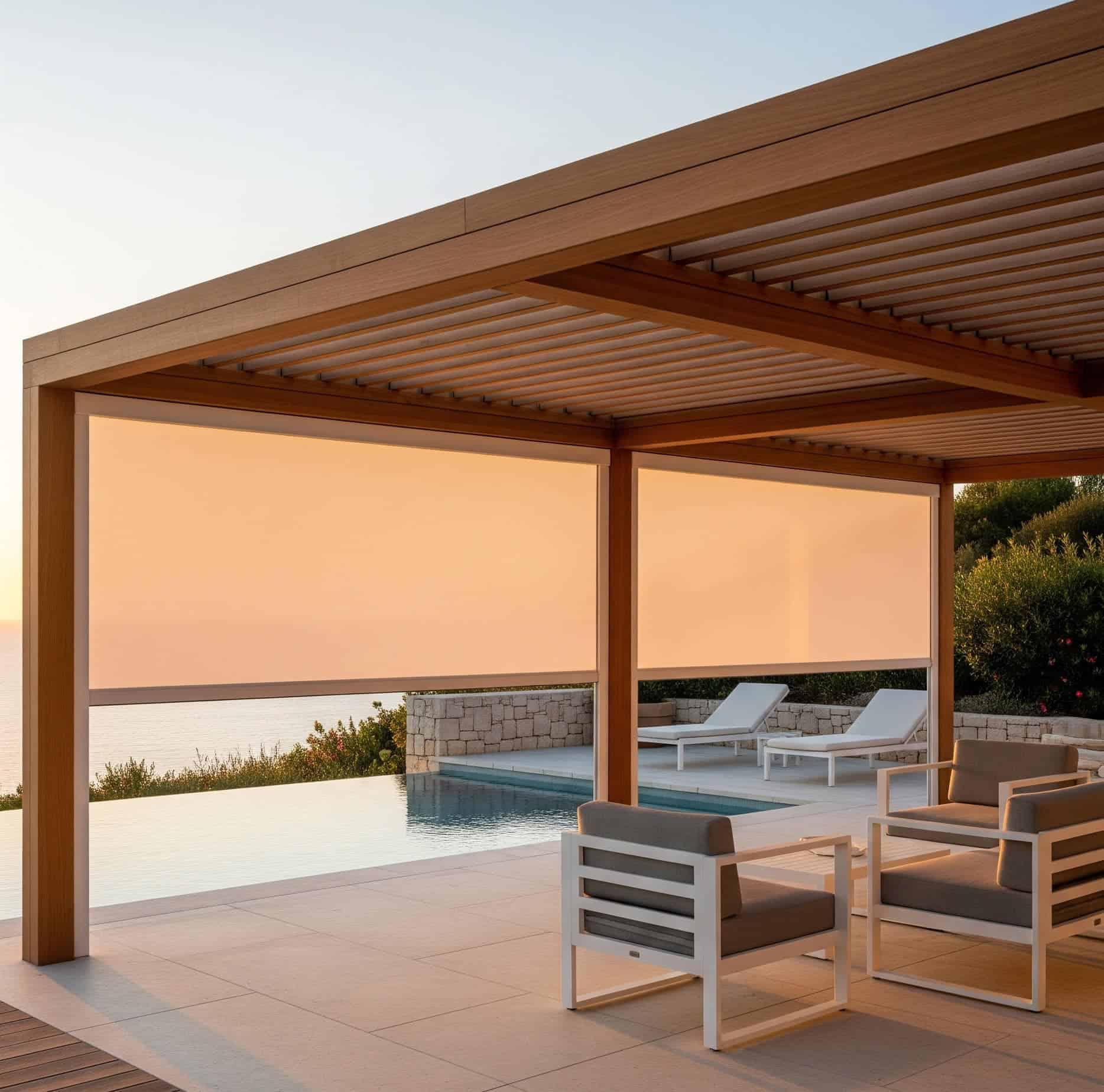
Bio-climatic pergolas feature adjustable aluminum louvers that rotate anywhere from 0 to 170 degrees. Open them completely for full sun. Tilt them partially for filtered light and airflow. Close them fully to create a waterproof barrier when rain hits. The system responds to what you need in the moment, not what the designer decided six months ago.
Most modern systems include motorization, so you’re adjusting from your phone or a remote, not manually cranking louvers. Some integrate weather sensors that automatically close when rain is detected or open during high winds to prevent updraft damage. This isn’t just convenience. In a climate where afternoon storms appear out of nowhere, it’s practical design.

South Florida weather doesn’t play fair. You’ve got intense UV exposure that damages furniture and skin. Humidity that breeds mold on anything left outside. Sudden thunderstorms that dump inches of rain in 20 minutes. And hurricane season, which requires structures that can handle serious wind loads.
Bio-climatic pergolas are built specifically for these conditions. The aluminum construction resists rust and corrosion from salt air and humidity. Powder-coated finishes hold up under constant sun exposure without fading or chalking. When louvers close, they form a gapless seal with integrated gutter systems that channel water away, keeping the space underneath completely dry.
The engineering matters here. Quality systems are Miami-Dade NOA approved, meaning they’ve been tested to withstand winds exceeding 120 mph. The louvers themselves are designed with dual-wall construction to prevent backsplash during heavy rain. Concealed hardware means no exposed screws or joints where water can penetrate and cause problems down the line.
But it’s the ventilation aspect that really sets these apart in Florida’s climate. Even with louvers partially closed for shade, air circulates freely. This prevents the greenhouse effect you get with solid roof structures, where trapped heat makes the space unusable. You get shade without stuffiness and protection without feeling enclosed. That balance is hard to achieve with traditional pergola designs, especially in a climate where airflow isn’t optional; it’s essential.
Smart sensors add another layer of weather management. Wind sensors detect gusts and automatically open louvers to reduce wind resistance, protecting the structure during storms. Rain sensors trigger closure the moment precipitation starts, so your furniture stays dry even if you’re not home. Sun sensors can adjust throughout the day to maintain consistent shade as the sun moves. This automation means the system is constantly optimizing for comfort and protection without requiring your attention.
South Florida weather doesn’t play fair. You’ve got intense UV exposure that damages furniture and skin. Humidity that breeds mold on anything left outside. Sudden thunderstorms that dump inches of rain in 20 minutes. And hurricane season, which requires structures that can handle serious wind loads.
Bio-climatic pergolas are built specifically for these conditions. The aluminum construction resists rust and corrosion from salt air and humidity. Powder-coated finishes hold up under constant sun exposure without fading or chalking. When louvers close, they form a gapless seal with integrated gutter systems that channel water away, keeping the space underneath completely dry.
The engineering matters here. Quality systems are Miami-Dade NOA approved, meaning they’ve been tested to withstand winds exceeding 120 mph. The louvers themselves are designed with dual-wall construction to prevent backsplash during heavy rain. Concealed hardware means no exposed screws or joints where water can penetrate and cause problems down the line.
But it’s the ventilation aspect that really sets these apart in Florida’s climate. Even with louvers partially closed for shade, air circulates freely. This prevents the greenhouse effect you get with solid roof structures, where trapped heat makes the space unusable. You get shade without stuffiness and protection without feeling enclosed. That balance is hard to achieve with traditional pergola designs, especially in a climate where airflow isn’t optional; it’s essential.
Smart sensors add another layer of weather management. Wind sensors detect gusts and automatically open louvers to reduce wind resistance, protecting the structure during storms. Rain sensors trigger closure the moment precipitation starts, so your furniture stays dry even if you’re not home. Sun sensors can adjust throughout the day to maintain consistent shade as the sun moves. This automation means the system is constantly optimizing for comfort and protection without requiring your attention.
Want live answers?
Connect with a Miami Design Group expert for fast, friendly support.
Marketing materials love listing features. Motorized! Smart sensors! Integrated lighting! But what matters when you’re trying to enjoy your backyard in 95-degree heat with 80 percent humidity and storm clouds building to the west?
Control is the first real benefit. You decide how much sun, shade, or protection you want at any given moment. Morning coffee with full sun? Open the louvers. Afternoon reading session when the sun is brutal? Close them for shade while maintaining airflow. Dinner party interrupted by rain? The system closes in seconds, and everyone stays dry. That flexibility transforms how you use the space because conditions are no longer dictating your plans.
Year-round usability is the second. Traditional pergolas are fair-weather structures. They’re pleasant in March and November but largely useless during South Florida’s intense summer or rainy season. Bio-climatic systems work in any weather. Rain, sun, heat, or wind, the space remains functional. That means you’re getting value from your outdoor investment 365 days a year, not just during the narrow windows when Florida weather cooperates.
Here’s something most people don’t consider until after installation: a bio-climatic pergola attached to your home doesn’t just improve outdoor comfort. It impacts indoor energy costs.
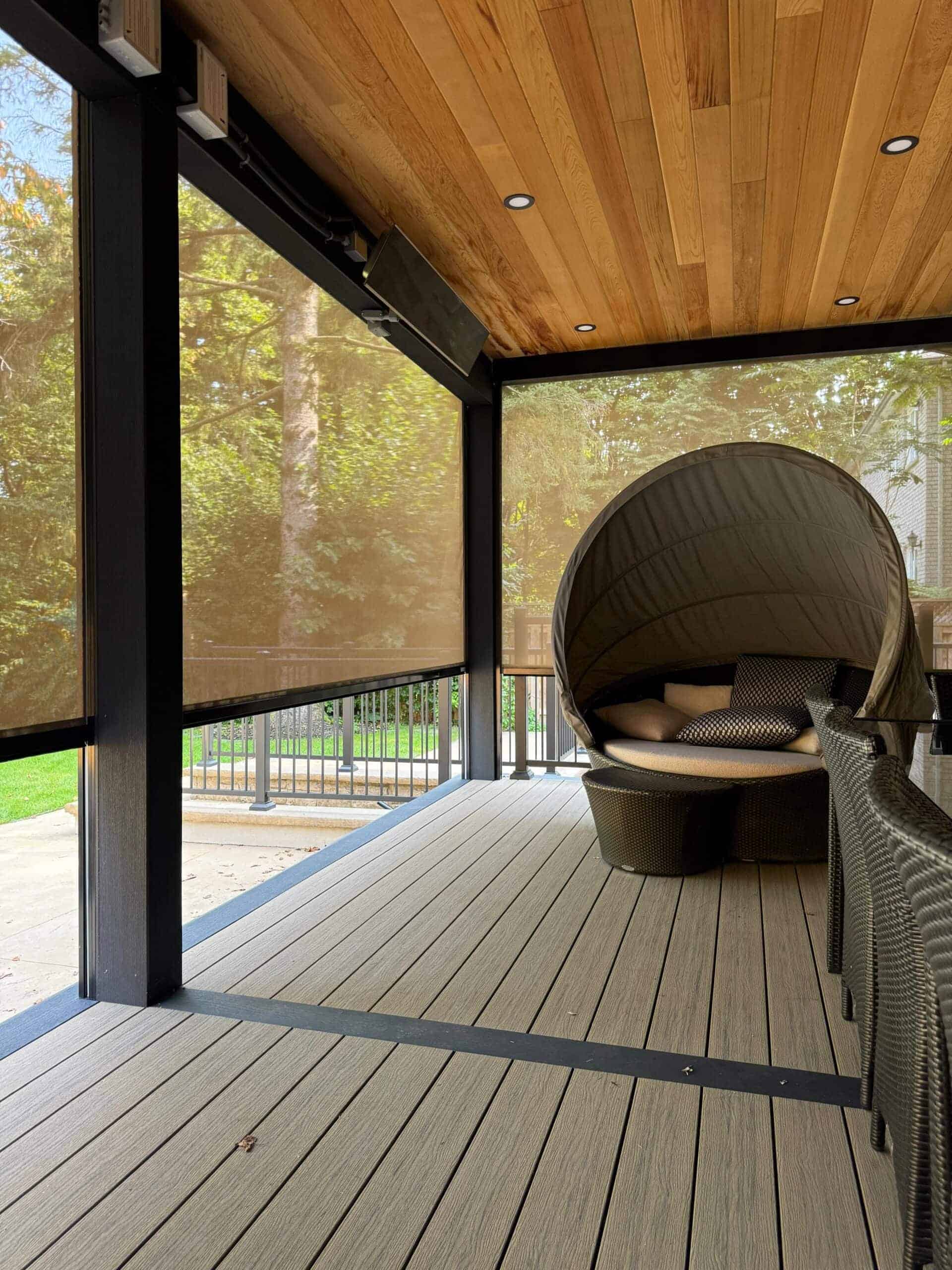
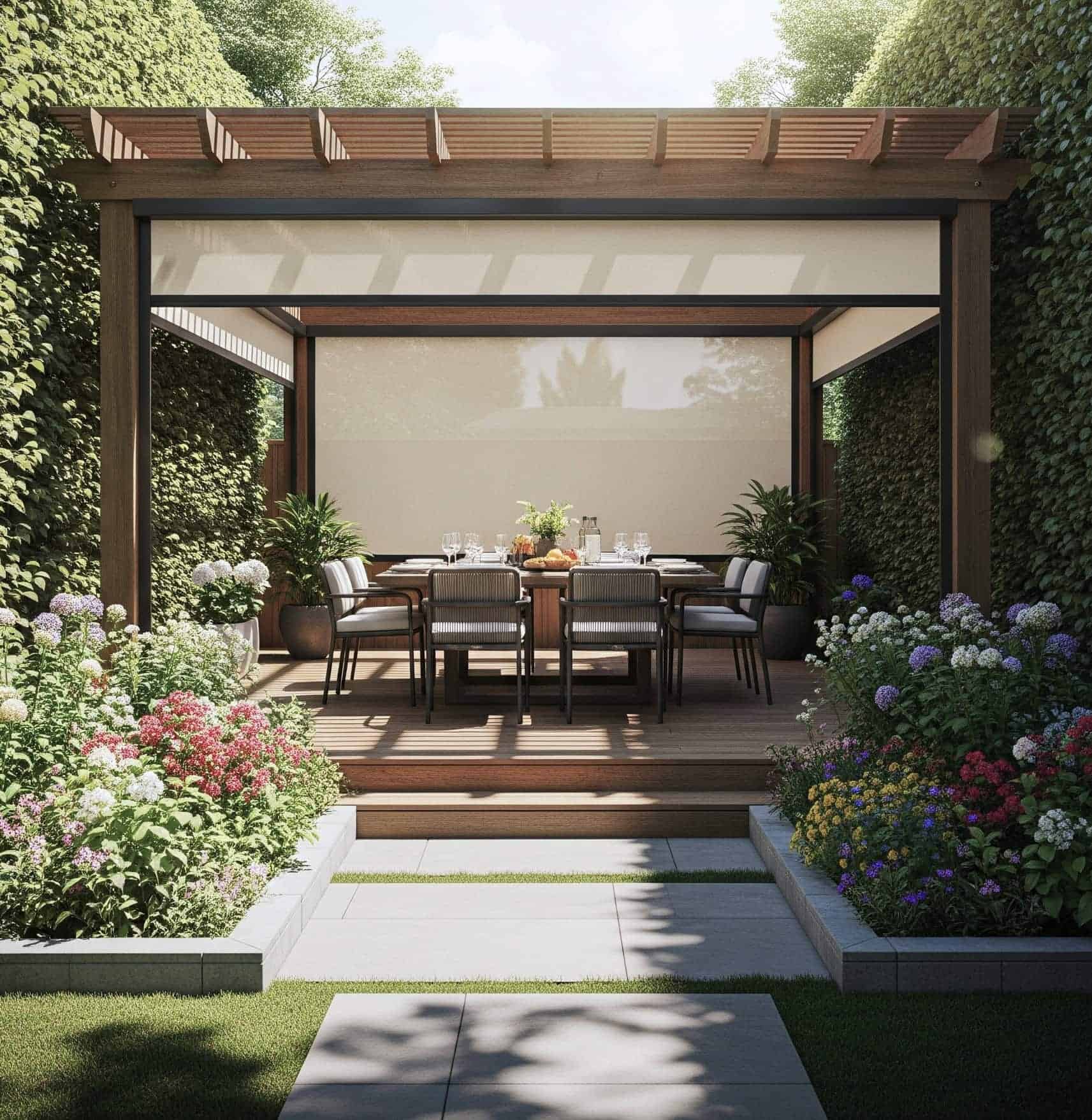
When louvers are closed or angled for shade, they block direct sunlight from hitting windows and walls. This reduces heat gain in adjacent rooms, sometimes significantly. Rooms that border the pergola stay cooler, requiring less air conditioning to maintain comfortable temperatures. In South Florida’s brutal summer months, that translates to measurable energy savings. Some homeowners report 10 to 20 percent reductions in cooling costs for rooms adjacent to the pergola.
The bioclimatic design principle works both ways. During cooler months (yes, South Florida has them), opening the louvers allows sunlight to warm the space and adjacent rooms naturally. This passive solar heating reduces the need for supplemental heating on those rare chilly mornings. The system adapts to seasonal needs, not just daily weather changes.
Ventilation plays a role here too. By controlling airflow through louver positioning, you can create natural air circulation that reduces reliance on mechanical cooling. Opening louvers slightly while maintaining shade allows hot air to escape while cooler air circulates underneath. This chimney effect is basic physics, but it’s surprisingly effective at keeping outdoor spaces comfortable without fans or misters.
The integrated gutter system does more than keep you dry during rain. It protects your home’s foundation and landscaping from water damage. Channeling runoff away from the structure prevents erosion, reduces moisture against your home’s exterior, and eliminates standing water that breeds mosquitoes. In a climate with heavy seasonal rainfall, proper drainage isn’t a luxury, it’s essential infrastructure.
Smart home integration adds another efficiency layer. Connect your pergola to your home automation system, and it can coordinate with other systems. Louvers close automatically when indoor temperatures rise above a set point, reducing solar heat gain. They open during optimal times to leverage natural ventilation. Some systems integrate with weather forecasts, preemptively adjusting for predicted conditions. This level of automation maximizes efficiency without requiring constant manual adjustment.
One of the biggest selling points of aluminum bio-climatic pergolas is the low maintenance requirement. But “low maintenance” doesn’t mean zero maintenance, and it’s worth understanding what’s actually involved.
The aluminum structure itself needs very little. Powder-coated finishes are designed to resist fading, chalking, and corrosion for decades. Occasional cleaning with mild soap and water removes dirt, pollen, and salt residue. That’s typically a once- or twice-yearly task, not a constant burden. No staining, no sealing, no treating against rot or insects. The material doesn’t degrade the way wood does in humid, salty environments.
Motors and mechanical components are sealed and weather-resistant, but they’re not immortal. Most quality systems use motors designed for tens of thousands of cycles, but eventually they’ll need servicing or replacement. This is typically a 10- to 15-year timeline, not an annual concern. When it does happen, it’s usually a straightforward motor swap by a qualified technician, not a major structural issue.
Sensors and electronics require occasional attention. Rain sensors can get clogged with debris and need cleaning. Wind sensors should be checked to make sure they’re functioning correctly. Smart home connections may need software updates. This is minor stuff, but it’s worth factoring in if you’re expecting truly zero-touch operation. Most manufacturers recommend an annual inspection to check all systems and make minor adjustments.
Gutter systems need periodic cleaning, just like your home’s gutters. Leaves, debris, and dirt can accumulate, potentially causing drainage issues. This is especially important in South Florida, where tropical vegetation drops material year-round. Clearing gutters once or twice a year prevents clogs and guarantees water flows properly away from the structure.
The louvers themselves are durable, but the seals and gaskets that create the watertight barrier when closed can wear over time. Quality systems use high-grade rubber or silicone seals designed for UV and weather resistance, but eventually they may need replacement. This is typically a 5- to 10-year maintenance item, not an immediate concern but something to be aware of for long-term ownership.
Compared to wood pergolas that require annual staining, regular rot checks, and frequent repairs, aluminum systems are dramatically lower maintenance. Compared to fabric awnings that tear, fade, and need replacement every few years, they’re even better. The maintenance reality is closer to your home’s aluminum windows than to a wood deck. Occasional cleaning and very infrequent component replacement versus constant upkeep.
Bio-climatic pergolas aren’t for everyone. If you rarely use your outdoor space, if your budget is tight, or if you’re planning to move soon, the investment may not make sense. But if you’re tired of watching your patio sit empty because Florida weather makes it unusable, if you’re replacing sun-damaged furniture every few years, or if you want to actually get value from your outdoor investment year-round, the equation changes.
These systems solve specific problems that South Florida homeowners face daily. Intense sun that makes outdoor spaces unbearable during peak hours. Sudden storms that ruin plans and damage property. Humidity that destroys furniture and breeds mold. The constant maintenance burden of wood structures in a harsh climate. Bio-climatic pergolas with motorized louvered roofs address all of these directly.
The cost is real, but so is the value. You’re adding functional square footage to your home, increasing property value, reducing energy costs, and eliminating maintenance problems. More importantly, you’re creating a space you’ll use instead of one that looks nice in photos but sits empty most of the year.
At Miami Design Group, we specialize in outdoor living solutions designed specifically for South Florida’s climate. With our expertise in window treatments, outdoor shades, home automation, and comprehensive design services, we understand how these systems integrate into your home and lifestyle. If you’re considering a bio-climatic pergola for your Boca Raton property, talking with specialists who understand local climate challenges, permitting requirements, and installation best practices is the right first step.
Article details:
Share:
Continue learning: