Miami's relentless sun drives up cooling costs and damages your home. Exterior shades stop heat at the source—delivering real savings and comfort you'll feel immediately. It's like giving your house a pair of high-end sunglasses.
Share:
Summary:
Think about how a greenhouse works. Glass lets sunlight in, then traps the heat inside. Your windows do the exact same thing every single day, turning your living room into a botanical garden without the cool plants.
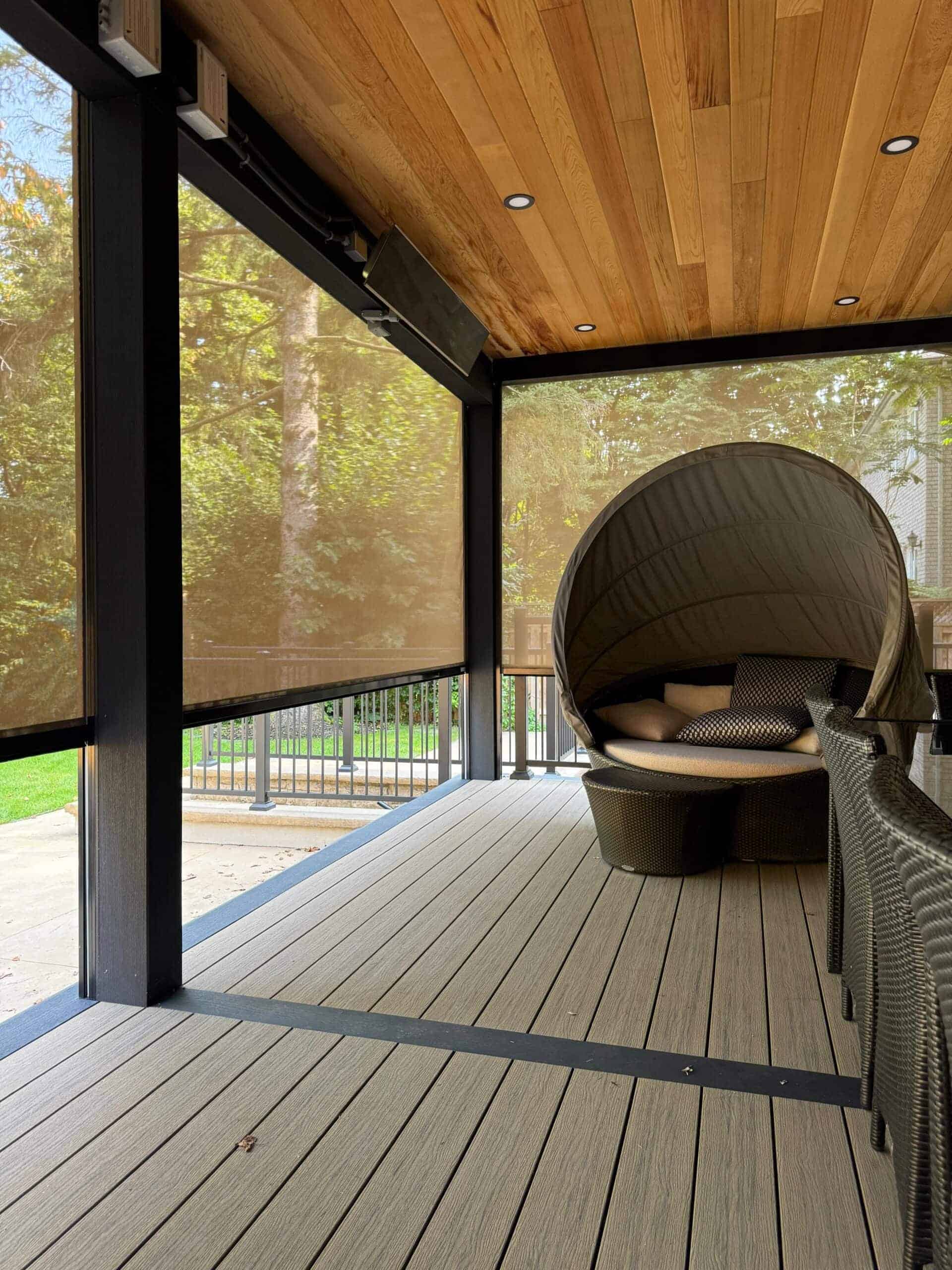
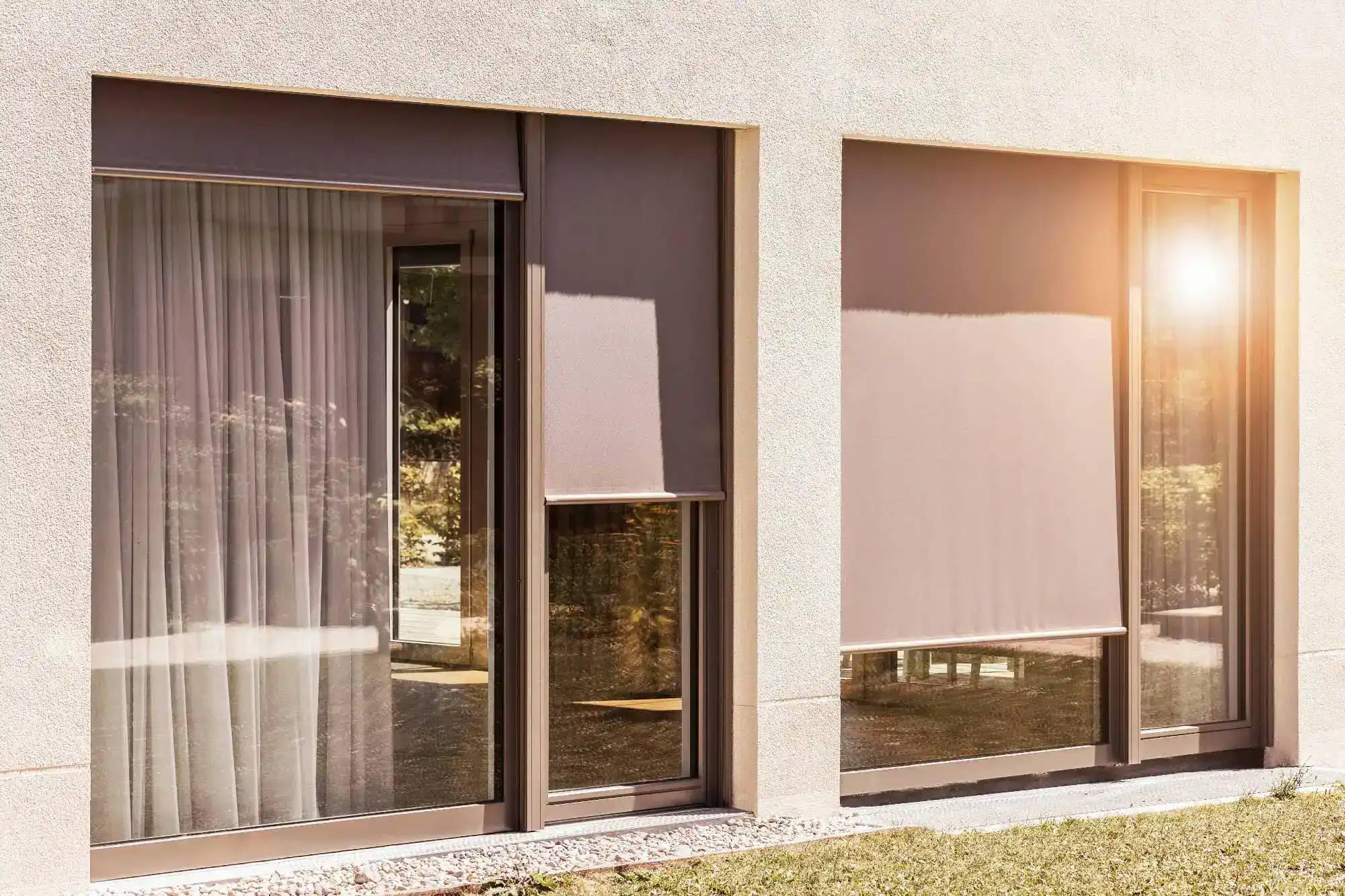
Interior blinds can only react after that heat has already passed through your glass. They’re basically trying to push the ocean back with a broom. Exterior shades stop the problem at the first point of contact—blocking up to 80% to 90% of solar heat gain before it ever touches your windowpane.
That difference matters in Miami. When your AC isn’t constantly battling a 1,500-watt “electric heater” (which is essentially what a standard window in the sun becomes), it runs less, lasts longer, and stops eating your paycheck. Homeowners consistently report 15-25% reductions in summer cooling bills. On Miami’s average $265 monthly electric bill, that’s up to $65 back in your pocket every month. That’s a lot of croquetas.
Windows account for 30-40% of your home’s cooling costs in South Florida. With 248 sunny days a year, those windows are basically open invitations for the sun to come in and stay for dinner.
Solar heat gain happens when sunlight converts to thermal energy inside your home. South and west-facing windows get hit the hardest. Exterior window shades create a literal “thermal shield.” The heat dissipates into the outdoor air instead of transferring through your glass. It’s the difference between wearing a hat and just putting an ice pack on your head after you’ve already been sunburned.
The Department of Energy confirms that exterior shading can reduce solar heat gain by up to 77% on west-facing windows. Interior treatments? They’re the “participation trophy” of heat management—nice to have, but they don’t really win the game.
Windows account for 30-40% of your home’s cooling costs in South Florida. With 248 sunny days a year, those windows are basically open invitations for the sun to come in and stay for dinner.
Solar heat gain happens when sunlight converts to thermal energy inside your home. South and west-facing windows get hit the hardest. Exterior window shades create a literal “thermal shield.” The heat dissipates into the outdoor air instead of transferring through your glass. It’s the difference between wearing a hat and just putting an ice pack on your head after you’ve already been sunburned.
The Department of Energy confirms that exterior shading can reduce solar heat gain by up to 77% on west-facing windows. Interior treatments? They’re the “participation trophy” of heat management—nice to have, but they don’t really win the game.
Want live answers?
Connect with a Miami Design Group expert for fast, friendly support.
Let’s talk about the elephant in the room: the price tag. Quality manual shades can start around $150-$500 per window, while high-end motorized systems often range from $700 to $2,000 per window.
It sounds like a lot until you realize you’re already paying that money—you’re just giving it to the electric company. If exterior shades save you $50 a month, they pay for themselves in just a few seasons. After that, it’s pure profit. It’s an investment that has a “break-even” point, unlike that fancy espresso machine you used twice.
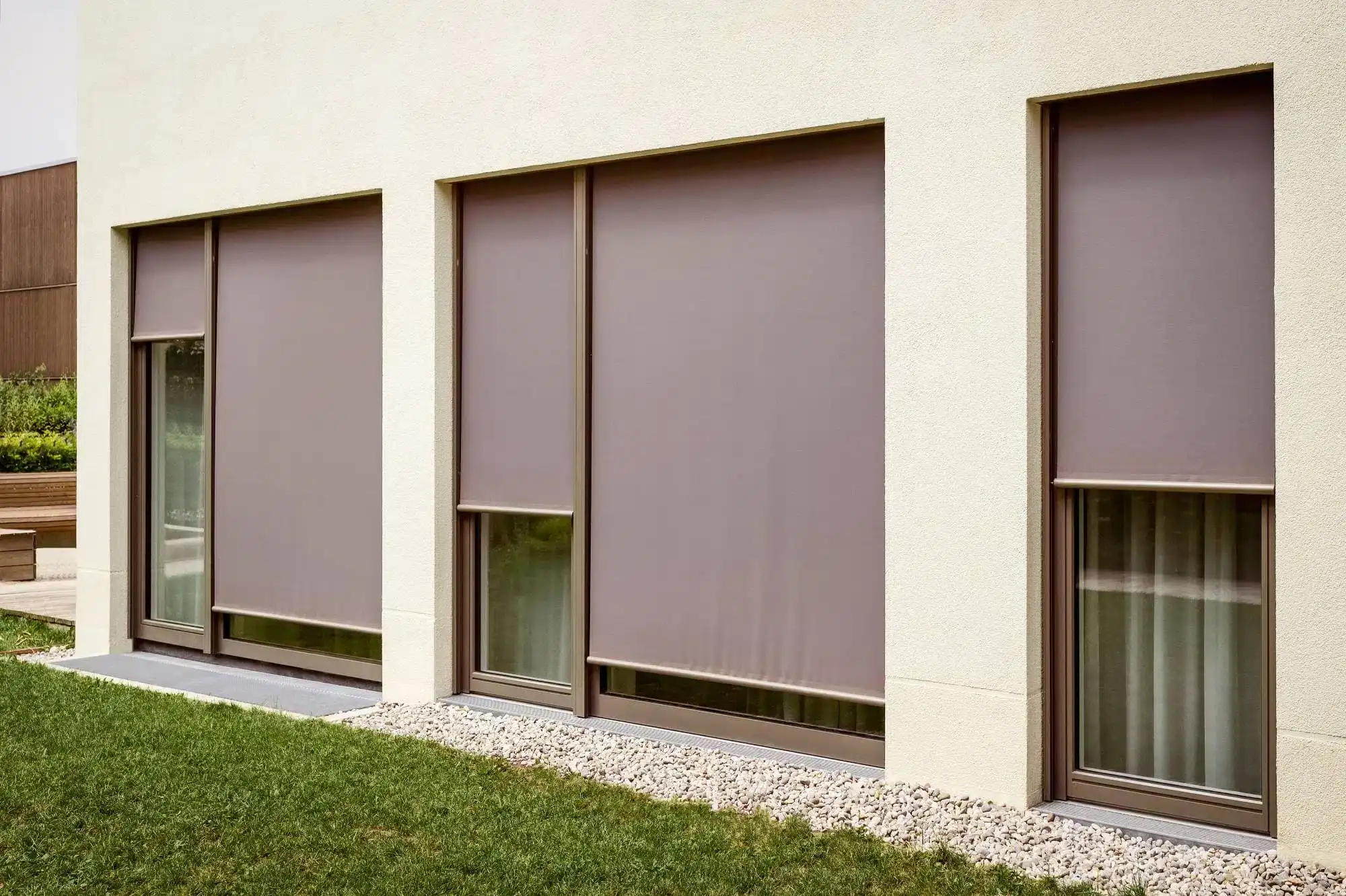
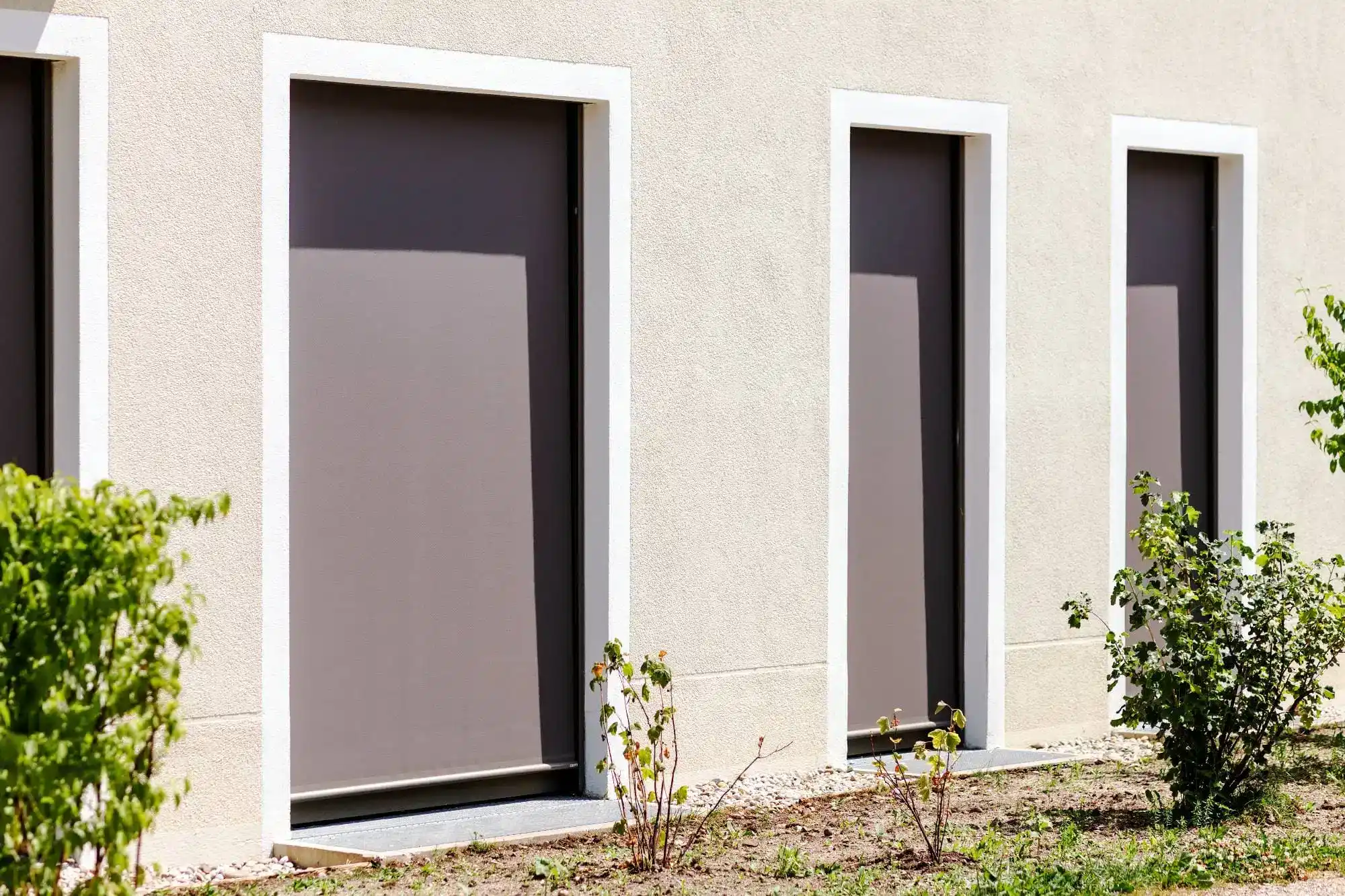
Manual shades are great for the budget-conscious, but they have one major flaw: human nature. The Department of Energy found that 75% of window coverings stay in the same position all day. We’re lazy—it’s okay to admit it.
Motorized shades (like Lutron or similar systems) remove the “I forgot” factor. They can be programmed to respond to sensors. Hurricane warning? They retract. Heatwave? They close proactively. You get optimal performance every day without ever having to put down your mojito.
While you’re weighing the options, Miami’s UV rays are treating your hardwood floors and leather sofa like a slow-cooked brisket.
Florida has some of the highest UV indices in the country. This isn’t just about heat; it’s about “asset depreciation.” Exterior shades block up to 99% of those harmful rays. You bought that sofa to last; don’t let the sun turn it into a vintage relic before its time. Exterior shades are an investment that protects your other investments.
Exterior shades aren’t one-size-fits-all. West-facing windows are the priority—they’re the “front line” of the heat war.
Fabric choice is also key. You can choose different “openness” levels (1% to 10%). A 5% openness lets you keep your gorgeous Miami view while still blocking the heat. You don’t have to live in a cave to stay cool.
Professional installation is a must. Between the wind-load requirements in Miami-Dade and the electrical needs of motorized systems, this isn’t a “hold my beer and watch this” DIY project. You want it done right so it lasts through the next hurricane season.
Article details:
Share:
Continue learning: