Your Miami patio has potential beyond what you're seeing right now. Here's how the right pergola transforms unused outdoor space into your favorite room—without you melting like a popsicle in July.
Share:
Summary:
South Florida has a unique problem: we have 300 days of sunshine, and we spend 290 of them hiding in the dark because it’s too hot to look outside. Miami receives a UV index of 10 during peak months—that’s “medium-well” on the human steak scale.
Pergolas designed for our climate solve this. It’s not just about adding shade—though that matters. It’s about creating a space that works with South Florida’s weather patterns instead of fighting against them. The structure provides relief from direct sun while allowing airflow, which is the only thing keeping us from becoming human steamed dumplings in this humidity.
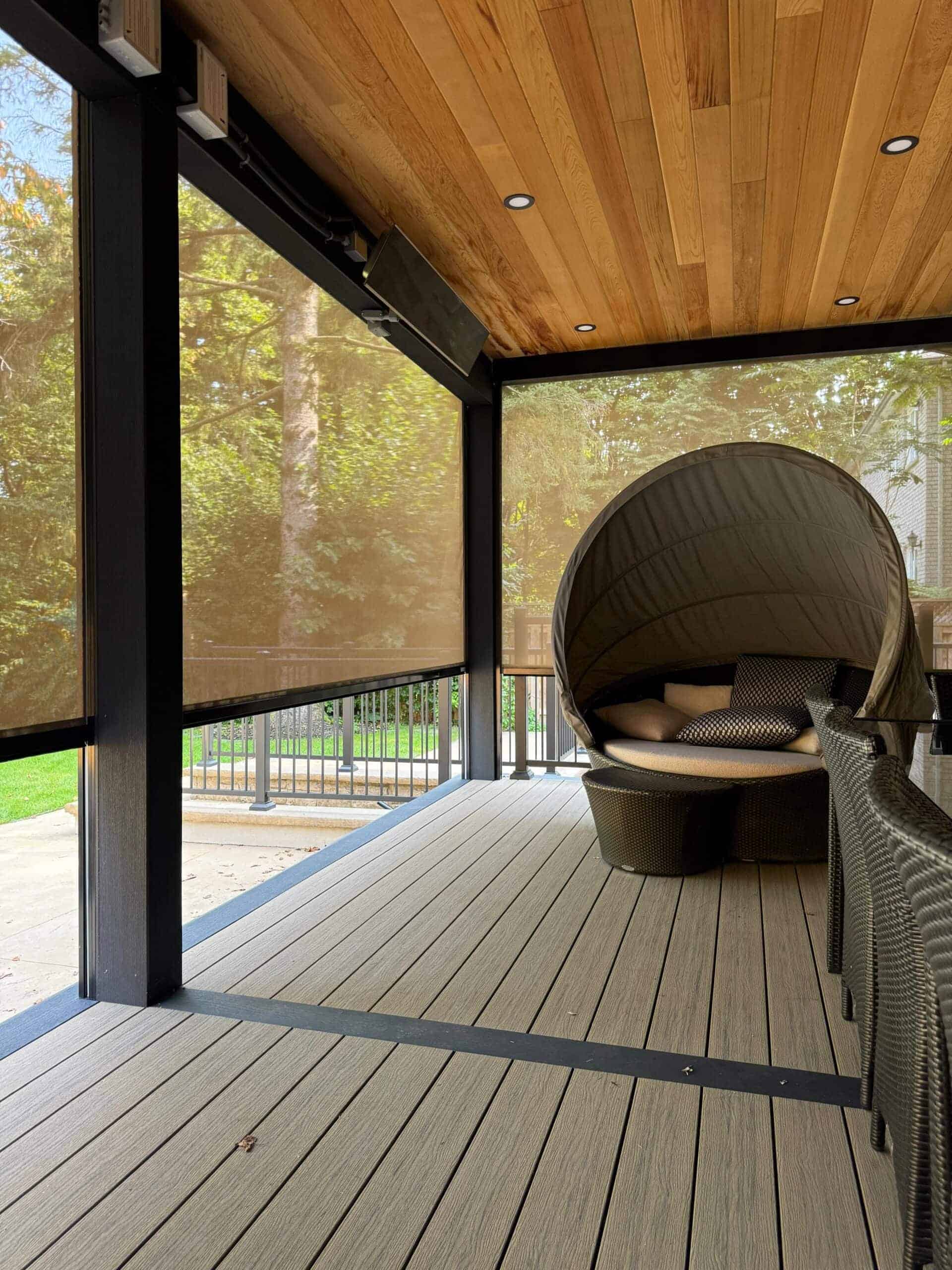
The best part? Modern pergola systems are smarter than they used to be. When you want full sun for that morning “golden hour” selfie, you get it. When the 2 PM heat makes you feel like you’re standing on the surface of the sun, you have instant shade. And when a surprise storm hits? You’re not the one sprinting outside to save the cushions.
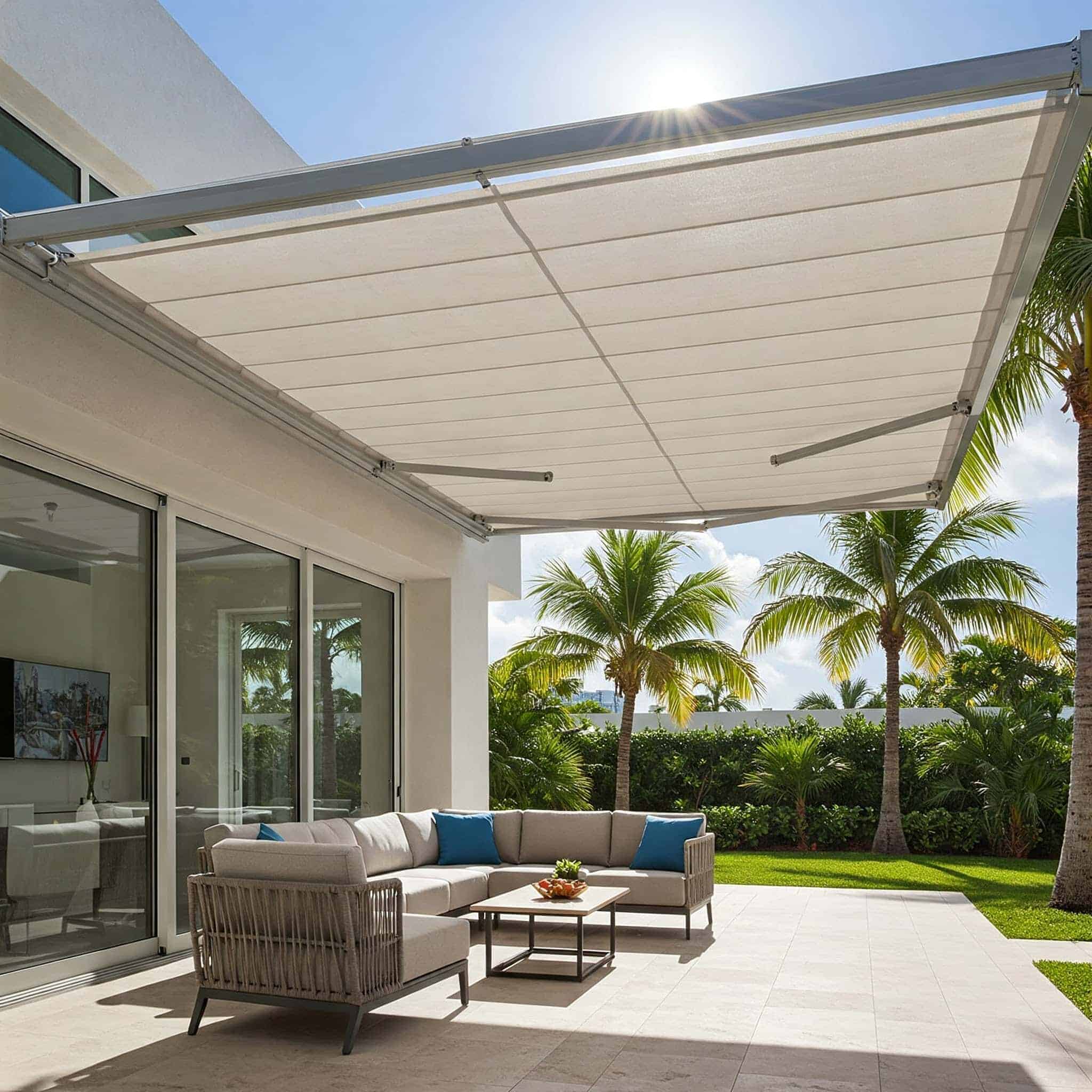
Here’s what nobody tells you about wood pergolas in South Florida: they’re beautiful for about six months. Then the humidity starts winning. Between the warping, the rot, and the termites that treat pine like an all-you-can-eat buffet, wood simply can’t handle the combination of salt air and UV rays.
Aluminum changes that equation completely. The material doesn’t absorb moisture, so humidity has zero power here. Salt air? It laughs at it. Powder-coated aluminum actually reflects heat instead of absorbing it—unlike wood, which basically acts like a giant heater over your head.
The maintenance difference is the real kicker. Wood pergolas need constant attention—sanding, staining, sealing, and a lot of swearing. Aluminum needs a rinse with your garden hose twice a year. If you can handle a garden hose, you can handle an aluminum pergola. It’s the low-maintenance dream for people who would rather spend their weekends at the beach than on a ladder.
But let’s talk about the “H” word: Hurricanes. Miami-Dade and Broward have strict building codes because Mother Nature occasionally likes to throw houses at other houses. Properly engineered aluminum pergolas meet NOA certification standards. Wood structures, after a few years of Florida humidity, often become a collection of very expensive projectiles during a storm.
Here’s what nobody tells you about wood pergolas in South Florida: they’re beautiful for about six months. Then the humidity starts winning. Between the warping, the rot, and the termites that treat pine like an all-you-can-eat buffet, wood simply can’t handle the combination of salt air and UV rays.
Aluminum changes that equation completely. The material doesn’t absorb moisture, so humidity has zero power here. Salt air? It laughs at it. Powder-coated aluminum actually reflects heat instead of absorbing it—unlike wood, which basically acts like a giant heater over your head.
The maintenance difference is the real kicker. Wood pergolas need constant attention—sanding, staining, sealing, and a lot of swearing. Aluminum needs a rinse with your garden hose twice a year. If you can handle a garden hose, you can handle an aluminum pergola. It’s the low-maintenance dream for people who would rather spend their weekends at the beach than on a ladder.
But let’s talk about the “H” word: Hurricanes. Miami-Dade and Broward have strict building codes because Mother Nature occasionally likes to throw houses at other houses. Properly engineered aluminum pergolas meet NOA certification standards. Wood structures, after a few years of Florida humidity, often become a collection of very expensive projectiles during a storm.
Want live answers?
Connect with a Miami Design Group expert for fast, friendly support.
Let’s talk money, because unless you’re printing it in your basement, ROI matters. Pergolas aren’t cheap—quality installations in Miami-Dade and Broward can range from a few thousand to the price of a mid-sized sedan for premium motorized systems.
But here’s the good news: in South Florida, outdoor living isn’t a luxury; it’s a requirement. Industry data shows outdoor upgrades return 50-80% of their cost at resale, but in Miami, that number often hits 100%. Why? Because a house with a gorgeous, functional patio sells a lot faster than one where the backyard looks like an abandoned parking lot.

Not all pergolas are created equal in the eyes of an appraiser. They know the difference between a “Weekend Warrior” special and a professionally engineered structure. They’re looking for commercial-grade materials and, most importantly, permits.
In Miami-Dade, an unpermitted pergola is a liability, not an asset. Getting the proper paperwork might feel like a root canal, but it protects your investment. An appraiser sees a permitted, hurricane-rated aluminum structure and thinks, “added square footage.” They see a DIY wood lattice and think, “future demolition project.”
Integration with your home’s architecture also matters. A pergola that looks like it was born with the house adds way more value than one that looks like it was dropped there by a confused pilot. Cohesive design is the secret sauce to making your property stand out in high-demand areas like Coral Gables or Fort Lauderdale.
Think about resale value from day one. Stick to neutral colors—modern greys, whites, or bronzes—that complement your home’s exterior. You might love a neon pink pergola, but the next buyer probably won’t.
Consider adding integrated features that make buyers drool. Built-in LED lighting, ceiling fans to keep the mosquitoes confused, and retractable screens are all high-value “hooks.” When people walk through your home and see a fully automated, mosquito-free outdoor lounge, they’re not just buying a house—they’re buying a lifestyle. (And they’re probably willing to pay a premium for it).
Document everything. Keep your permits and warranty info in a folder. When you eventually sell, being able to prove your pergola can withstand 160 mph winds is a massive selling point. It’s assurance you can’t get from a box store kit.
Your outdoor space should be usable, not just a place where you occasionally go to check if the humidity is still at 100%. If your patio is empty because it’s too hot or too bright, you’re paying property taxes on “dead space.”
The right pergola changes the equation. It turns a “maybe next weekend” backyard into an “every single evening” oasis. It’s designed for Miami weather, not a generic “one-size-fits-all” solution.
Material choice is king. Aluminum handles the salt, the sun, and the storms. Motorized louvers handle the mood. And professional installation handles the assurance. If you’re ready to stop hiding from the Miami sun and start enjoying it on your own terms, we’re ready to help you build the best room in your house—which just happens to be outside.
Article details:
Share:
Continue learning: