You’ve decided on linen curtains. Smart choice for Miami—when done right. But here’s where most people stall out: figuring out where to actually buy them, which fabric weight survives this humidity, and whether you need a custom workroom or can get away with something premade.
Miami’s climate destroys mediocre window treatments fast. You need linen that breathes without becoming a mildew magnet, fabrication that accounts for moisture and UV exposure, and installation that doesn’t leave gaps where your AC escapes. This guide covers where to purchase linen curtain fabrics in Miami, what to look for in a custom linen curtain workroom, and how to make choices that hold up longer than one summer.
Where you buy linen curtains in Miami matters as much as the fabric itself. Big-box stores offer limited options and zero guidance on what survives South Florida’s climate. Online retailers can’t see your windows, assess your light exposure, or tell you which linen weight holds up against humidity and salt air.
Custom linen curtain workrooms in Miami offer something different. We source commercial-grade fabrics you won’t find in retail stores, understand how different linen weaves perform in Miami’s heat, and guide you through overwhelming choices based on your actual windows and lifestyle. You’re not just purchasing fabric—you’re getting expertise that prevents expensive mistakes.
We operate from Hallandale Beach, FL with direct access to premium linen suppliers and an in-house workroom fabricating custom curtains to exact specifications. You can see fabric samples in your actual lighting, get honest feedback about what works for your space, and have everything measured, fabricated, and installed by people who understand South Florida’s unique demands.
Belgian linen gets discussed like it’s the only option worth considering. Yes, it’s beautiful—woven from European flax with perfect texture and natural drape. But in Miami, FL humidity, pure linen comes with realities you need to understand before committing.
Linen is naturally absorbent. It wicks moisture away and dries relatively quickly, which helps in humid climates, but it’s still a natural fiber that holds dampness if your windows face certain exposures or you’re in a humid microclimate near the water. Pure Belgian linen works beautifully in Miami when properly lined and when you’re working with a fabricator who understands climate considerations.
Linen blends—usually linen mixed with polyester or cotton-poly combinations—offer practical advantages for South Florida. The synthetic fibers add moisture resistance while maintaining much of linen’s breathable quality and natural texture. You lose some of that pure linen hand, but you gain durability and easier maintenance in an environment that’s genuinely tough on natural fabrics.
Your right choice depends on your specific situation. Floor-to-ceiling windows with direct sun exposure and high humidity? A linen blend might serve you better long-term. Interior windows with good airflow and less moisture exposure? Pure Belgian linen can absolutely work. We walk you through these considerations based on your actual windows, not just sell you the most expensive option.
Weight matters too. Lightweight linen sheers filter light beautifully but offer minimal privacy and limited UV protection. Medium-weight linen gives you versatility—enough substance for privacy and sun control without feeling heavy. Heavyweight linen provides maximum light blocking and insulation but can feel too substantial for Miami’s aesthetic if you want that breezy coastal vibe.
When you’re looking at where to purchase custom linen curtains in Miami, ask about fabric weight options and climate-appropriate blends. We carry multiple linen weights and both pure Belgian linen and climate-smart blends. Our design team shows you samples, explains trade-offs, and helps you make decisions based on how you actually use your space—not just what looks good in a showroom.
Here’s what happens when you buy linen curtains from retail stores: you get standard sizes that probably don’t fit your windows correctly, limited fabric choices from whatever the manufacturer produced this season, and zero customization for Miami’s specific climate challenges. You’re also getting fabrics treated for general use, not tested against the UV exposure and humidity we deal with here.
Custom linen curtain workrooms in Miami operate differently. We take precise measurements of your actual windows—not just width and height, but accounting for how your space functions, where your curtain rod mounts, and how much stack-back you need when curtains are open. We source fabrics from commercial suppliers with access to hundreds of options in different weights, weaves, and finishes. We fabricate everything to your exact specifications, which means proper fit, appropriate lining choices, and construction methods that account for how curtains behave in humid environments.
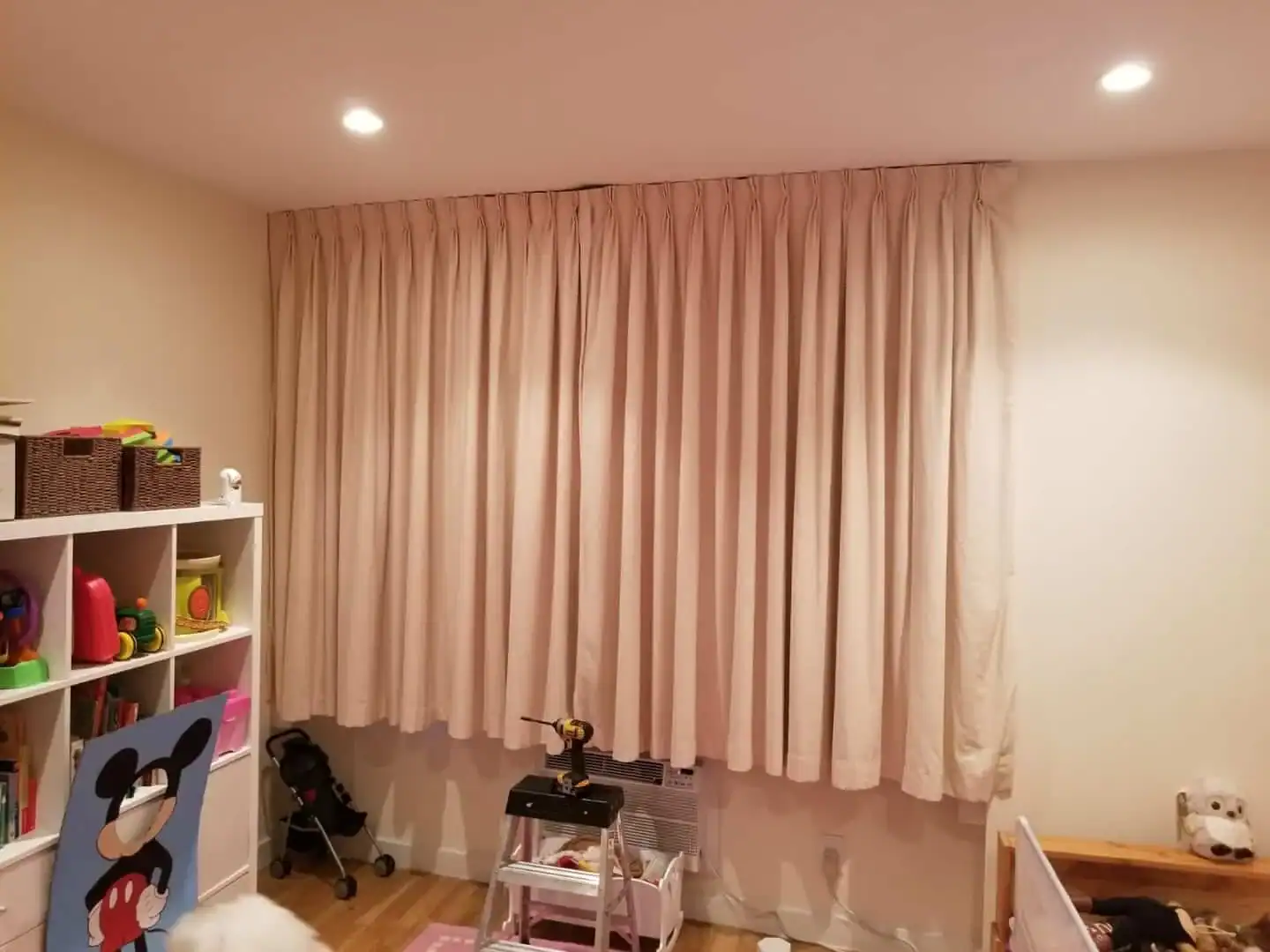
The fabrication process matters more than most people realize. Quality workrooms pre-wash linens when appropriate to account for shrinkage, use climate-appropriate linings that add UV protection without trapping moisture, and construct headers and hems that maintain their shape despite humidity. We also understand pleat styles—pinch pleats, ripplefold, inverted box pleats—and recommend what works best for your aesthetic and functional needs.
Installation is where custom workrooms really separate themselves from DIY or retail options. Professional installers ensure your curtain rods mount at the right height with proper support for the weight of lined linen curtains. We account for how windows expand and contract with temperature changes. We make sure everything hangs straight, operates smoothly, and looks polished from every angle in your room.
Turnaround time is often better than you’d expect. While many national retailers quote 4-8 weeks for custom work, our in-house workroom typically completes projects in 2-3 weeks from final measurement to installation. Everything happens locally—no shipping fabric across the country, no waiting for third-party fabricators, no coordination headaches with multiple vendors.
Cost runs higher upfront than retail options. But factor in proper fit, appropriate fabric for the climate, professional installation, and how much longer they actually last in Miami’s demanding environment, and the value equation shifts. You’re not replacing them in two years because they’ve faded, developed mildew, or never fit correctly in the first place. When researching where to find linen fabric for curtains in Miami, consider the total cost of ownership, not just the initial price tag.
Miami, FL climate isn’t just hot—it’s a specific combination of heat, humidity, UV exposure, and salt air that genuinely challenges window treatment fabrics. Temperatures regularly hit the low 90s with oppressive humidity. You’ve got intense sun exposure year-round. If you’re near the coast, salt air accelerates deterioration of fabrics that aren’t designed for it.
Linen has natural advantages here. It’s breathable, which helps prevent moisture buildup behind your curtains. It filters light beautifully without completely blocking airflow. It has a relaxed, coastal aesthetic that fits Miami’s vibe. But not all linen performs equally in these conditions, and the details of fabric selection make the difference between curtains that age gracefully and ones that become a maintenance headache.
Look for linen with tight, consistent weaves. Loose weaves might seem more breathable, but they’re also more prone to stretching and sagging in humidity. Quality Belgian linen maintains its structure better than cheaper alternatives because of how the flax fibers are processed and woven. You’ll pay more, but you’re getting fabric engineered to hold up under stress.
Motorized linen curtains used to be a luxury feature for high-end homes. Now they’re becoming standard in Miami, FL, especially for floor-to-ceiling windows, hard-to-reach installations, or anyone who values the convenience of automated light control. The technology has improved dramatically—motors are quieter, batteries last longer, and smart home integration actually works reliably.
The practical advantages go beyond convenience. Motorized curtains let you program opening and closing schedules that optimize natural light and temperature control throughout the day. You can close curtains during peak sun hours to reduce cooling costs, then open them in the evening to enjoy views and breezes. You can control everything from your phone, even when you’re not home, which adds security by making your house look occupied.
Smart home integration means your linen curtains work with Alexa, Google Home, or comprehensive automation systems. Voice control is genuinely useful when your hands are full or you’re settled in for the evening. Automation routines—curtains that open with your morning alarm or close at sunset—become part of how your home functions without you thinking about it.
Motor quality matters significantly. Cheap motors are loud, unreliable, and burn out quickly. Quality motors from manufacturers like Somfy or Lutron operate almost silently—under 45 decibels, quieter than a library. They’re engineered for thousands of cycles and backed by solid warranties. They also handle the weight of lined linen curtains without strain, which cheaper motors struggle with.
Battery versus hardwired is a practical decision. Battery-powered motors offer flexibility—you can install them without running electrical wiring, which keeps installation costs lower and works for windows where wiring isn’t practical. Modern batteries last months between charges, and some systems include solar panels that keep them topped off. Hardwired motors eliminate battery maintenance but require electrical work and permanent installation.
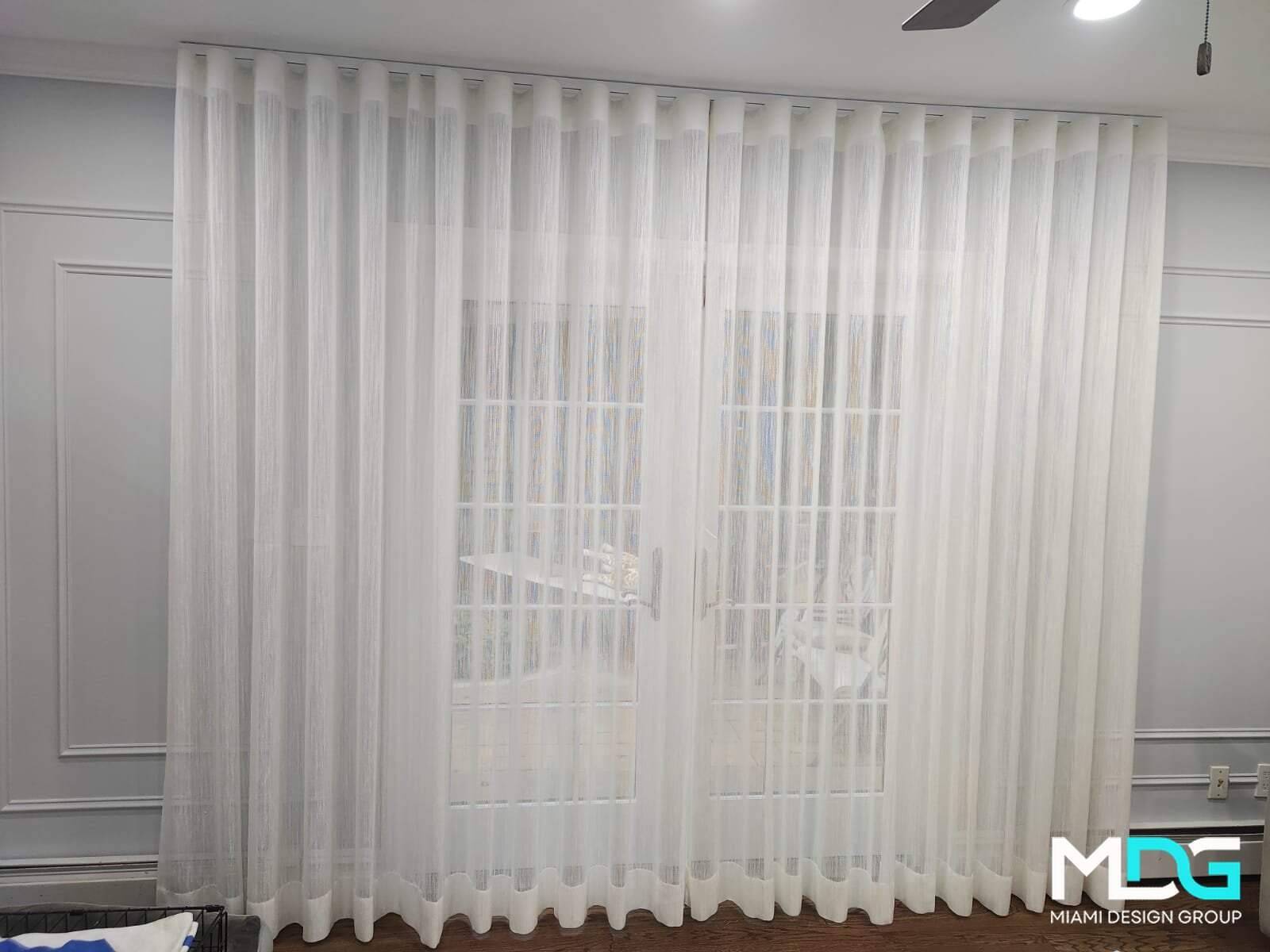
Track systems for motorized curtains come in different styles. Ripplefold tracks create those smooth, even waves that look clean and contemporary—they’re popular in Miami’s modern condos and homes. Traditional traverse tracks work with pinch pleat or other headed curtains for a more classic look. The track needs to be properly specified for your motor and curtain weight, or you’ll have operational problems.
Installation of motorized systems requires expertise. The motor needs proper mounting, the track must be level and securely supported, and programming requires understanding how the system works. DIY installations often result in curtains that bind, motors that strain, or systems that don’t integrate properly with smart home platforms. Professional installation ensures everything works correctly from day one.
Cost runs higher than manual curtains—you’re adding motors, tracks designed for automation, and more complex installation. But consider the convenience, energy savings from optimized light control, and increased home value from smart features. For many Miami homeowners, especially those with large windows or multiple curtain installations, motorization quickly justifies its cost through daily use and reduced cooling expenses.
If you’re researching where to purchase motorized linen curtains in Miami, look for companies that handle complete installations from fabric selection through programming and smart home integration. We handle the entire process, understanding both the technical requirements and how to make recommendations that match your lifestyle and budget.
Buying custom linen curtains in Miami comes down to working with people who understand both the product and the environment. You need fabric that handles humidity without becoming a maintenance problem. You need fabrication that accounts for how curtains behave in heat and moisture. You need installation that ensures everything fits correctly and operates smoothly for years.
The right approach starts with consultation—someone who can assess your actual windows, discuss how you use your spaces, and recommend fabric weights, lining options, and features that match your needs. It continues with quality fabrication from a workroom that sources premium materials and constructs curtains to last. It finishes with professional installation that makes everything look polished and function perfectly.
We bring 15 years of experience from successful NYC and Toronto operations to South Florida, with an in-house workroom, access to premium linen fabrics, and a team that understands Miami’s specific climate challenges. We handle everything from initial consultation through final installation, delivering custom linen curtains that actually work in this environment. If you’re ready to move beyond guessing and work with experts who know what they’re doing, reach out to us for a consultation.