Grommet drapes offer clean lines and effortless function—but styling them right makes all the difference. Get the insider tips that transform basic panels into designer-worthy windows.
Share:

Summary:
Your windows deserve better than curtains that bunch awkwardly like a middle-schooler’s first suit. Grommet drapes are the “cool cousin” of the window treatment world—they’ve got those sleek metal rings that slide smoother than a pickup line at a Brickell happy hour. They offer clean vertical lines and a modern edge that works in nearly any room, but getting them to look intentional rather than “I just moved in and found these in a box” takes a bit of strategy. The difference between “it’s fine” and “it’s a masterpiece” usually comes down to three things: where you put the rod, how much fabric you use, and whether you’ve actually hemmed them. If you’ve ever stood in front of your windows wondering why they look like saggy bedsheets instead of a spread in Architectural Digest, you’re in the right place. We’re breaking down the specifics—what works, what looks like a DIY disaster, and how to style your panels so your space feels finished.
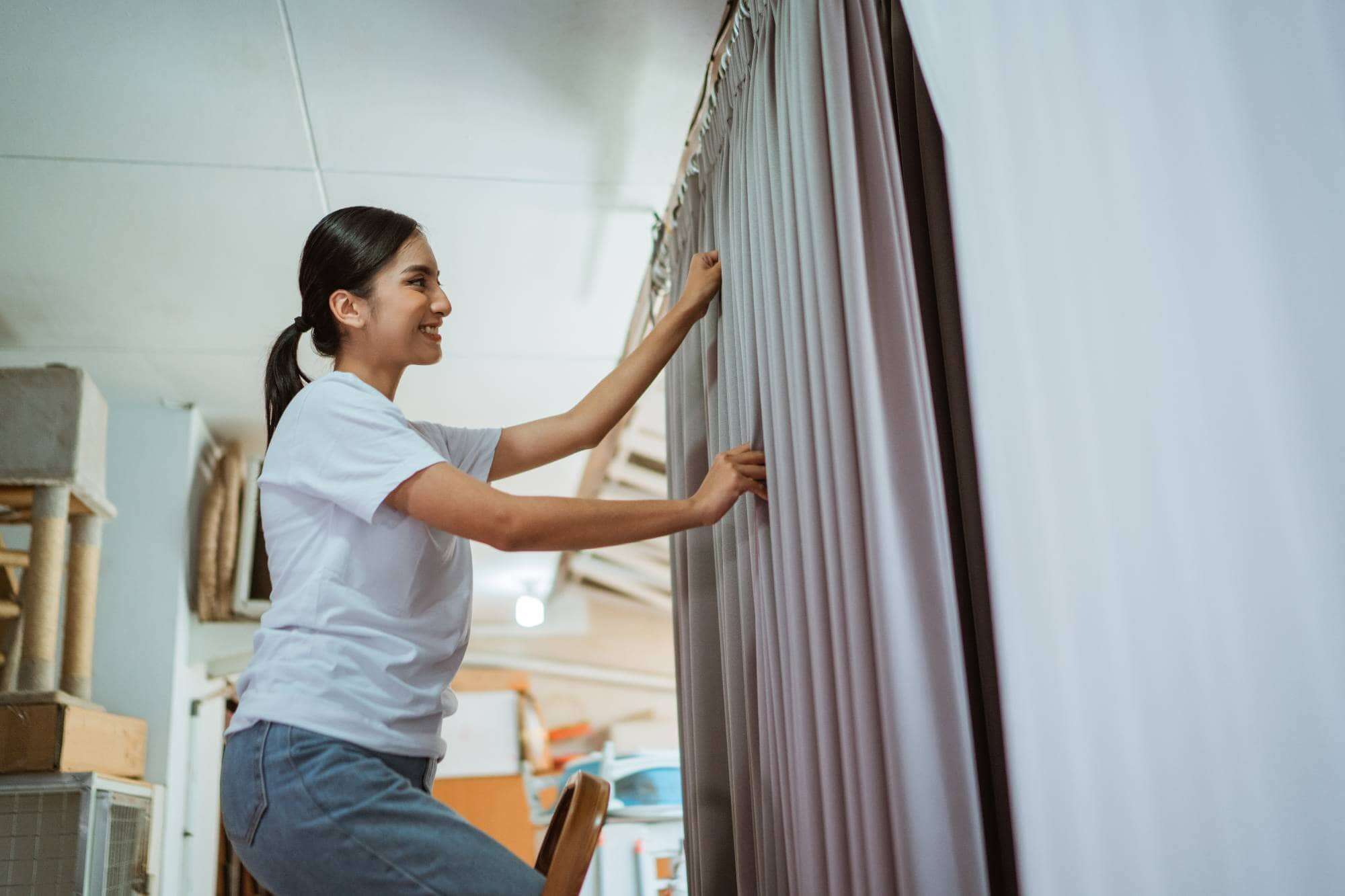
Grommet drapes feature metal or plastic rings embedded directly into the fabric, which means they are essentially “idiot-proof” when it comes to hanging. These rings slide onto your curtain rod, creating deep, uniform folds that hang in crisp vertical lines from ceiling to floor. Unlike rod pocket curtains that bunch up and fight you every time you try to close them, grommets glide like they’re on ice. Because the rod is visible through the rings, it’s no longer just a functional stick—it’s a fashion accessory. You’ll want to choose hardware that matches your room’s jewelry, regardless of if that’s matte black, brushed nickel, or “look-at-me” brass. It’s one of the few drapery styles where the hardware is invited to the party rather than being hidden behind a bunch of fabric. In a fast-paced Miami lifestyle, the functionality of grommets is a major win. They handle daily opening and closing without the need for delicate pins or those tiny plastic clips that always seem to snap at the worst moment. You get a modern, structured look that stays looking organized even if your actual life currently feels a little chaotic.

Rod diameter is the secret sauce of a successful drape installation. If the rod is too thick, your grommets will grip it like a terrified toddler, making it impossible to slide them open. If it’s too thin, the rod will bow under the weight of the fabric, giving your window a sad, frowny-face silhouette that screams “I didn’t measure anything.” Most standard grommet panels have a 1.6-inch interior opening, which means you should aim for a rod that is roughly 1 to 1.25 inches thick. This “Goldilocks” zone provides enough structure to look high-end while leaving plenty of “breathing room” for the rings to slide. Always check the weight capacity of your hardware, too—velvet blackout drapes are a lot heavier than the breezy linen sheers you bought for the guest room. Don’t be stingy with the width, either; your rod should extend 4 to 10 inches beyond the window frame on each side. This trick, known as “stack back,” allows the fabric to sit on the wall rather than blocking the glass, making your window look twice as large. Plus, in South Florida, why would you want to block even an inch of that glorious sunshine?
There is nothing sadder in the design world than a curtain panel stretched tight across a window like a drumhead. If your drapes don’t have “fullness,” they aren’t window treatments—they’re just vertical towels. To get those beautiful, deep ripples that make grommet drapes look expensive, you need to buy enough fabric to actually cover the distance twice. The “Magic Ratio” is 2:1. If your window is 50 inches wide, you need 100 inches of fabric. If you want that extra-luxurious, “I own a yacht” look, go for a 2.5:1 ratio. This ensures that even when the drapes are closed, they still have those rich, wavy folds that add depth and texture to your room. Finally, let’s talk about the “kiss.” Your drapes should just barely touch the floor—think of it like a polite first date. If they hang an inch too short, they look like they’re waiting for a flood; if they puddle too much, they’ll become a high-end dust bunny collector. In Miami’s humid climate, keeping them slightly off the floor also prevents them from soaking up any accidental moisture or pet hair that tends to gravitate toward fabric.
Want live answers?
Connect with a Miami Design Group expert for fast, friendly support.
Side panels are the “fake it till you make it” version of drapery, and we are here for it. These are stationary panels that hang on the ends of your rod but never actually meet in the middle. They provide all the softness, color, and framing of a full drapery set without the bulk (or the cost) of covering the entire window. It’s the perfect solution for when you want your windows to look dressed up but don’t actually need to hide from the neighbors. This approach is a total game-changer for layering. You can have functional solar shades or blinds doing the heavy lifting of blocking the 4:00 PM Miami heat, while the side panels sit there looking pretty. It adds a designer “layer” that makes the room feel warmer and more finished without the utilitarian look of naked blinds. Grommet-style side panels are especially great because they maintain a consistent vertical ripple even when they aren’t being moved. They stay “trained” in their folds, meaning you don’t have to spend your Saturday morning steaming and adjusting them to make them look uniform. Just slide them to the ends, space the folds evenly, and go enjoy your weekend.

If you want to trick your guests into thinking you live in a palace with 12-foot ceilings, you need to “hang ’em high.” Most people instinctively put the rod right above the window frame, which is a rookie mistake. Instead, mount that rod 4 to 6 inches above the frame—or even halfway to the ceiling—to draw the eye upward and make the room feel much larger than it actually is. For side panels, width is just as important as height. You want the panels to start where the window ends, barely overlapping the glass. This frames the view like a piece of art rather than obscuring it. Since they don’t have to close, you can use narrower panels (like 24 inches) to get the look without the extra weight or cost of full-width fabric. When layering with blinds or shades, make sure your rod is mounted far enough away from the wall so the drapes don’t bump into the hardware underneath. A double-rod system is the “pro move” here—it gives you a dedicated spot for your sheer or solar shade behind the grommet panels. It keeps the lines clean and prevents your window from looking like a cluttered mess of fabric and string.
South Florida’s climate is basically a gladiator arena for fabric. Between the relentless UV rays that want to bleach your colors and the humidity that wants to turn your linen into a moldy science project, you have to choose your materials wisely. Pure silk or heavy cotton might look great in a New York loft, but down here, they’ll break your heart in a single season. Polyester blends are the unsung heroes of Miami window treatments. They don’t absorb moisture like natural fibers do, which means they won’t sag when the humidity hits 90%. They also resist fading much better than cotton, so your “deep ocean blue” drapes won’t turn into “vague dusty sky” after six months of facing the afternoon sun. Don’t forget the power of a good lining. A high-quality blackout or thermal lining on your grommet drapes can actually lower your FPL bill by keeping that AC-cooled air inside where it belongs. It also protects the face fabric from sun damage, ensuring your investment looks great for years. Think of it like SPF for your windows—it’s not just a good idea, it’s a necessity.
At the end of the day, styling grommet drapes and side panels is about finding the balance between “modern minimalist” and “I live in a comfortable home.” You want clean lines, but you also want a space that doesn’t feel like a cold doctor’s office. By following the 2:1 fullness rule, hanging your rods high, and choosing fabrics that won’t wilt in the Florida heat, you’re 90% of the way there. Of course, the final 10% is where the magic happens. If you’re tired of “eyeballing” your measurements or you’re worried about drilling holes in your walls only to find out you were two inches off, that’s where we come in. We know the challenges of Miami homes—from CBS walls to high-rise window banks—and we make sure your installation is “pinch-proof” and perfect. If you’re ready to stop guessing and start living in a home that looks professionally styled, we’re here to help. Serving Miami-Dade and Broward with the expertise to make your windows the star of the show.
Article details:
Share:
Continue learning: