Mixing tile patterns between your kitchen and bathroom doesn't have to feel risky. Learn the design principles that create cohesive flow throughout your home.
Share:
Summary:
The biggest mistake people make when coordinating tile across rooms isn’t picking the wrong tile. It’s trying to coordinate too many tiles at once without a clear starting point.
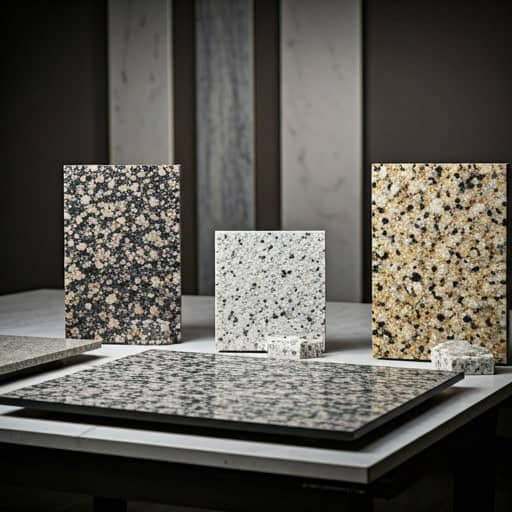
Professional designers don’t walk into a showroom and start grabbing samples. They pick one stone or tile that sets the tone for everything else. That base material becomes the anchor—the thing that dictates your color palette, your texture choices, and the overall vibe of both spaces.
Think of it like this: if you’re using a honed Carrara marble subway tile in your kitchen backsplash, that’s your jumping-off point. Everything you choose for the bathroom should either complement that marble’s soft white-and-gray veining or contrast it in a way that still feels connected. You’re not matching. You’re creating a conversation between two spaces that share the same design language.
Here’s the part that trips people up: which tile should be your base? The short answer is the one you’re most drawn to. The longer answer is the one that appears in the largest, most visible area of your home.
If your kitchen is open to your living space and gets seen every single day, that’s probably where your base tile lives. If your primary bathroom is your sanctuary and you’re spending real money there, maybe that’s the anchor. Either way, pick the tile you absolutely love, because every other decision flows from that choice.
Once you have your base, pull a color from it. Not the dominant color—one of the subtle tones in the veining, the grout, or the finish. That secondary color becomes your bridge to the next space.
Let’s say your kitchen backsplash is a white subway tile with soft gray veining. You could choose a medium gray porcelain tile for your bathroom floor that echoes that veining. Or a slate-look ceramic tile that picks up the cooler tones. The key is that someone walking through your home can see the connection, even if they can’t articulate why it works.
This approach keeps you from overthinking. You’re not trying to match everything. You’re letting one material guide the rest, which is exactly how designers create that effortless, pulled-together look that feels anything but accidental.
Here’s the part that trips people up: which tile should be your base? The short answer is the one you’re most drawn to. The longer answer is the one that appears in the largest, most visible area of your home.
If your kitchen is open to your living space and gets seen every single day, that’s probably where your base tile lives. If your primary bathroom is your sanctuary and you’re spending real money there, maybe that’s the anchor. Either way, pick the tile you absolutely love, because every other decision flows from that choice.
Once you have your base, pull a color from it. Not the dominant color—one of the subtle tones in the veining, the grout, or the finish. That secondary color becomes your bridge to the next space.
Let’s say your kitchen backsplash is a white subway tile with soft gray veining. You could choose a medium gray porcelain tile for your bathroom floor that echoes that veining. Or a slate-look ceramic tile that picks up the cooler tones. The key is that someone walking through your home can see the connection, even if they can’t articulate why it works.
This approach keeps you from overthinking. You’re not trying to match everything. You’re letting one material guide the rest, which is exactly how designers create that effortless, pulled-together look that feels anything but accidental.
Want live answers?
Connect with a Miami Design Group expert for fast, friendly support.
Once you’ve nailed down your base material and color palette, the next question is, how do you mix different tile sizes and patterns without the whole thing looking like a Pinterest board threw up in your house?
The answer is balance. Specifically, balancing scale.
If you’re using large-format tile in your kitchen—say, 12×24 or 18×18 on the floor—you don’t want to repeat that exact size in your bathroom. It’ll feel monotonous, like you ordered too much of one thing and just used it everywhere. Instead, bring in a smaller version of the same tile, or switch to a mosaic tile that shares the same color but adds texture and visual interest.
Think of it like a rhythm. Large tiles give you a clean, modern base. Smaller bathroom tiles or kitchen tiles in mosaic form bring in detail and movement. When you combine them thoughtfully, you get a space that feels layered and intentional, not flat or overwhelming.

Let’s talk about grout, because it’s one of those details people overlook until it’s too late—and then it’s the thing they complain about for the next decade.
Grout color can make or break your tile design. A contrasting grout highlights the tile pattern and makes each piece stand out. A matching grout blends everything together and creates a more seamless, spa-like look. Neither is wrong. It just depends on what you’re going for.
If you’re mixing tile patterns between your kitchen and bath, keeping your grout color consistent across both spaces is one of the easiest ways to create visual flow. A soft gray grout works with almost everything. White grout feels clean and classic but shows dirt faster. Black grout makes a bold statement but can feel heavy if overused.
Here’s the thing about grout that nobody tells you until you’re living with it: it’s maintenance. Grout lines collect dirt, moisture, and stains, especially in high-traffic areas like kitchens and bathrooms. The wider the grout line, the more surface area you’re dealing with. That’s why the trend right now is toward larger tiles with thinner grout lines. Fewer lines mean less scrubbing, less sealing, and less frustration.
If you’re in the planning stage, this is worth thinking about. Epoxy grout costs more upfront but resists stains and moisture better than traditional cement grout. In a South Florida climate where humidity is a given, that extra investment can save you problems down the road.
No matter if you’re planning a tile installation in Boca Raton, FL, or coordinating a tile layout across multiple rooms, keep the grout color the same if you’re mixing a patterned tile—like a herringbone or chevron—with a straight-set tile in another room. That consistency is what makes the two spaces feel connected, even when the patterns are doing different things.
Patterned tile is gorgeous. It’s also the easiest thing to overdo.
The rule of thumb is this: if you’re using a bold pattern, limit it to one surface. That could be a backsplash tile, a shower wall, or a bathroom floor. But not all three. And definitely not in every room.
When you’re coordinating tile between your kitchen and bath, patterned tile works best as an accent. Maybe your kitchen has a clean subway tile backsplash, and your bathroom has a patterned hexagon floor tile that picks up the same color palette. The pattern adds personality without competing for attention.
The mistake people make is framing patterned tile—putting it in a small section surrounded by a border, like a rug on the wall. It almost never works. Patterns need room to breathe. If you’re going to use a decorative tile, commit to it. Cover the whole surface, or don’t use it at all.
Here’s a practical example: let’s say you’re using a white subway tile in your kitchen. In your bathroom, you could bring in a small-scale mosaic tile in the shower that shares the same white base but adds a geometric pattern. The scale is different, and the application is different, but the color and material tie it back to the kitchen. That’s how you get visual interest without visual chaos.
If you’re not sure whether a pattern works, step back and ask yourself: does this tile stand alone as a statement, or does it need the other tiles around it to make sense? If it’s the latter, you might be overcomplicating things.
At the end of the day, coordinating tile between your kitchen and bathroom is about creating a home that feels cohesive, not cookie-cutter. You want someone to walk through your space and feel like every decision was intentional, even if they can’t pinpoint exactly why it works.
The principles we’ve covered—starting with a base material, keeping your color palette tight, balancing scale, and using grout and patterns strategically—aren’t rigid rules. They’re guidelines that give you a framework to make confident choices.
If you’re in Boca Raton, or anywhere in South Florida, you also need to think about climate. Humidity, salt air, and temperature swings mean your tile needs to perform, not just look good. That’s where working with a team that understands both design and durability makes a difference.
We bring that combination to every project—helping you choose tile that works with your lifestyle, your budget, and your home’s unique flow. From kitchen tile and bathroom tile selection to coordinated tile installation that considers your entire home, the right guidance turns overwhelming decisions into confident next steps.
Article details:
Share:
Continue learning: