Miami's 73% average humidity damages window treatments fast. Learn the maintenance strategies that work in South Florida's demanding climate.
Share:
Summary:
The easiest way to maintain window treatments in Miami is choosing materials that resist humidity from day one. Faux wood blinds, poly shutters, and solar shades handle moisture without the warping, cracking, or mildew issues that plague natural materials. They block UV rays, resist mold growth, and require minimal maintenance—exactly what you need in South Florida.
Real wood blinds might look beautiful in the showroom, but they absorb moisture and release it as humidity fluctuates throughout the day. This constant expansion and contraction leads to warping within a few years. Faux wood gives you the same warm aesthetic without fighting Miami’s climate. The composite materials don’t absorb moisture, so they maintain their shape and finish for 10-15 years or more with basic care.
Fabric choices matter just as much. Heavy cotton drapes and natural fiber shades act like moisture sponges, absorbing humidity from the air and taking hours to dry. Synthetic materials—polyester blends, PVC-coated fabrics, vinyl—shed moisture instead of soaking it up. They’re also easier to clean and maintain their appearance longer in humid conditions.
Faux wood blinds and composite shutters top the list for Miami homes. They’re engineered to resist moisture, mildew, and warping even in extreme humidity. You can wipe them down with a damp cloth without worrying about damage. They work in any room, including bathrooms and kitchens where steam is a daily occurrence. Hunter Douglas and similar premium brands offer limited lifetime warranties on many components, showing confidence in long-term performance.
Aluminum and vinyl blinds offer complete moisture immunity. The slats themselves never warp, crack, or develop mold. Salt air doesn’t corrode properly coated aluminum. The only consideration is the operating cords—synthetic cords last far longer than cotton in humid environments. These treatments are particularly practical for coastal properties in Miami Beach, Sunny Isles, or Aventura where salt exposure accelerates wear on lesser materials.
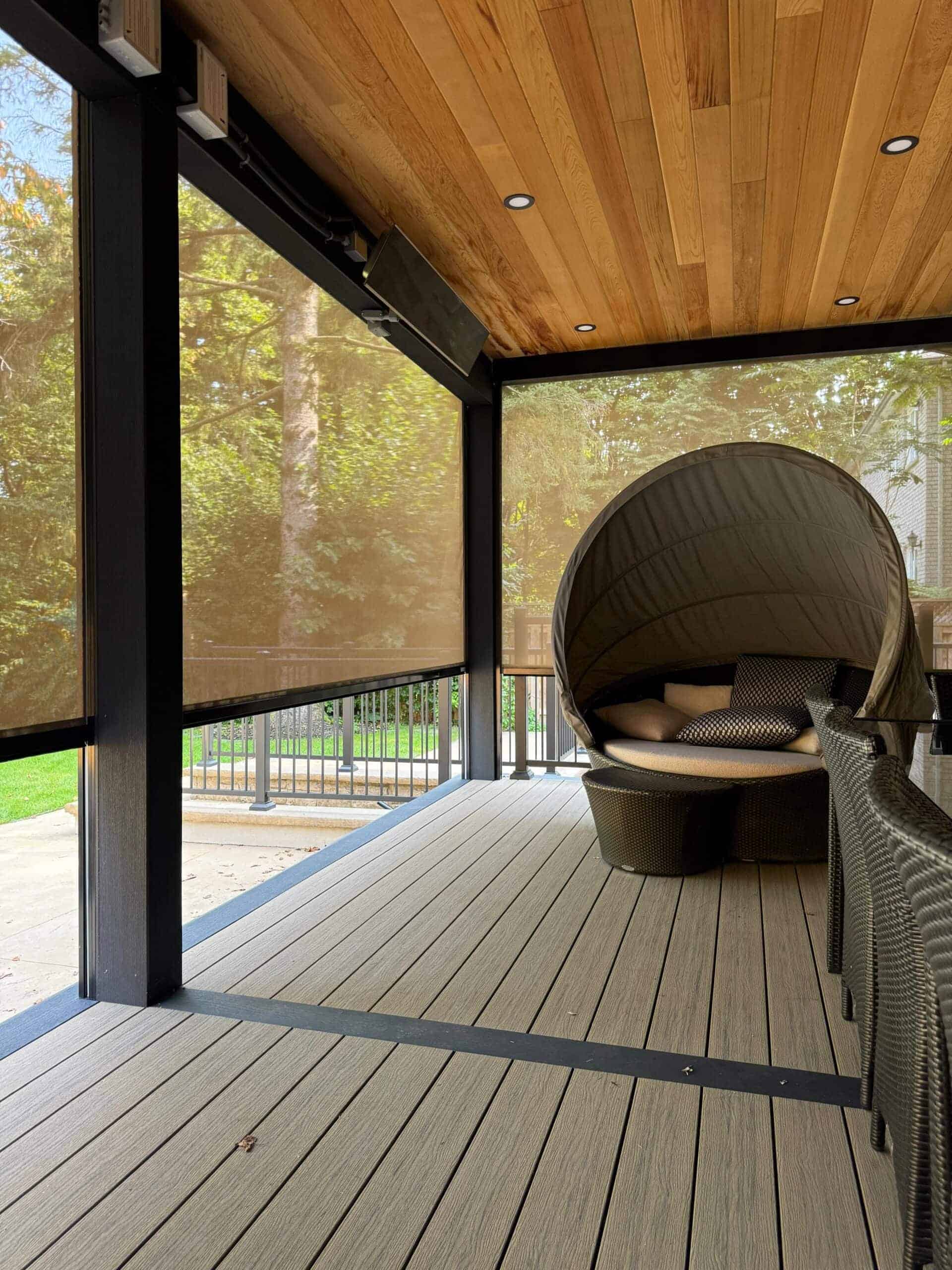
Solar shades made from vinyl-coated polyester or fiberglass provide UV protection while resisting moisture. They’re designed for outdoor use, which makes Miami’s indoor humidity easy by comparison. They reduce heat gain, protect furniture from sun damage, and resist mold growth. For homes with large windows facing Biscayne Bay or ocean views, solar shades deliver performance and durability.
Cellular shades with moisture-resistant fabrics maintain energy efficiency without mildew problems. The honeycomb structure traps air for insulation, reducing cooling costs during Miami’s long summers. Look for synthetic fabrics specifically rated for high-humidity environments. These shed moisture quickly if condensation forms, unlike cotton cellular shades that trap dampness in the folds.
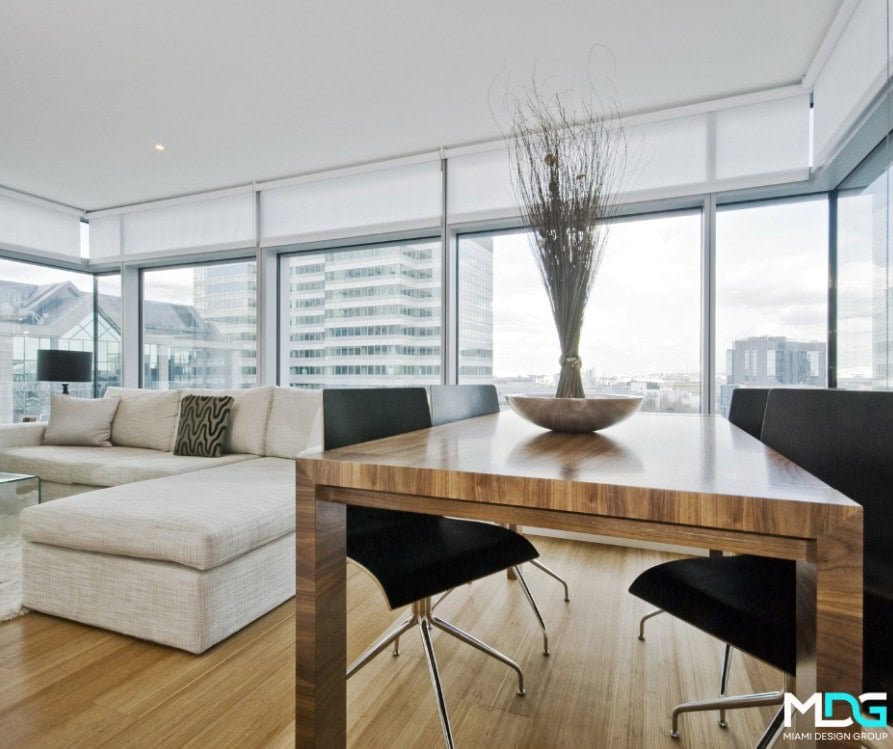
Roller shades with synthetic fabrics offer versatility in light control while handling humidity. Polyester blends and PVC materials don’t absorb moisture. They’re easy to clean—most dirt wipes away with a damp cloth. They work throughout your home, from bedrooms needing blackout options to living rooms where you want filtered light.
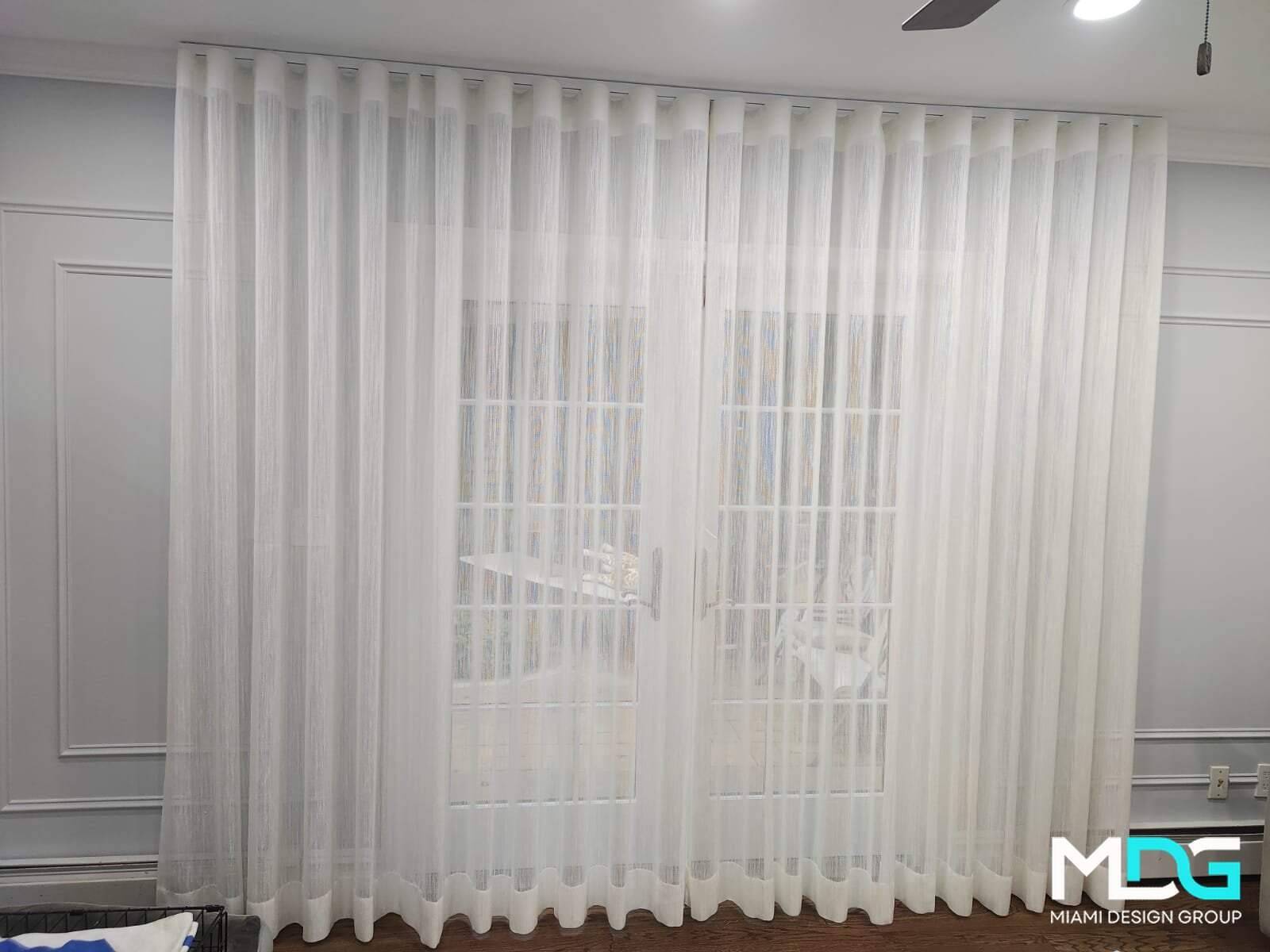
Polyester and acrylic drapes give you soft fabric treatments without moisture retention issues. They dry quickly, resist mildew, and are often machine washable for easy deep cleaning. If you want the look of traditional drapes in your Coral Gables or Pinecrest home, synthetic fabrics are your practical choice. Some manufacturers treat these fabrics with antimicrobial finishes for additional protection against mold and mildew.
Hardware quality matters as much as the treatment material. Stainless steel chains, powder-coated brackets, and corrosion-resistant headrails handle salt air without degrading. Motorized systems need sealed motors rated for humid environments. These components cost more initially but eliminate the expense and hassle of premature replacement.
Faux wood blinds and composite shutters top the list for Miami homes. They’re engineered to resist moisture, mildew, and warping even in extreme humidity. You can wipe them down with a damp cloth without worrying about damage. They work in any room, including bathrooms and kitchens where steam is a daily occurrence. Hunter Douglas and similar premium brands offer limited lifetime warranties on many components, showing confidence in long-term performance.
Aluminum and vinyl blinds offer complete moisture immunity. The slats themselves never warp, crack, or develop mold. Salt air doesn’t corrode properly coated aluminum. The only consideration is the operating cords—synthetic cords last far longer than cotton in humid environments. These treatments are particularly practical for coastal properties in Miami Beach, Sunny Isles, or Aventura where salt exposure accelerates wear on lesser materials.
Solar shades made from vinyl-coated polyester or fiberglass provide UV protection while resisting moisture. They’re designed for outdoor use, which makes Miami’s indoor humidity easy by comparison. They reduce heat gain, protect furniture from sun damage, and resist mold growth. For homes with large windows facing Biscayne Bay or ocean views, solar shades deliver performance and durability.
Cellular shades with moisture-resistant fabrics maintain energy efficiency without mildew problems. The honeycomb structure traps air for insulation, reducing cooling costs during Miami’s long summers. Look for synthetic fabrics specifically rated for high-humidity environments. These shed moisture quickly if condensation forms, unlike cotton cellular shades that trap dampness in the folds.
Roller shades with synthetic fabrics offer versatility in light control while handling humidity. Polyester blends and PVC materials don’t absorb moisture. They’re easy to clean—most dirt wipes away with a damp cloth. They work throughout your home, from bedrooms needing blackout options to living rooms where you want filtered light.
Polyester and acrylic drapes give you soft fabric treatments without moisture retention issues. They dry quickly, resist mildew, and are often machine washable for easy deep cleaning. If you want the look of traditional drapes in your Coral Gables or Pinecrest home, synthetic fabrics are your practical choice. Some manufacturers treat these fabrics with antimicrobial finishes for additional protection against mold and mildew.
Hardware quality matters as much as the treatment material. Stainless steel chains, powder-coated brackets, and corrosion-resistant headrails handle salt air without degrading. Motorized systems need sealed motors rated for humid environments. These components cost more initially but eliminate the expense and hassle of premature replacement.
Want live answers?
Connect with a Miami Design Group expert for fast, friendly support.
Keeping indoor humidity below 60% prevents most mold and mildew issues before they start. This is the single most effective maintenance strategy for window treatments in Miami. At 60% or below, humidity-induced mold growth is deterred. Your treatments stay drier, last longer, and require less intensive cleaning.
Dehumidifiers make this achievable even during Miami’s humid months. Place them in rooms with the most window treatments or where you notice condensation on windows. Run exhaust fans in bathrooms during and after showers. Use kitchen vents when cooking. These simple steps pull moisture out of the air before it can affect your custom window shades and other treatments.
Air circulation matters almost as much as humidity levels. Open your blinds and shades regularly to allow air flow, especially in corner windows or bay windows where air tends to stagnate. Tilt blinds open when you’re not using them for privacy. This prevents moisture from getting trapped between the treatment and the window, reducing condensation buildup that leads to mildew.
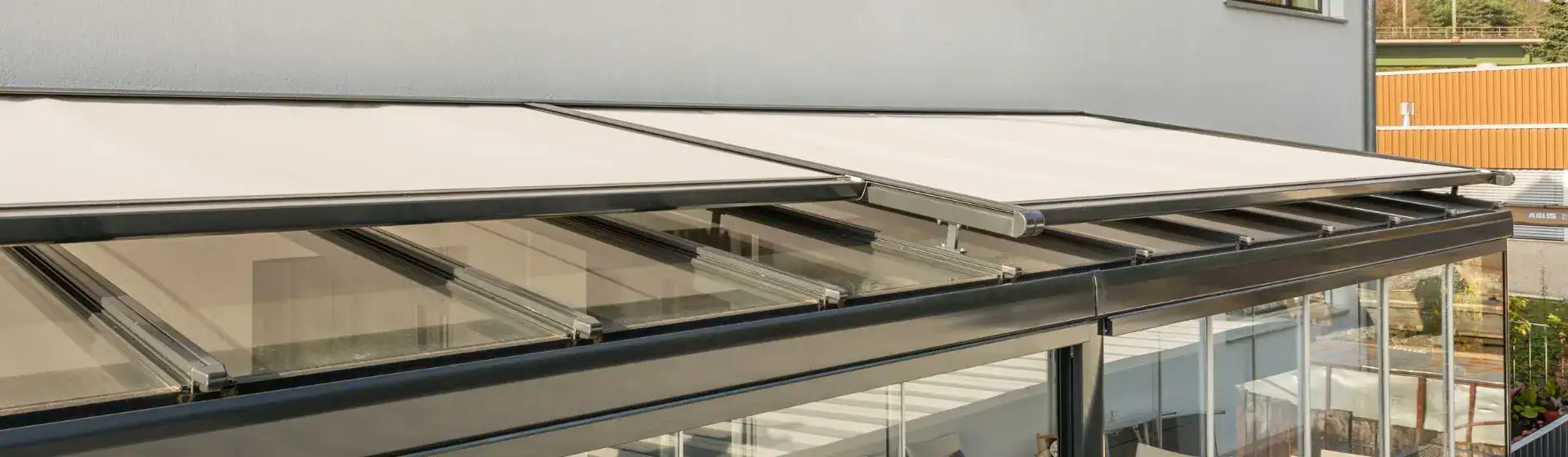
Condensation forms when warm, humid air meets the cooler surface of your window glass. If your cellular shades or fabric treatments sit close to the glass, they’re absorbing that moisture daily. Closed treatments trap condensation between the window and fabric, creating perfect conditions for mildew growth. This is especially problematic during summer months when your AC keeps windows cool while outdoor humidity is at its peak.
Installing treatments so they don’t touch the glass helps. For inside mounts, verify you have enough depth so the treatment clears the window. For outside mounts, use spacer blocks or projection brackets to push treatments away from the glass. This small gap allows air circulation and prevents direct contact with condensation.
Single-pane windows create more condensation than double-pane. If you’re dealing with persistent moisture issues, window film or insulation kits create a barrier that reduces condensation formation. This protects both your windows and your window treatments from moisture damage.
Seal air leaks around windows with weather stripping or caulk. If air can get in, so can moisture. Feel for breezes or cold spots around window frames. These gaps let humid outdoor air infiltrate your home, raising indoor humidity levels and creating more condensation. Sealing them helps your AC work more effectively while protecting your window treatments.
Keep plants away from windows with treatments. Plants release moisture into the air through transpiration, increasing local humidity levels. A window full of plants can create a microclimate that’s 10-15% more humid than the rest of the room. If you love plants, spread them throughout your home rather than concentrating them near window treatments.
Monitor humidity levels with a hygrometer—an inexpensive device that measures moisture in the air. Place one in rooms with expensive window treatments. When you see humidity creeping above 60%, take action. Run the dehumidifier, turn on fans, adjust your AC settings. This proactive approach prevents problems instead of trying to fix damage after it occurs.
During Miami’s wettest months—typically June through October—you’ll need more aggressive humidity control. Your dehumidifier might run daily. That’s normal and necessary. The electricity cost is minimal compared to replacing mildewed window treatments or dealing with mold remediation. Think of it as preventive maintenance for your entire home, not just your window coverings.
Faux wood blinds and shutters tolerate more moisture during cleaning than any other treatment. Dust them weekly with a microfiber cloth or vacuum with a brush attachment. For deeper cleaning, use a damp cloth with mild soap and water. Wipe along the length of each slat rather than across to prevent bending. Dry immediately with a clean cloth to prevent water spots. You can clean these treatments thoroughly without worrying about damage.
Aluminum and vinyl blinds handle similar cleaning methods. Dust regularly, then wipe with a damp cloth when needed. For heavily soiled blinds, remove them and soak in a bathtub with warm water and mild detergent. Let them soak for an hour, rinse thoroughly, and dry completely before reinstalling. This deep cleaning method works well for kitchen blinds that accumulate grease or dust.
Cellular shades require gentler handling because of their pleated structure. Vacuum with a soft brush attachment on low suction. Never rub or scrub cellular shades—the fabric can pill or lose its shape. For stains, gently blot with a slightly damp cloth and mild soap. Let the shade dry completely before raising it. Never immerse cellular shades in water, as this can cause the folds to lose their shape permanently.
Roller shades with synthetic fabrics clean easily. Dust with a feather duster or vacuum with a brush attachment. For spots or stains, wipe with a damp cloth and mild soap. Rinse with a clean, damp cloth to remove soap residue. Keep the shade fully extended until it’s completely dry—rolling it up while damp can cause mildew growth inside the headrail.
Fabric Roman shades need regular vacuuming to prevent dust buildup in the folds. Use the upholstery attachment on your vacuum. For stains, spot clean with foam upholstery cleaner. Spray the foam on the stain, gently rub with a clean cloth, then remove excess moisture. Never soak Roman shades. The multiple layers and folds make thorough drying nearly impossible, creating mildew risk.
Wood blinds—if you have them despite Miami’s humidity—require dry cleaning only. Dust with a soft cloth or vacuum with a brush attachment. Never use water on real wood blinds. For stubborn dirt, use wood polish or a cleaner specifically designed for wood furniture. Apply it to your cloth, not directly to the blinds, then wipe each slat carefully.
Drapes and curtains benefit from monthly vacuuming using the upholstery attachment. Pay special attention to the top where dust settles in pleats and folds. For washable fabrics, follow manufacturer instructions carefully. Use cool water and gentle cycle with mild detergent. Hang to dry rather than using a dryer, which can shrink fabric. Iron while slightly damp if needed. If your drapes are lined, verify both the face fabric and lining are washable before attempting to clean them yourself.
Solar shades resist mold and moisture, making them easy to maintain. Dust or vacuum regularly. For deeper cleaning, wipe with mild soap and water on a damp cloth. Rinse thoroughly and let air dry. Avoid harsh chemicals or cleaners containing quaternary ammonium compounds or phenols, which can damage the fabric coating.
Miami’s humidity challenges your window treatments daily, but it doesn’t have to shorten their lifespan. The difference between treatments that last a decade and those needing replacement in a few years comes down to material selection and consistent maintenance. Choose moisture-resistant materials designed for humid climates. Control indoor humidity with dehumidifiers and proper ventilation. Clean regularly using methods appropriate for each material type.
Most importantly, recognize that standard advice doesn’t account for South Florida’s unique environment. Generic cleaning tips can damage treatments or fail to prevent the mold and mildew issues that develop in 73% average humidity. You need strategies specifically designed for the combination of heat, moisture, salt air, and intense sun that defines Miami’s climate.
At Miami Design Group, we understand these challenges from daily experience serving homeowners throughout Miami-Dade and Broward County. Based in Hallandale Beach with 15 years of experience from our NYC and Toronto operations, we know which materials hold up here, which maintenance approaches actually work, and how to help you protect your investment long-term. When you’re ready to discuss window treatments that can handle Miami’s demanding climate, we’re here to help.
Article details:
Share:
Continue learning: